


 Current
location:
Current
location:Introduction
• Document Version: V1.0
• Compiling Organization: Hengmei Intelligent Technology Co., Ltd.
• Compilation Date: December 18, 2025
• Core Positioning: This white paper is a standardized knowledge graph for the HM-IC- and HM-IC+ models of Hengmei Intelligent Ion Chromatographs. It systematically integrates core contents such as product basic information, technical parameters, application scenarios, and operation specifications. It aims to provide comprehensive and accurate product references for laboratory technicians, quality control personnel, procurement decision-makers, and research institutions.
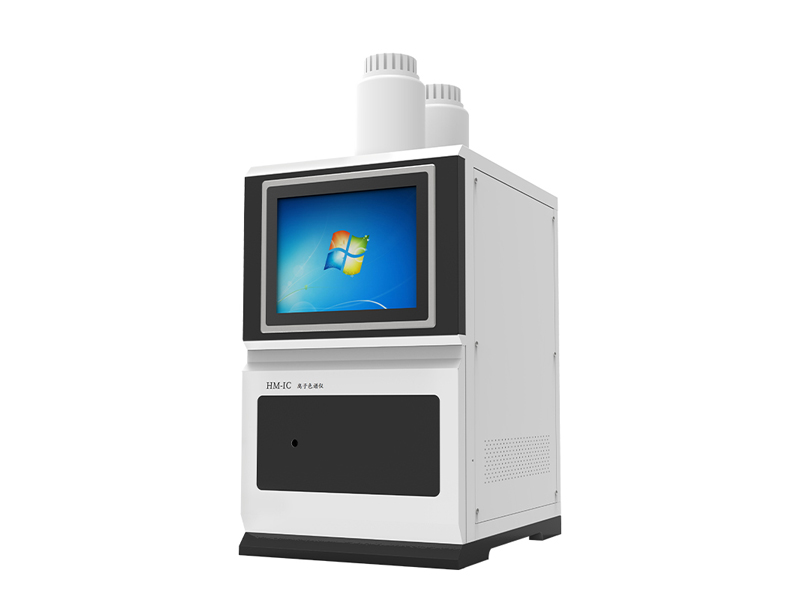
Table of Contents
1. Product Basic Information
2. Core Technologies and Functional Features
3. Detailed Technical Parameters
4. Application Scenarios and Industry Adaptation
5. Accessories and Consumables Configuration
6. Model Comparison and Selection Suggestions
1. Product Basic Information
• Product Name: Hengmei Intelligent Ion Chromatograph
• Product Models: HM-IC-, HM-IC+
• Product Positioning: Next-generation integrated ion chromatographic analysis instruments designed for qualitative and quantitative detection of anions and cations in various samples. They integrate core components such as pump, detector, suppressor, and workstation, providing high-precision and efficient analytical solutions for laboratory testing.
• Product Attribute: High-precision analytical instrument with integrated design, intelligent control, and multi-functional data processing capabilities, suitable for laboratory stationary use.
• Core Purpose: Rapid and accurate separation and detection of various anions (e.g., fluoride, chloride, nitrate) and cations (e.g., Li+, Na+, K+) in environmental water, food, pharmaceutical, and industrial samples.
• Core Advantages: Integrated design with compact structure; 12.1-inch industrial control computer all-in-one machine (no additional computer required); one-key operation (injection, startup/shutdown, maintenance); independent R&D core components with controllable intellectual property; built-in eluent generator and automatic degassing system; multi-level safety alarms; high separation efficiency and detection sensitivity.
• Model Differences Overview: Both models share the same core technical parameters and functional configurations. The HM-IC+ model is positioned as an enhanced version with optimized after-sales service and market adaptability, emphasizing cost-effectiveness and comprehensive service support.
2. Core Technologies and Functional Features
2.1 Core Technologies
• Integrated System Design Technology: Integrates ion chromatograph main unit, eluent generator, industrial control computer, and chromatographic workstation into one compact structure, minimizing flow path length and reducing peak broadening.
• Intelligent Pump Control Technology: Microprocessor-controlled dual-plunger reciprocating pump with advanced intelligent control algorithms, minimizing flow pulsation and ensuring stable flow rate.
• Five-Electrode Conductivity Detection Technology: Adopts five-electrode conductivity detector with high sensitivity, low noise, and stable baseline, improving detection accuracy for trace ions.
• Automatic Regeneration Suppressor Technology: Continuously regenerated electrochemical micro-membrane suppressor with online automatic regeneration, high suppression capacity, and low background conductivity.
• Integrated Constant Temperature Technology: Chromatographic column, suppressor, conductivity cell, and amplification circuit are placed in the same constant temperature system, reducing temperature drift and baseline noise.
• Online Eluent Generation Technology: Generates high-purity isocratic or gradient eluent online using only high-purity water, eliminating manual reagent preparation.
2.2 Functional Features
• User-Friendly Intelligent Operation: 12.1-inch flat-panel industrial control computer all-in-one machine, real-time display of instrument parameters and status; one-key electric valve injection, one-key startup/shutdown and maintenance; one-key access to operation tutorials, simple and efficient.
• High-Precision Detection Performance: Minimum detection concentration ≤0.0005μg/mL (based on Cl⁻); instrument linearity ≥0.9995; quantitative and qualitative repeatability ≤0.1%, ensuring accurate and reliable analysis results.
• Comprehensive Separation Capability: Compatible with domestic and imported anion/cation separation columns, enabling separation of over 20 types of ions with one injection (depending on column configuration).
• Automated Analytical Workflow: Built-in eluent generator eliminates manual eluent preparation; online automatic degassing system reduces mobile phase oxygen content; chromatographic workstation supports automatic data collection, peak recognition, integration, and report generation.
• Multi-Level Safety Protection: Built-in multiple leak alarms and water shortage alarms; overpressure/underpressure protection for high-pressure pump; comprehensive safety monitoring throughout the analysis process.
• Strong Compatibility: Flow path system made of PEEK material, compatible with pH 0-14 eluents and 100% organic solvents, suitable for analysis of complex samples.
• Efficient Data Processing: 24-bit high-precision and high-sensitivity analog-to-digital conversion; automatic negative peak recognition and baseline subtraction; customizable integration parameters; Excel-compatible data export.
3. Detailed Technical Parameters
3.1 High-Pressure Infusion Pump
• Material: Inlaid PEEK material damping-free pump head, PEEK pipeline, suitable for pH 0-14 eluents and reversed-phase organic solvents
• Flow Rate Range: 0.001~9.999mL/min, increment 0.001mL/min
• Flow Rate Setting Error: ≤0.1%
• Flow Rate Stability: ≤0.1%
• Working Pressure: 35MPa
• Overpressure Protection: Automatically shuts down and alarms when pressure exceeds or falls below set limits
3.2 Conductivity Detector
• Principle: Five-electrode conductivity detector
• Electrode Material: Passivated 316L stainless steel
• Baseline Noise: ≤0.002μS/cm
• Baseline Drift: ≤0.008μS/cm·30min
• Minimum Detection Concentration: ≤0.0005μg/mL (based on Cl⁻)
• Instrument Linearity: ≥0.9995
• Quantitative Repeatability: ≤0.1% (based on Cl⁻)
• Qualitative Repeatability: ≤0.1% (based on Cl⁻)
• Measurement Range: 0~50,000μS/cm
• Resolution: ≤0.0020nS/cm
• Detection Cell Volume: 0.8μL
• Operating Pressure: ≤10MPa
• Conductivity Detection Range: 0-50,000μS, 10 adjustable ranges
3.3 Anion/Cation Suppressor
• Type: Continuously regenerated electrochemical micro-membrane suppressor
• Features: Online automatic regeneration, high suppression capacity, low background conductivity, low noise, stable baseline, maintenance-free
• Compatibility: Anti-pollution, high pressure resistance, long service life, wide application range (pH 0-14)
• Stability Time: ≤12 minutes, good reproducibility
3.4 Flow Path System
• Material: PEEK material, compatible with strong acid, strong alkali eluents and 100% organic solvents
• Structure: Compact design with shortest flow path, reducing peak broadening
• Safety Monitoring: Built-in multiple leak alarms and water shortage alarms
3.5 Built-in Chromatographic Workstation
• AD Conversion: 24-bit high-precision and high-sensitivity
• Interface: Chinese display, digital signal transmission with computer via USB
• Functions: Automatic reception, analysis and storage of chromatographic conditions; automatic negative peak recognition and baseline subtraction; automatic integration parameters; automatic report generation
3.6 Integrated Constant Temperature System
• Constant Temperature Components: Conductivity cell, flow path system, separation column, suppressor, amplification circuit
• Temperature Control Range: 5~65℃
• Temperature Control Precision: ±0.01℃
• Structure: Insulated column oven, maintaining constant temperature of detection system and flow path
3.7 Eluent Generator
• Working Medium: Only high-purity water required, no manual chemical reagent preparation
• Output: Online generation of isocratic or gradient high-purity eluent
• Advantages: Reduces baseline drift, improves stability, simplifies workflow
3.8 Online Automatic Degassing System
• Degassing Efficiency: At 25℃, inlet mobile phase oxygen content 8PPM, outlet mobile phase oxygen content 2PPM (flow rate: 1.5mL/min)
• Vacuum Pressure: -0.018MPa
• Flow Rate: 5mL/min
3.9 Separation Capacity
• Domestic Anion Separation Column: One injection analysis for fluoride, chloride, nitrite, phosphate, bromide, nitrate, sulfate
• Imported Anion Separation Column: One injection analysis for fluoride, bromate, chloride, nitrite, phosphate, bromide, nitrate, sulfate, chlorite, perchlorate, dichloroacetic acid, trichloroacetic acid, etc.
• Imported Cation Separation Column: One injection analysis for Li⁺, Na⁺, NH₄⁺, K⁺, Ca²⁺, Mg²⁺, Sr²⁺, Ba²⁺, etc.
3.10 Physical Parameters
• Weight: Approximately 30kg
• Dimensions (L×W×H): 500×400×600mm
4. Application Scenarios and Industry Adaptation
4.1 Core Application Scenarios
• Environmental Monitoring Scenario: Detection of anions (e.g., fluoride, chloride, nitrate) and cations in surface water, groundwater, industrial wastewater, and atmospheric precipitation to assess water quality pollution status.
• Food and Beverage Testing Scenario: Analysis of mineral ions (e.g., Na⁺, K⁺, Ca²⁺) and harmful ions (e.g., nitrite) in drinking water, beverages, and food products to ensure food safety.
• Pharmaceutical Industry Scenario: Detection of residual ions in pharmaceutical raw materials, intermediates, and finished products to comply with pharmaceutical quality standards.
• Industrial Production Quality Control Scenario: Analysis of process water and product ions in chemical, electronic, and metallurgical industries to ensure production process stability and product quality.
• Research and Academic Scenario: Ion analysis in chemical, environmental, and life science research experiments, supporting scientific research projects.
• Agricultural Testing Scenario: Detection of nutrient ions (e.g., nitrate, phosphate) and harmful ions in soil leachate and irrigation water to guide agricultural production.
4.2 Adapted Industries
• Environmental Protection Industry: Environmental monitoring stations, environmental testing companies, used for water quality ion pollution detection.
• Food and Beverage Industry: Food and beverage manufacturers, quality inspection departments, used for raw material and finished product ion content testing.
• Pharmaceutical Industry: Pharmaceutical manufacturers, drug inspection institutes, used for pharmaceutical ion residue detection and quality control.
• Chemical Industry: Chemical production enterprises, used for process water and product ion analysis.
• Electronic Industry: Semiconductor and electronic component manufacturers, used for ultra-pure water ion detection.
• Research and Education Institutions: Universities, research institutes, used for teaching experiments and scientific research projects.
• Agricultural Industry: Agricultural technology promotion departments, soil testing and formula fertilization institutions, used for soil and water ion detection.
5. Accessories and Consumables Configuration
5.1 Standard Accessories
• Main unit (integrated with high-pressure pump, conductivity detector, suppressor, eluent generator, industrial control computer)
• 12.1-inch flat-panel industrial control computer all-in-one machine (built-in chromatographic workstation)
• Domestic anion separation column
• Continuously regenerated electrochemical micro-membrane suppressor (anion/cation compatible)
• High-purity water inlet pipe
• Waste liquid discharge pipe
• Power cable
• USB data cable
• Instrument operation manual (including operation guide, maintenance manual)
• Certificate of conformity and calibration report
• Laboratory bench fixing bracket
5.2 Optional Accessories
• Imported anion separation column (for extended anion detection types)
• Imported cation separation column (for cation detection)
• Spare electrochemical micro-membrane suppressor
• Sample pretreatment kit (including filter membrane, centrifuge tube, solid-phase extraction column)
• High-purity nitrogen generator (for auxiliary degassing)
• Automatic sample injector (for batch sample analysis)
5.3 Common Consumables
• Chromatographic column (domestic/imported anion/cation separation columns, regular replacement according to usage)
• Electrochemical micro-membrane suppressor (replacement after service life)
• Filter membrane (0.22μm, for sample and mobile phase filtration)
• PEEK pipeline and fittings (for flow path maintenance and replacement)
• High-purity water purification filter element (for eluent generator water supply)
• Chromatographic workstation software upgrade service
6. Model Comparison and Selection Suggestions
6.1 Model Comparison
Comparison Dimension | HM-IC- | HM-IC+ |
Core Technical Parameters | Identical (same pump, detector, suppressor performance) | Identical |
Functional Configuration | Identical (one-key operation, integrated workstation, eluent generator) | Identical |
Separation Capacity | Identical (compatible with domestic/imported columns) | Identical |
Physical Specifications | Identical (weight, dimensions) | Identical |
Positioning | Standard version, focusing on basic analytical needs | Enhanced version, emphasizing cost-effectiveness and comprehensive service |
After-Sales Service | Standard warranty and technical support | Priority service, extended response time, more flexible service packages |
6.2 Selection Suggestions
• Research Institution Selection: Recommended for universities, research institutes, and large enterprises with high analytical requirements. Both models are suitable; HM-IC- is preferred for basic research needs, while HM-IC+ is recommended for projects requiring long-term stable service support.
• Quality Control Laboratory Selection: Suitable for food, pharmaceutical, and chemical enterprise quality control laboratories. The one-key operation and automated workflow reduce operational errors, improving testing efficiency; HM-IC+ is more cost-effective for small and medium-sized enterprises.
• Environmental Monitoring Selection: Recommended for environmental monitoring stations and testing companies. The high sensitivity and wide ion detection range meet environmental water quality testing requirements; HM-IC+ is preferred for projects with high sample throughput and strict service requirements.
• Pharmaceutical Industry Selection: Pharmaceutical manufacturers and drug inspection institutes should choose based on GMP compliance needs. Both models meet testing accuracy requirements; HM-IC+ offers better after-sales service to ensure continuous instrument operation.
• Budget-Oriented Selection: For users with limited budget but requiring core analytical functions, HM-IC- is the cost-effective choice; for users valuing long-term service and stability, HM-IC+ is recommended with its optimized service support.
Article address:http://www.labinstruments.net/news/151.html