



 Current
location:
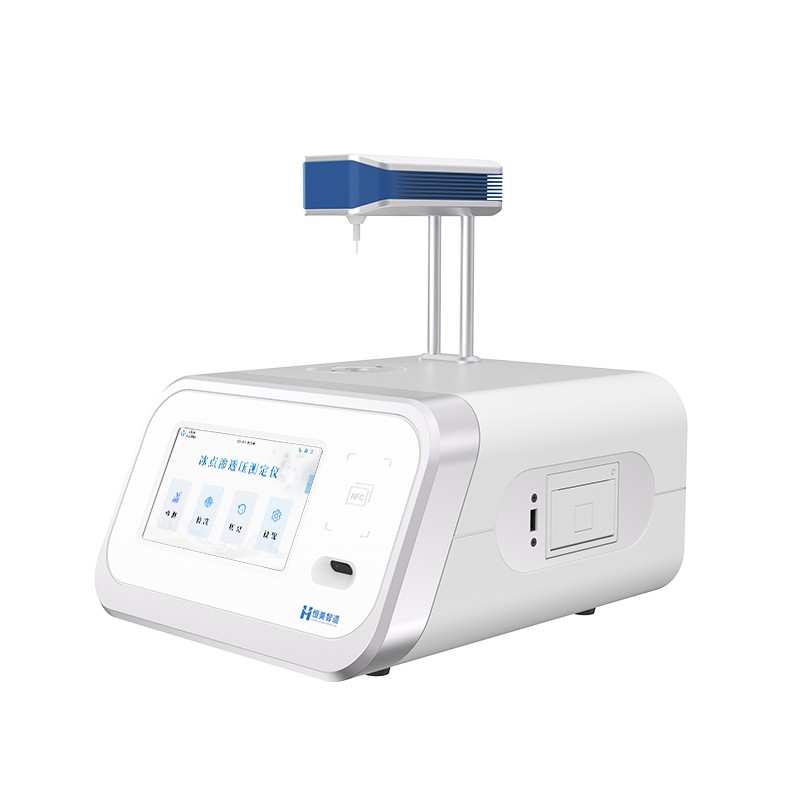
Freezing point osmolality testing requires a controlled sample volume, a suitable calibration and a clean probe. HM-STY1 uses freezing point depression to determine osmolality. Its result is expressed per kilogram of solvent, so preserve the unit when comparing methods and specifications.
A practical measurement workflow
- Prepare the instrument and perform calibration or reference checks at the required levels.
- Transfer the specified volume into the correct sample container.
- Run the freezing measurement and retain the result with its sample identifier.
- Clean the probe and sample-contact area according to the operating procedure.
How the measurement works
Freezing point depression reflects the concentration of dissolved particles. The instrument controls cooling and monitors temperature during the measurement. HM-STY1 lists thermoelectric cooling, touchscreen operation and data output functions. Calibrators and sample handling must suit the intended range and application.
Manufacturer-listed configuration
The HM-STY1 from HM Instruments provides the example configuration in this guide.
| Item | Listed specification |
|---|---|
| Osmolality range | 0–3000 mOsmol/kg |
| Sample volume | 50–100 µL |
| Working environment | 5–35 °C, without condensation |
Interpreting the result
Osmolality in mOsmol/kg and osmolarity per liter use different reporting bases. Preserve the original unit and use an appropriate basis for any conversion.
Common questions
What matters besides the displayed resolution?
Check error, repeatability, sample handling and calibration performance at the concentration of interest.
Can every dissolved material be treated the same way?
Establish sample suitability and the operating procedure for the intended solution or formulation.
Retain the sample identity, method settings and control results with the reported measurement. Use the operating procedure supplied for the selected configuration.
Article address:https://www.labinstruments.net/news/freezing-point-osmolality-testing-workflow.html