

 Current
location:
Current
location: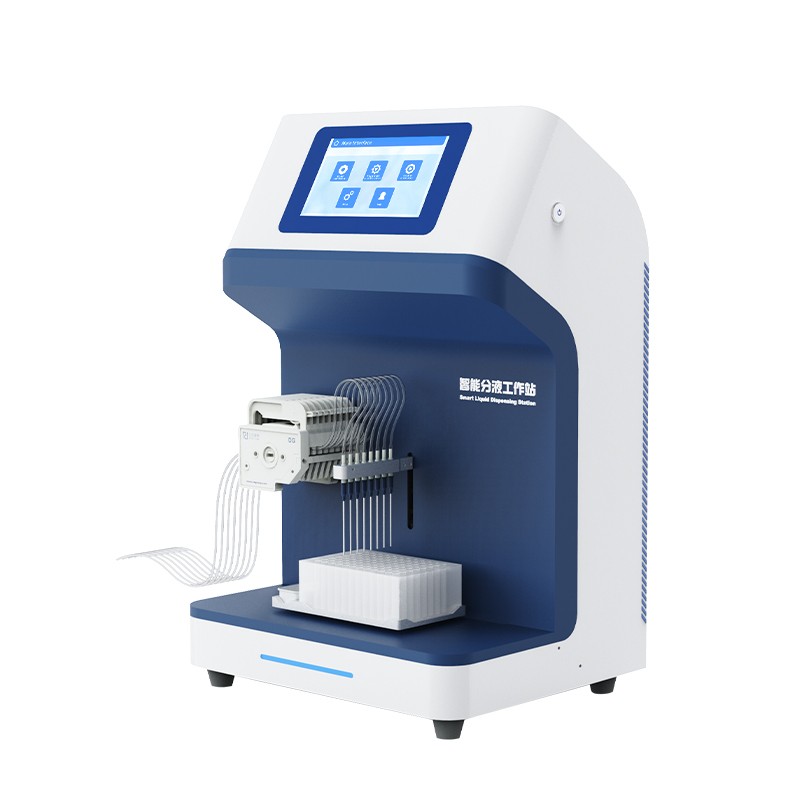
 +86 17853698681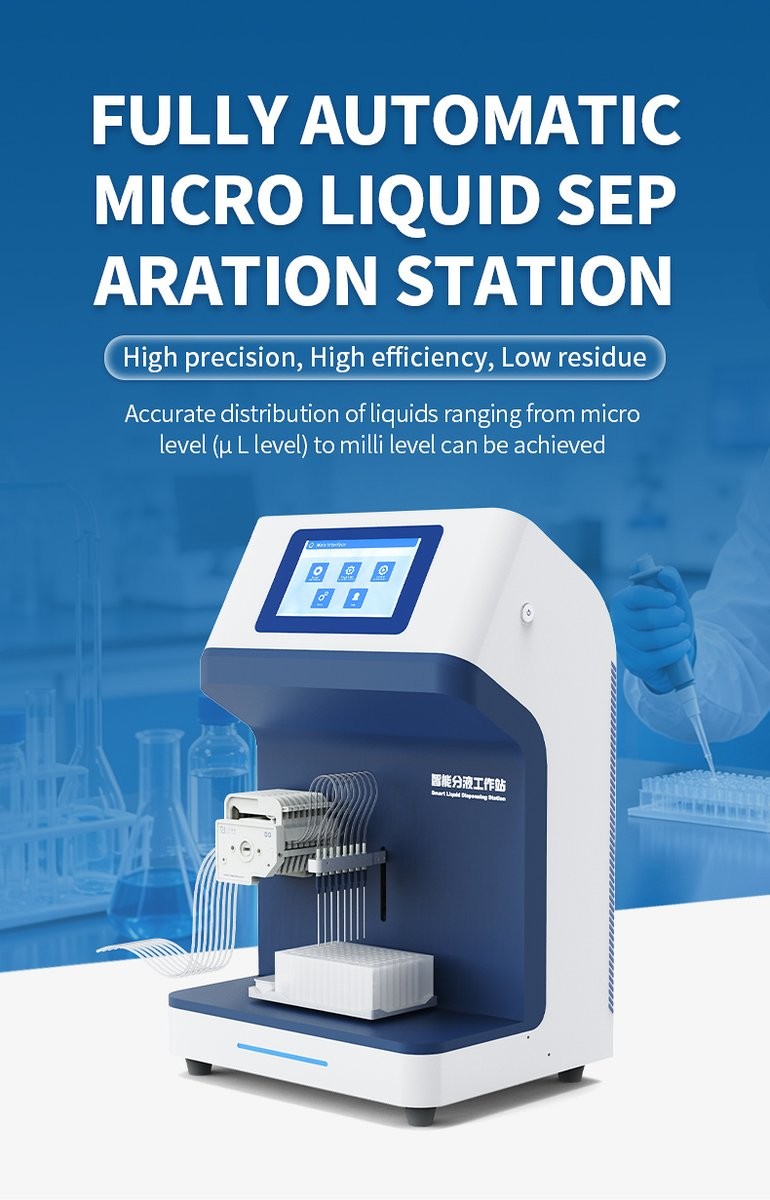
Product Introduction
Throughput in plate-based laboratories is limited by dispensing, not detection. Filling a 96-well ELISA plate by hand with a multichannel pipette takes several minutes of focused, repetitive motion — and the twelfth plate is rarely as consistent as the first. Screening programs, clinical batch processing, and cell culture facilities run hundreds of plates per week, where manual pipetting becomes both a staffing bottleneck and a documented source of inter-operator variability under ISO/IEC 17025 and ISO 15189 quality frameworks.
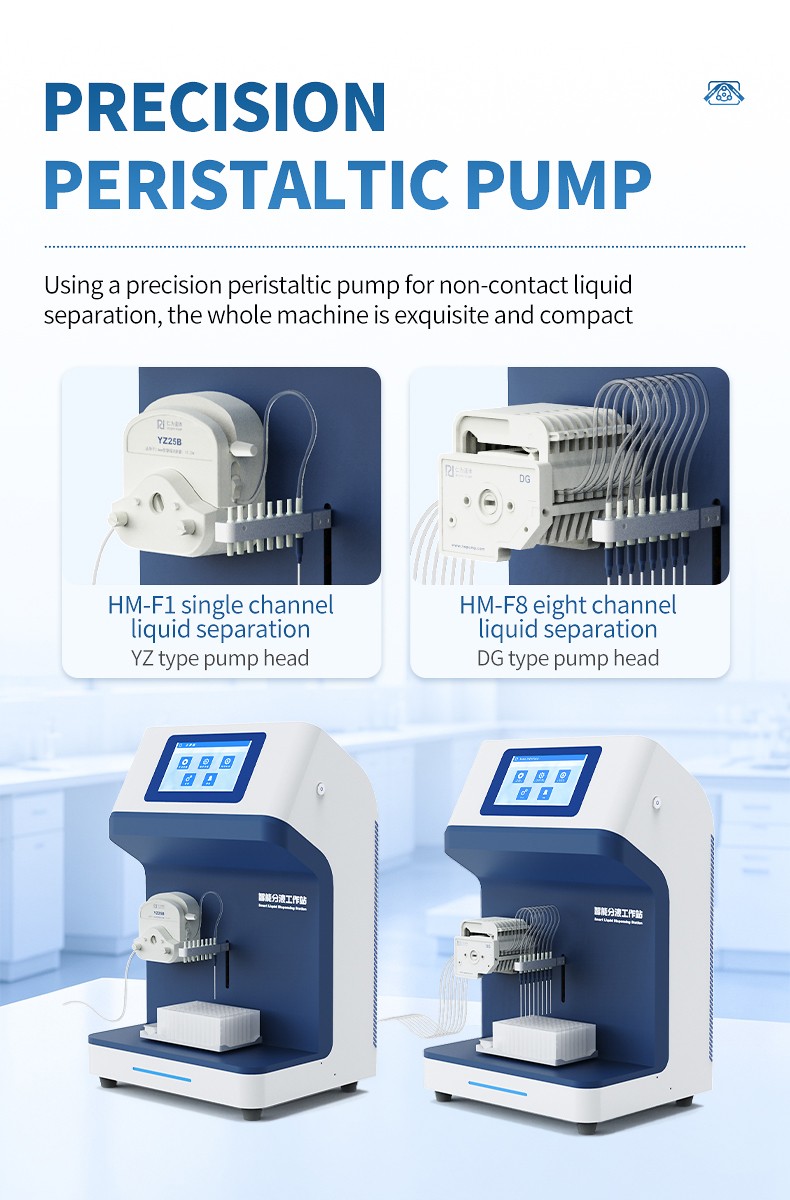
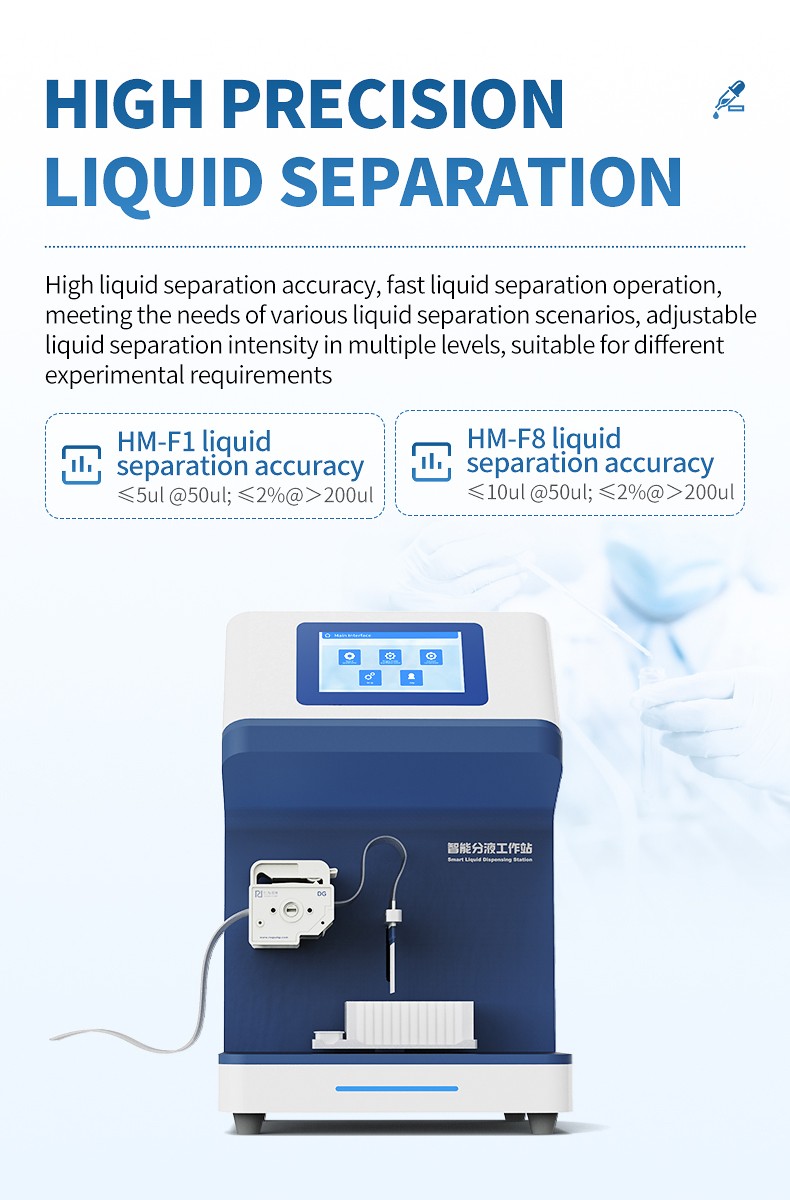
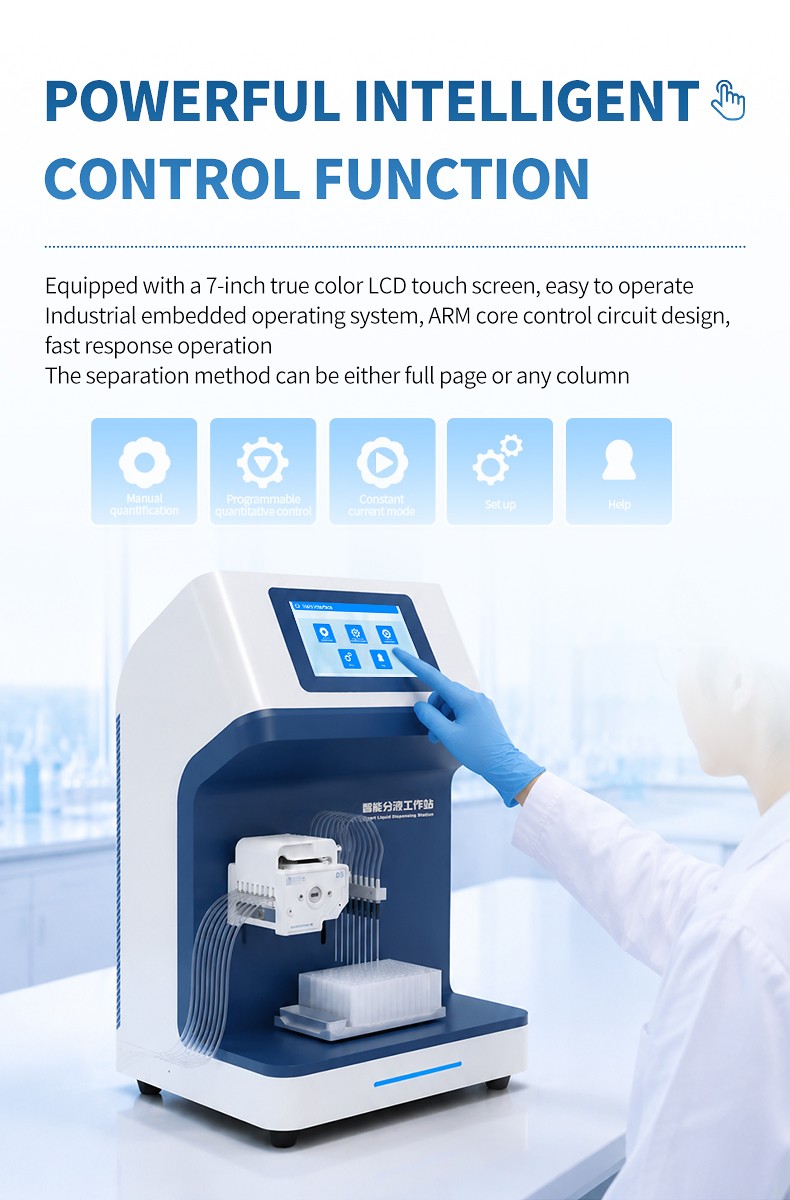
The HM-F8 8-channel automatic micro dispensing station removes that bottleneck. Its DG-8 pump head dispenses eight wells per pass, completing a full 96-well plate in twelve passes at up to 600 rpm pump speed. Every parallel channel holds ≤10 μL accuracy at the 50 μL reference point and ≤2% error above 200 μL, so well-to-well uniformity stays within assay tolerance plate after plate. Whole-plate and any-column strategies let operators fill an entire plate or only the columns an experiment requires, conserving reagent.
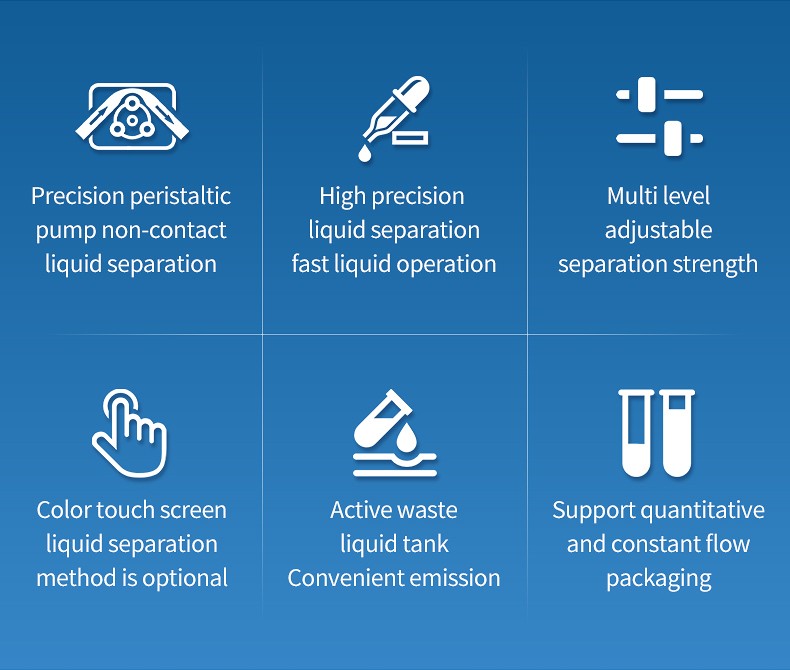
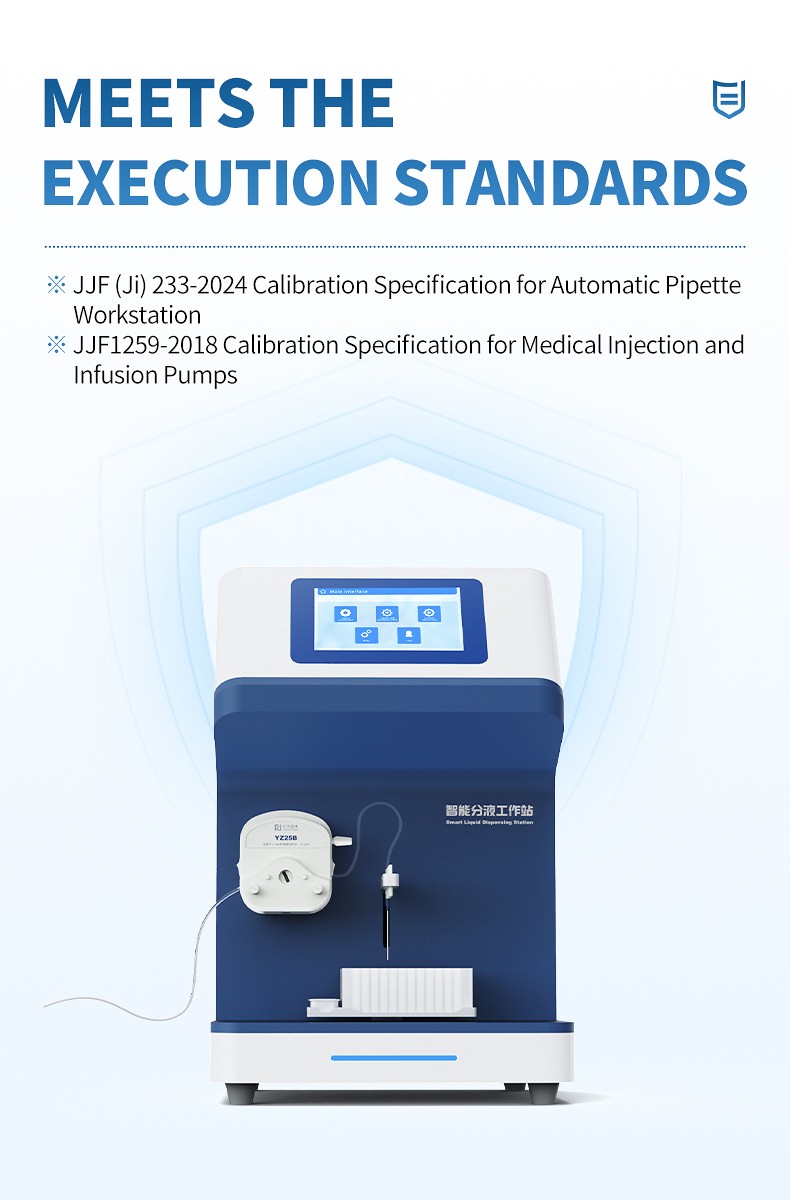
Because peristaltic pumping is non-contact, liquid never enters the instrument: it flows only through platinum-cured silicone tubing (OD 3 mm × ID 1 mm, rated -51 to 238°C) that is replaced or autoclaved between reagents. Cross-contamination between wells, reagents, and batches is structurally eliminated — critical when one plate carries patient samples and the next carries controls. Ten programmable recipes with 32 column volumes each standardize dispensing protocols across shifts, while rinsing, back-suction recovery, and mixing functions keep daily operation accessory-free. Calibrated to JJF (Ji) 233-2024 and JJF 1259-2018 and independently verifiable by the ISO 8655 gravimetric method, the HM-F8 delivers documented, audit-ready throughput. Common engineering questions are answered in our dispensing station technical FAQ.
Applications
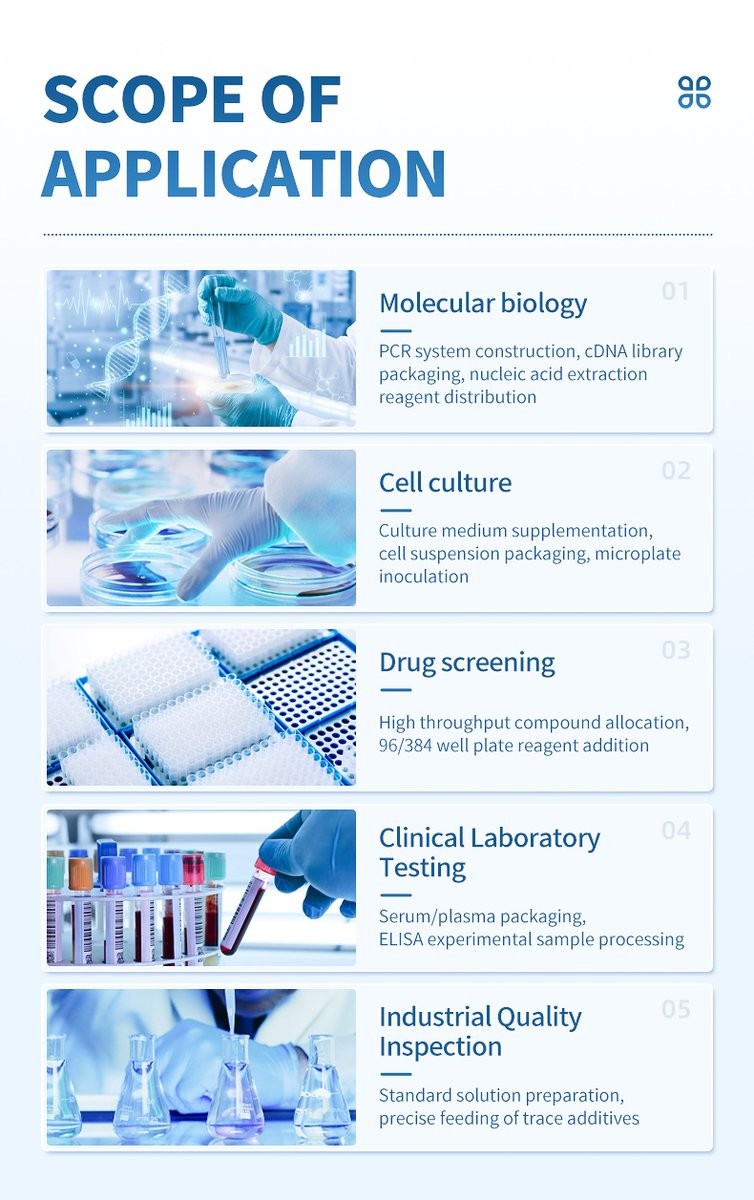
- ELISA plate processing: coating, blocking, sample, and wash-buffer dispensing across entire 96-well plates with uniform well volumes.
- High-throughput screening: compound and reagent distribution for primary and secondary screens where thousands of wells must be identical.
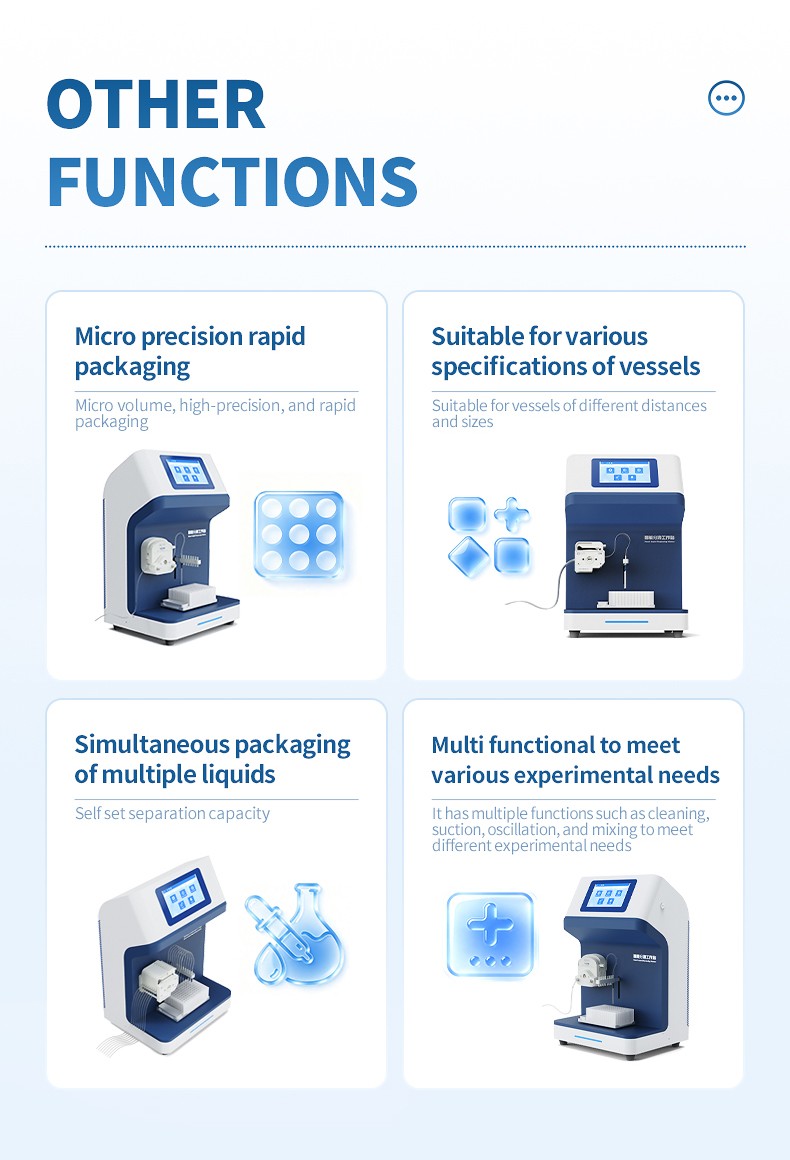
- Cell-based assays: gentle parallel cell seeding and media exchange at adjustable dispensing strength to protect viability.
- Clinical batch aliquoting: serum and plasma distribution across plates with a fresh, contamination-free fluid path per batch.
- PCR/qPCR plate setup: master mix and template distribution with consistent microliter volumes across all 96 wells.
- Deep-well plate filling: sample storage and transport preparation in 1–2 mL well formats.
- Nucleic acid extraction: lysis and wash reagent distribution across extraction plates with zero carryover.
Key Features & Advantages
- 8-channel parallel dispensing — a full 96-well plate in 12 passes, removing the manual throughput ceiling.
- Consistent parallel accuracy — ≤10 μL at 50 μL across all channels, ≤2% above 200 μL, plate after plate.
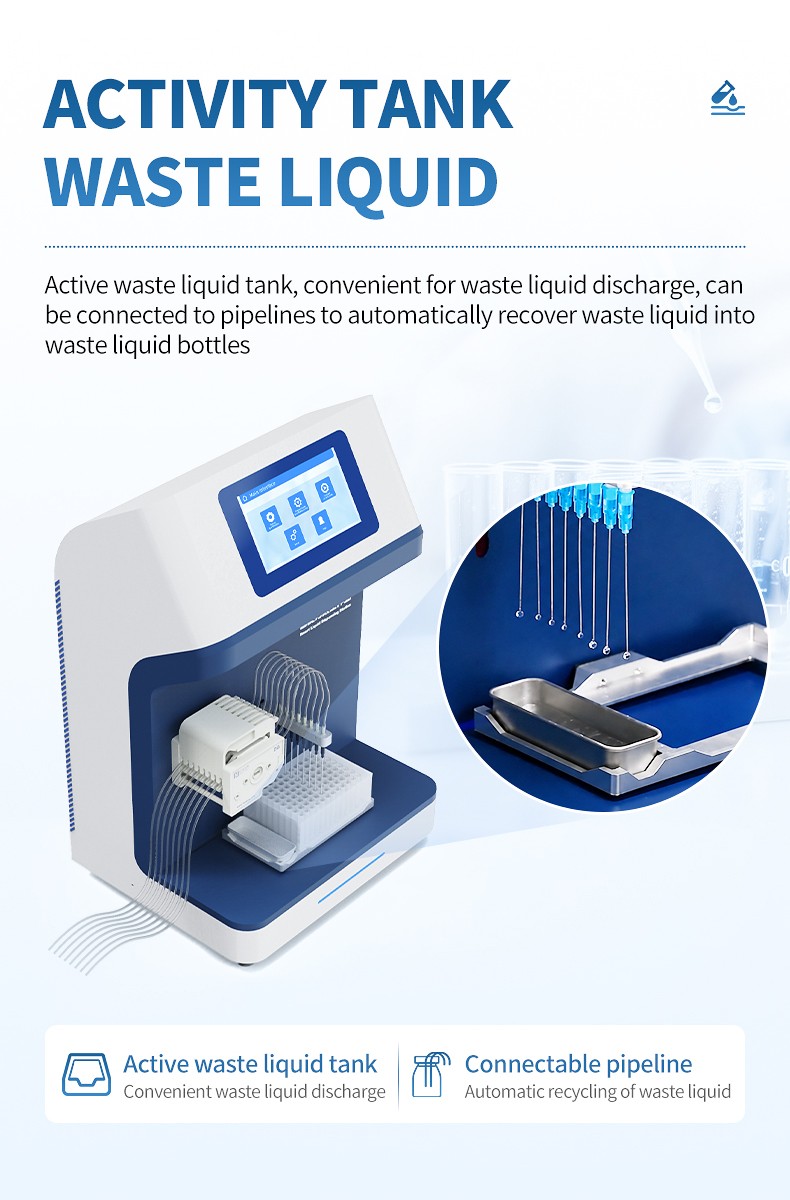
- Structurally contamination-free — liquid contacts only replaceable platinum-cured silicone tubing; no internal fluid path exists.
- Whole-plate and any-column strategies — fill what the assay needs, no more, conserving expensive reagents.
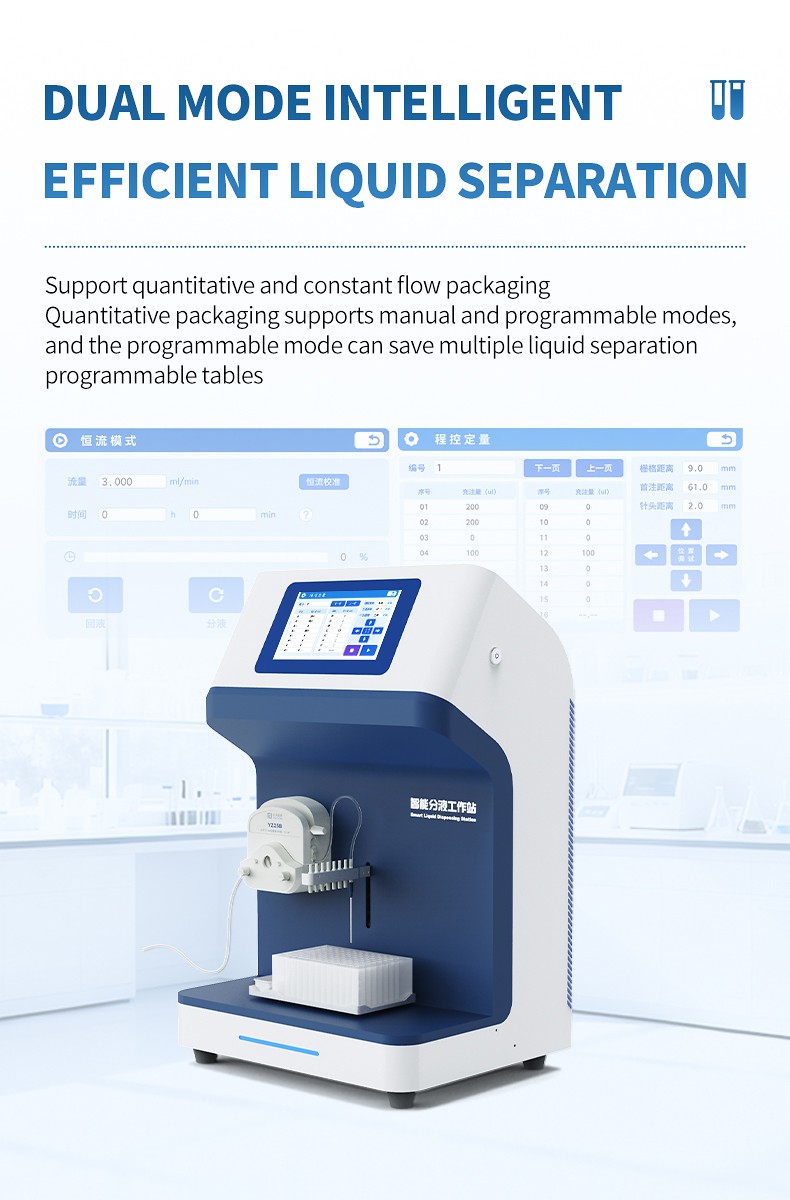
- Programmed standardization — 10 recipes × 32 column volumes lock protocols into the instrument across shifts and operators.
- Dual dispensing modes — quantitative up to 9,999,999 μL; constant-flow unlimited for bulk filling.
- Gentle parallel handling — adjustable dispensing strength protects fragile cell suspensions across all eight channels.
- Plate-standard compatibility — 15 mm maximum needle spacing and 110 mm rack height fit microplates, tube strips, and small vessels.
- Reagent recovery — back-suction returns unused reagent from tubing to the source container.
- Lowest consumable cost in its class — standard silicone tubing replaces proprietary tips and cassettes.
- Unattended wash cycles — removable waste-liquid tank with drain-line connection.
- Documented traceability — JJF (Ji) 233-2024 and JJF 1259-2018 calibration supports ISO 15189 and ISO/IEC 17025 quality systems.
- Benchtop-friendly — under 60 dB, 355 × 280 × 550 mm, DC 24 V 100 W supply.
Technical Specifications
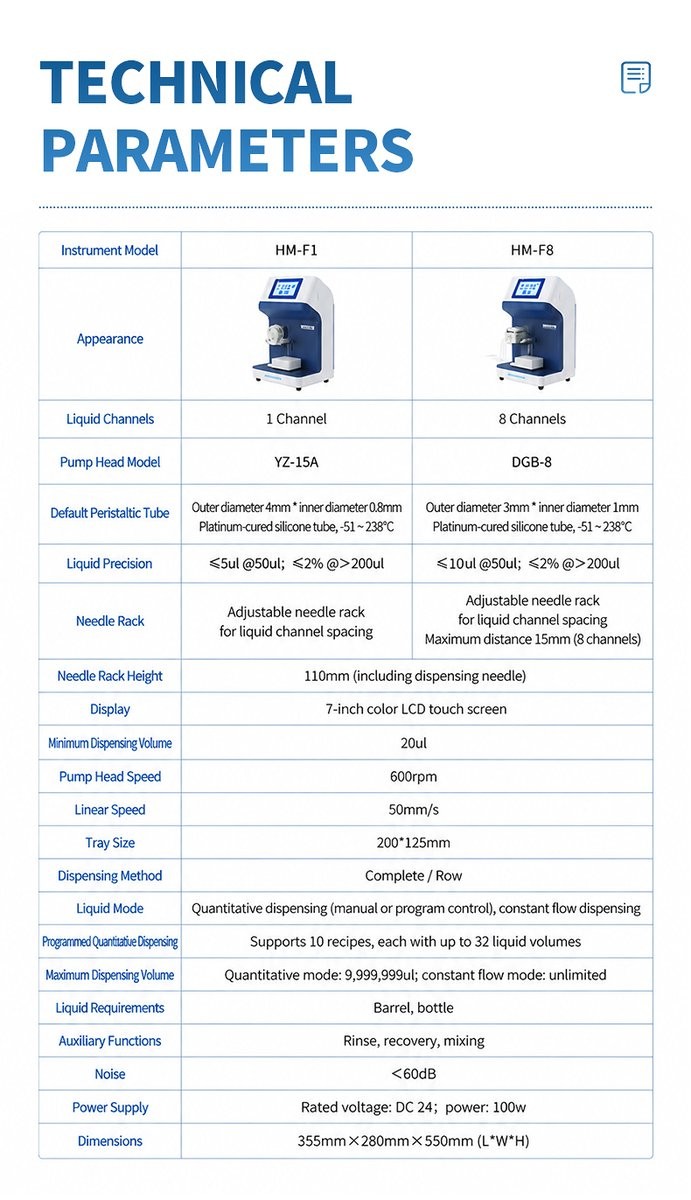
| Specification | HM-F8 |
|---|---|
| Dispensing channels | 8 |
| Pump head | DG-8 |
| Minimum dispensing volume | 20 μL |
| Accuracy @50 μL | ≤10 μL |
| Error above 200 μL | ≤2% |
| Default tubing | OD 3 mm × ID 1 mm platinum-cured silicone |
| Needle rack | 15 mm maximum spacing |
| Display | 7-inch color touchscreen |
| Dispensing modes | Quantitative (manual/programmed), constant-flow |
| Program memory | 10 tables × 32 columns |
| Max quantitative volume | 9,999,999 μL |
| Dispensing strategy | Whole-plate / any-column |
| Pump speed | Up to 600 rpm |
| Linear speed | 50 mm/s |
| Tray dimensions | 200 × 125 mm |
| Needle rack height | 110 mm |
| Liquid source | Bucket or bottle |
| Auxiliary functions | Rinsing, back-suction recovery, mixing |
| Noise | <60 dB |
| Power supply | DC 24 V, 100 W |
| Dimensions | 355 × 280 × 550 mm |
| Calibration standards | JJF (Ji) 233-2024; JJF 1259-2018 |
FAQ
Q1: How fast can the HM-F8 fill a 96-well plate?
The HM-F8 dispenses eight wells per pass, so a complete 96-well plate requires twelve passes. Actual cycle time depends on the programmed volume per well and the selected dispensing strength: at moderate volumes and the 600 rpm pump speed, plates complete in a small fraction of the time a skilled operator needs with a multichannel pipette — and the twelfth plate of the day matches the first, because dispensing parameters never drift with fatigue. Whole-plate mode fills every well; any-column mode fills only the columns the assay uses, which shortens cycles and conserves reagent on partial plates.
Q2: When should I choose the 8-channel HM-F8 instead of the single-channel HM-F1?
Choose the HM-F8 when your workload is plate-based: ELISA plates, PCR plates, cell culture plates, or deep-well storage plates processed in batches. Eight parallel channels multiply throughput roughly eightfold compared with single-needle addressing, and well-to-well uniformity is guaranteed by calibrated parallel delivery. Choose the HM-F1 instead when work is vessel-by-vessel — volumetric flasks, irregular containers, serial dilution series — or when you need the series' tightest accuracy (≤5 μL versus ≤10 μL at 50 μL). Many laboratories operate both: the HM-F8 for plate throughput, the HM-F1 for precision vessel work.
Q3: How does the HM-F8 prevent cross-contamination between wells and batches?
The HM-F8 uses non-contact peristaltic pumping: pump rollers compress the tubing from outside, so liquid only touches the inner wall of the platinum-cured silicone tube. No internal fluid path, valve, or shared tip exists inside the instrument. Between reagents or sample batches, operators replace the inexpensive tubing — or autoclave it, since the material tolerates -51°C to 238°C. Built-in rinsing and back-suction recovery clear and drain all eight lines between runs. Because every well is fed through its own fresh fluid path, carryover between patient samples and controls on consecutive plates is structurally impossible.
Q4: Can the HM-F8 dispense living cells into culture plates?
Yes. Peristaltic pumping has no valves, seals, or shear-inducing orifices in contact with the liquid, making it inherently gentle on suspended cells. The HM-F8's multi-level adjustable dispensing strength lets operators slow and soften the flow across all eight channels for fragile cell suspensions, protecting viability during seeding and media exchange. Any-column mode supports partial-plate layouts for dose-response experiments, while whole-plate mode covers routine culture expansion. The silicone tubing is autoclavable between cell lines, eliminating carryover risk without instrument disassembly.
Q5: What routine maintenance does the HM-F8 require?
Maintenance is minimal by design. Daily care consists of running the built-in rinsing function with an appropriate cleaning solution and using back-suction recovery to clear all eight channels after work. The silicone tubing set is the only routine consumable and is replaced in minutes without tools. Periodic gravimetric verification against the JJF calibration specifications keeps channel-to-channel accuracy documented for quality audits. There are no pistons, seals, or syringes to service. HM Instruments backs the instrument with a one-year warranty, lifetime technical support, free control-software upgrades, and spare-parts availability for at least 10 years after discontinuation.
Address of this article:https://www.labinstruments.net/liquid-dispenser/hm-f8-8-channel-plate-dispensing-station.html
- Previous: Single Channel Micro Dispensing Station for Precision Laboratory Work
- Next: no more