

 Current
location:
Current
location: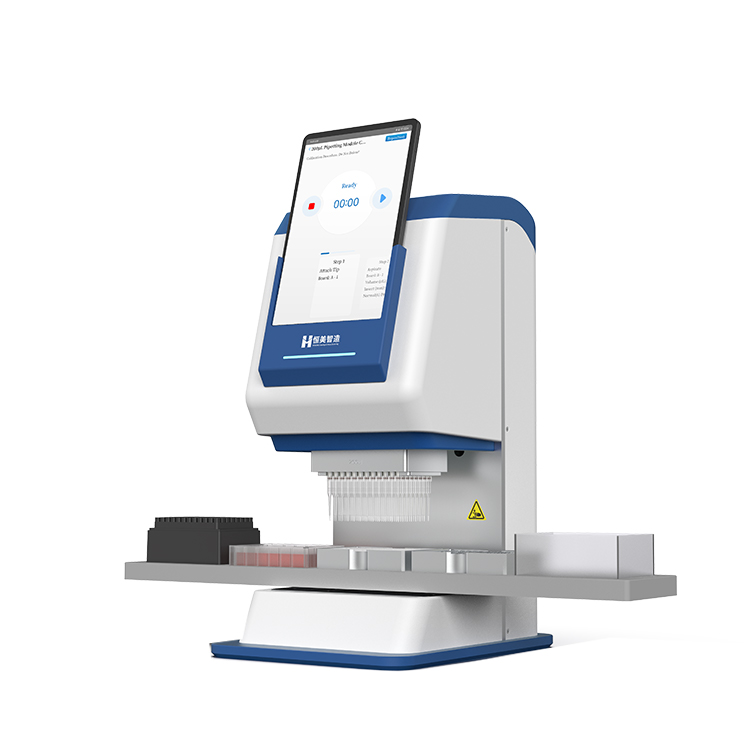
 +86 17853698681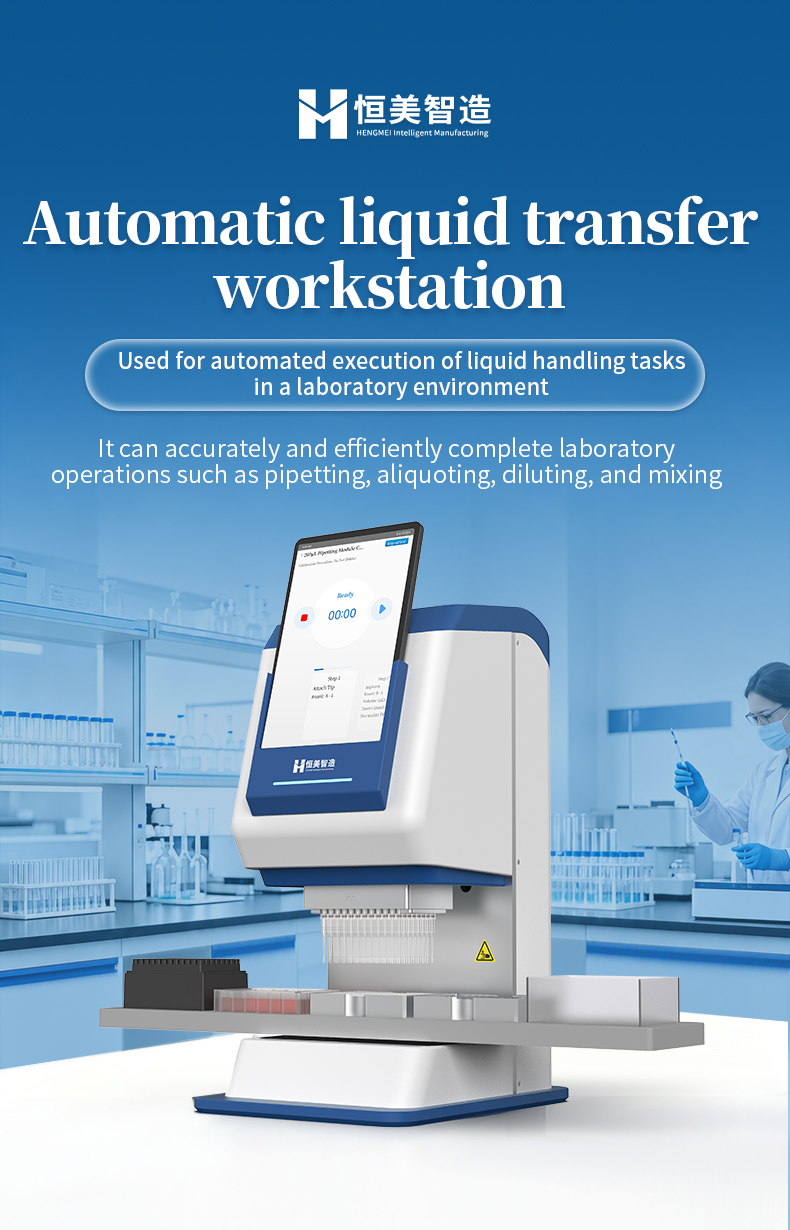
Product Introduction
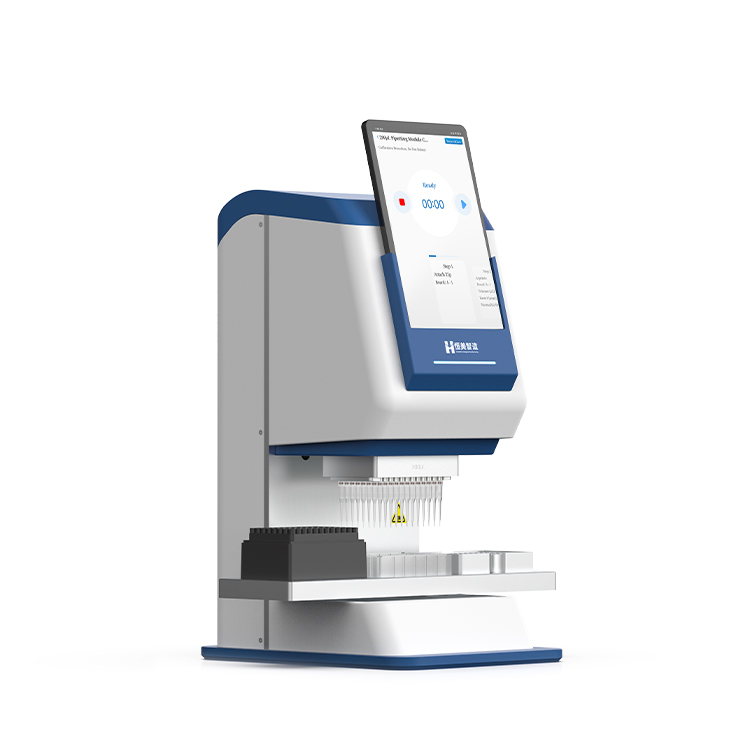
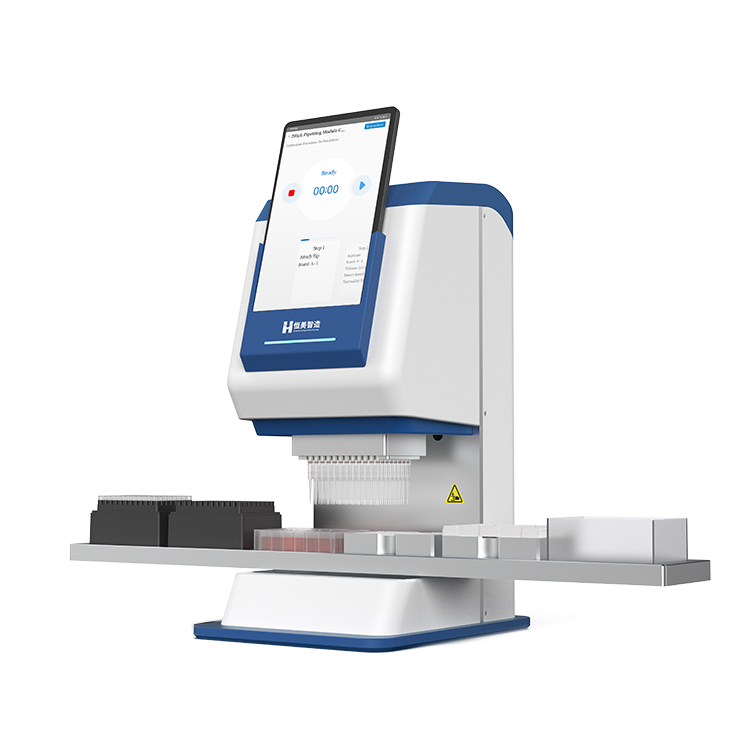
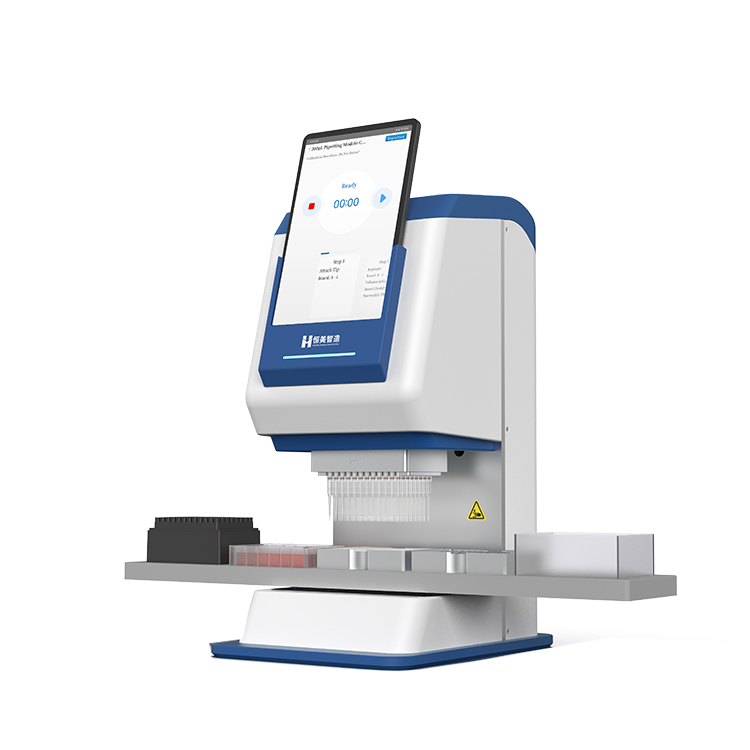
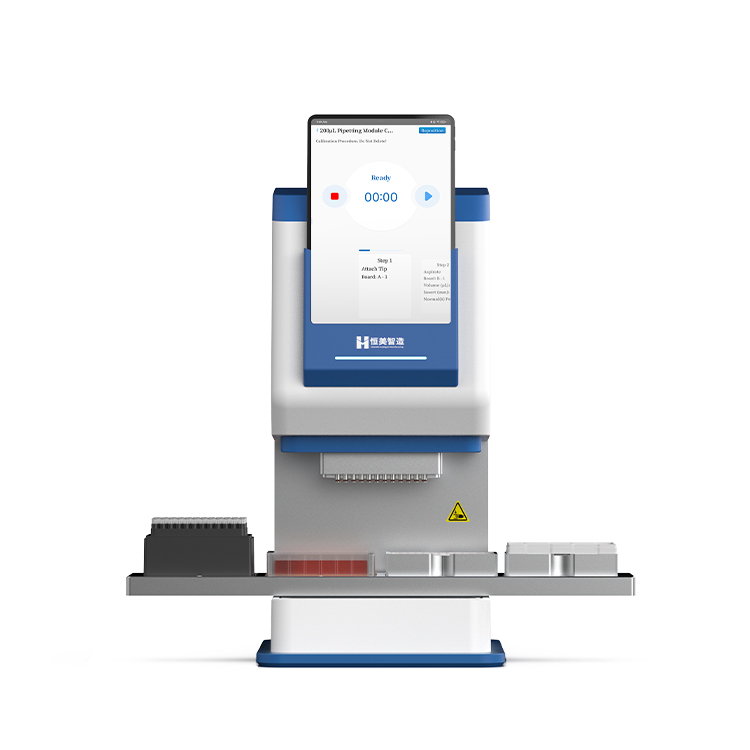
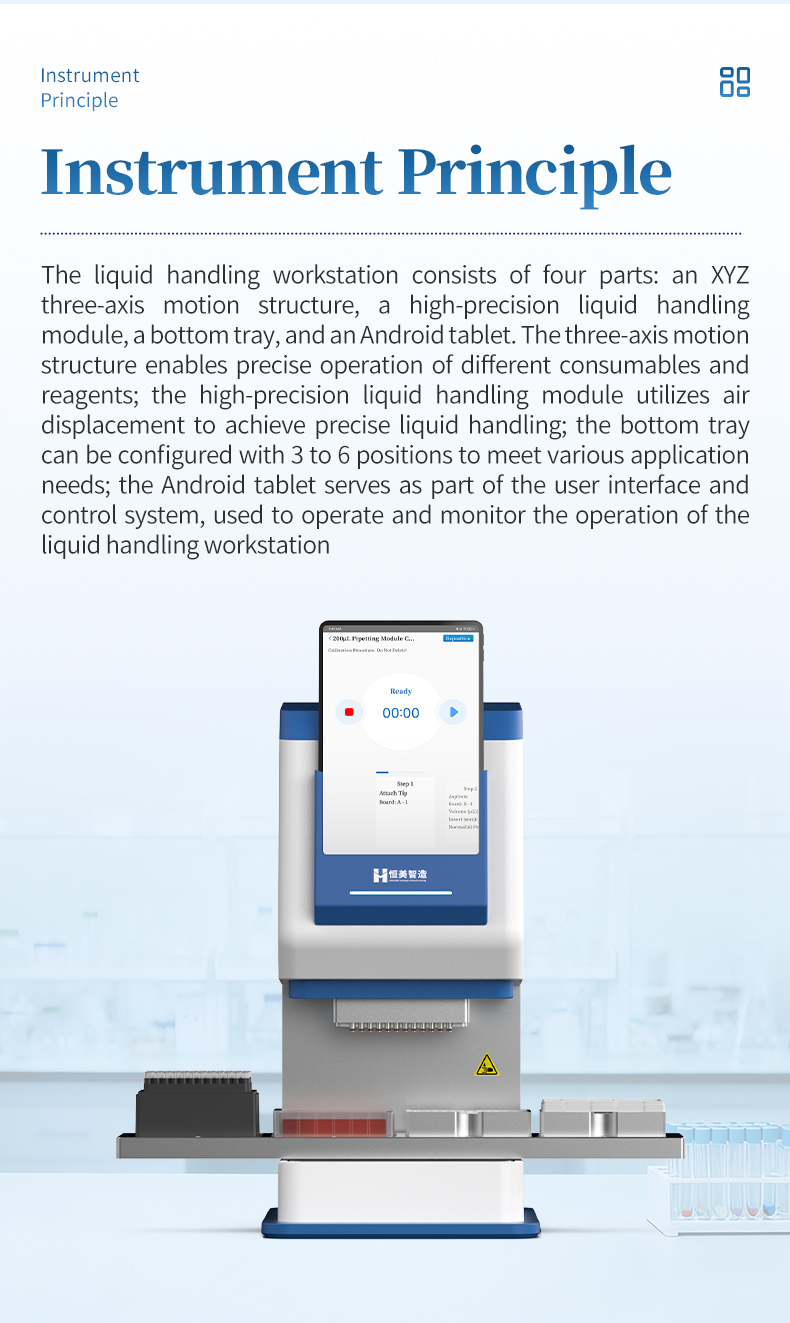
In pharmaceutical drug discovery screening, the transition from single-step compound addition to multi-step dose-response protocols creates a critical workflow bottleneck: 3-deck workstations require manual plate swapping between compound dispensing and dilution steps, interrupting runs and introducing variability. The YA200-4 from HM Instruments addresses this challenge by adding a fourth SBS deck position to the 5–200 μL platform, enabling compound source plates, diluent reservoirs, assay destination plates and tip boxes to remain loaded throughout the entire protocol.
This continuous-workflow capability transforms screening operations. Instead of pausing after each compound addition step to manually swap plates, the YA200-4 executes compound dispensing followed by gradient dilution in a single unattended run. For screening teams processing 50–100 plates per day, this eliminates 30–60 minutes of hands-on plate handling per shift and reduces inter-plate CV from 6–10% (manual swap) to below 3%.
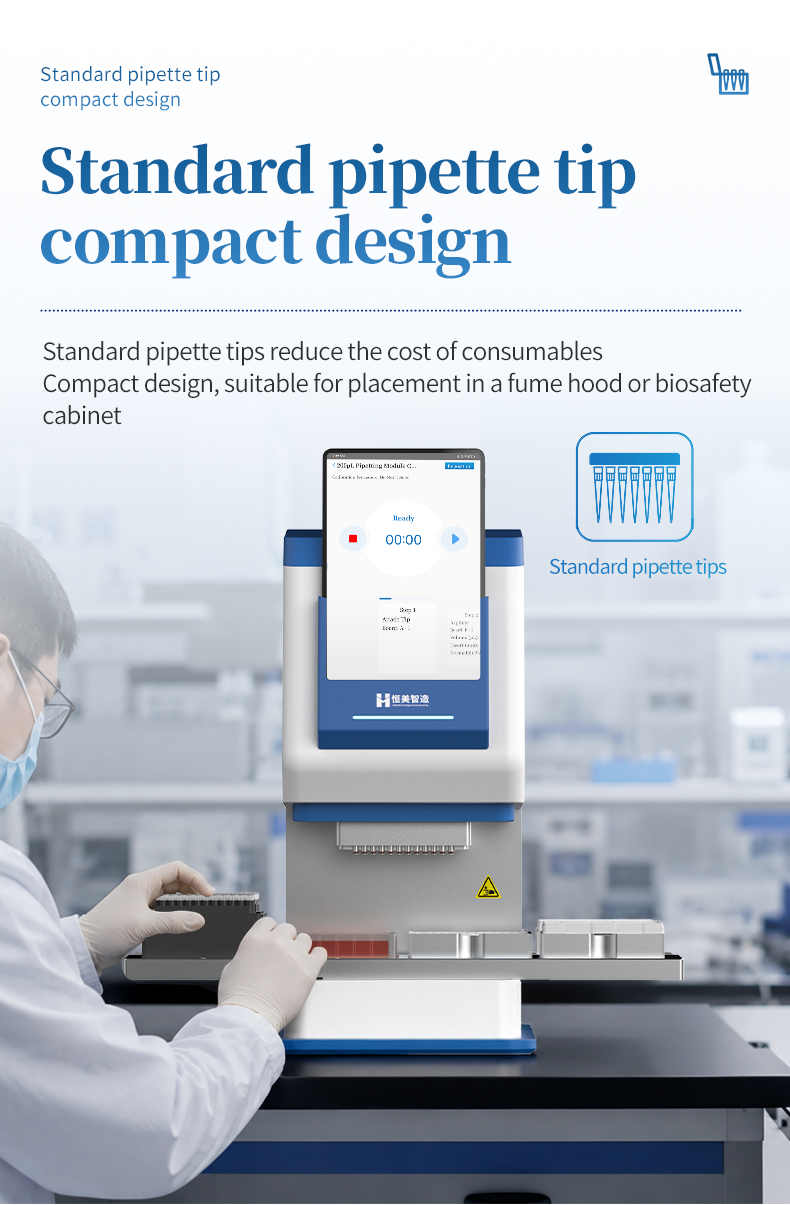
The air-displacement pipetting principle with ≤0.8% accuracy at 200 μL and ≤0.5% CV ensures that each well receives the precise volume specified by the dose-response protocol. Adjustable dispensing speed accommodates DMSO stock solutions at slower aspiration rates while maintaining rapid buffer delivery for wash steps. The compact 580 × 350 × 580 mm footprint fits inside Class II biosafety cabinets for aseptic cell-based assay dispensing, and the Android tablet with Bluetooth control allows monitoring from outside the containment zone.
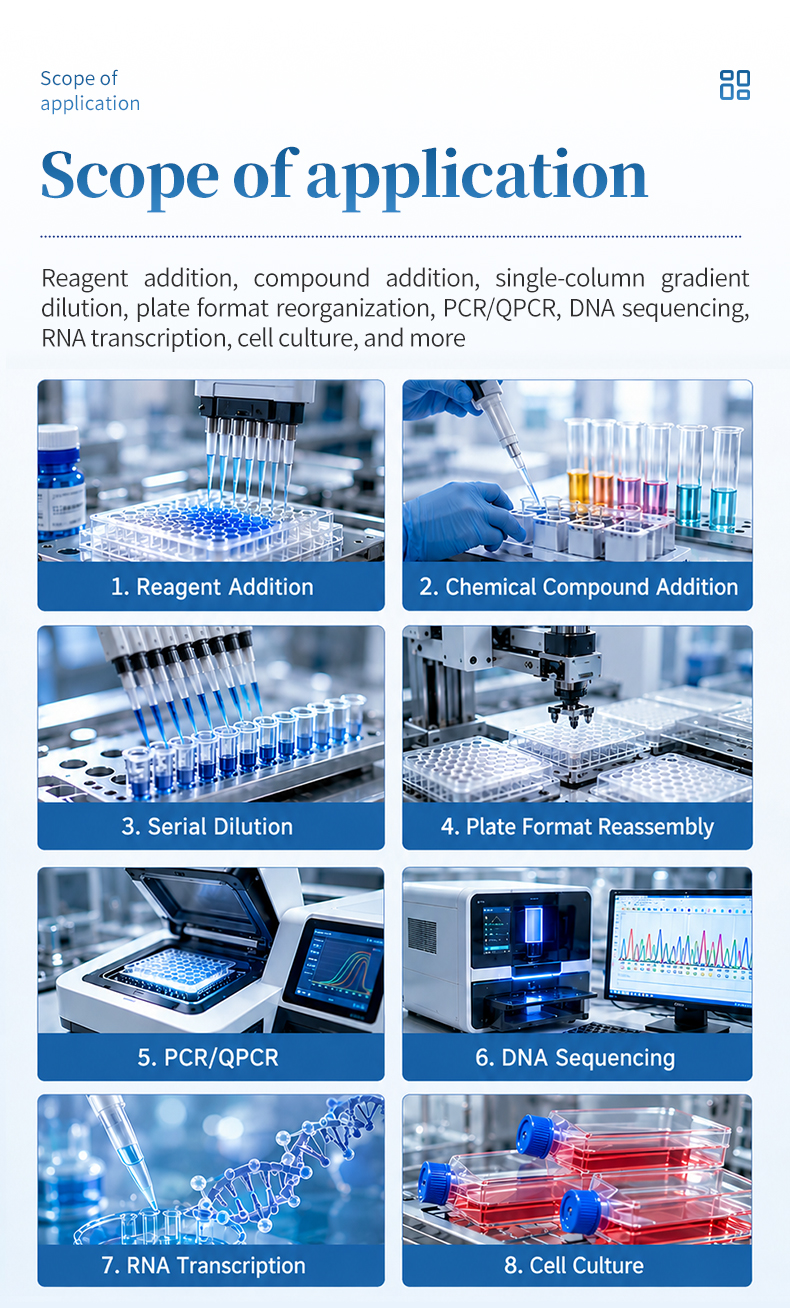
Applications
Multi-reagent compound screening with in-run serial dilution for dose-response curves
Cell-based assay setup requiring compound addition followed by media replacement
ELISA workflow automation: conjugate addition → substrate addition → stop solution
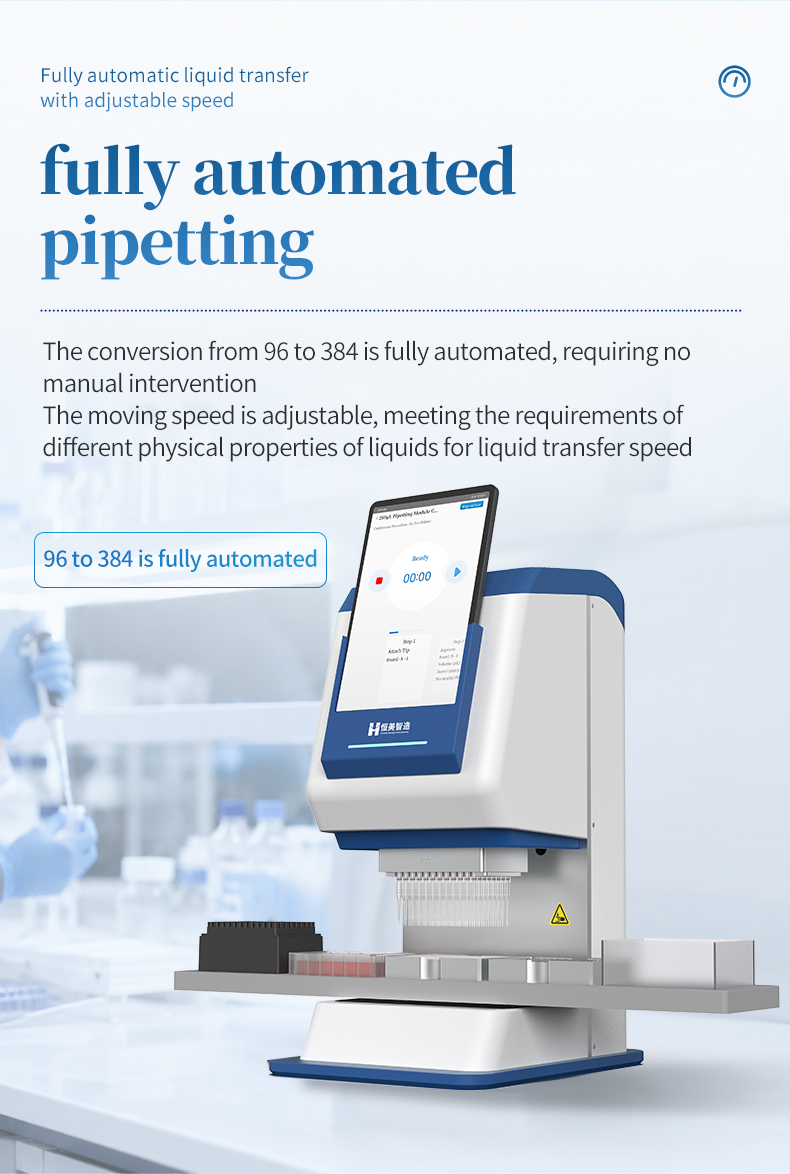
High-throughput 96-to-384 format miniaturization for primary screening campaigns
NGS library preparation: enzymatic reaction setup followed by bead-based cleanup
Key Features & Advantages
4 SBS deck positions enable compound + diluent + destination + tip simultaneous loading
Continuous dose-response protocols without plate-swapping interruptions
5–200 μL wide volume range covers dispensing, dilution and reagent addition steps
≤0.8% accuracy at 200 μL and ≤0.5% CV for quantitative assay reproducibility
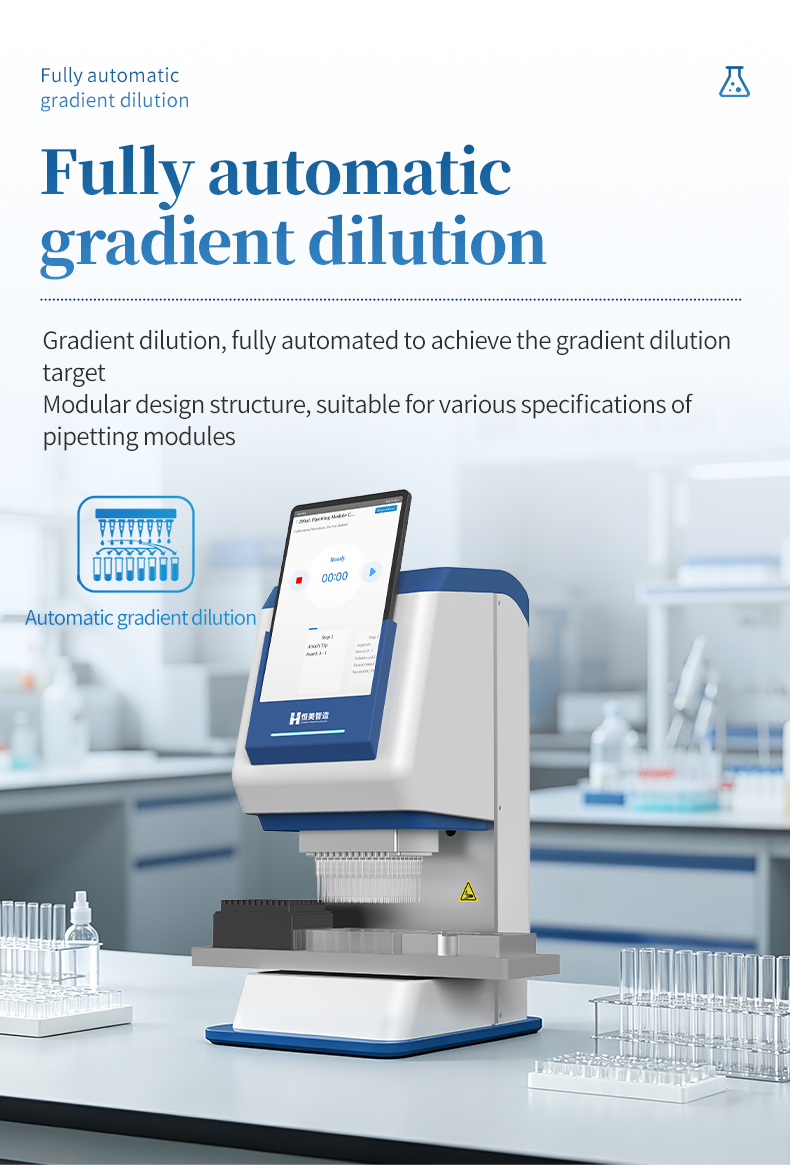
Built-in gradient dilution generates 8- or 12-point concentration series automatically
Automated 96-to-384 reformatting reduces assay volume and consumable cost by 75%
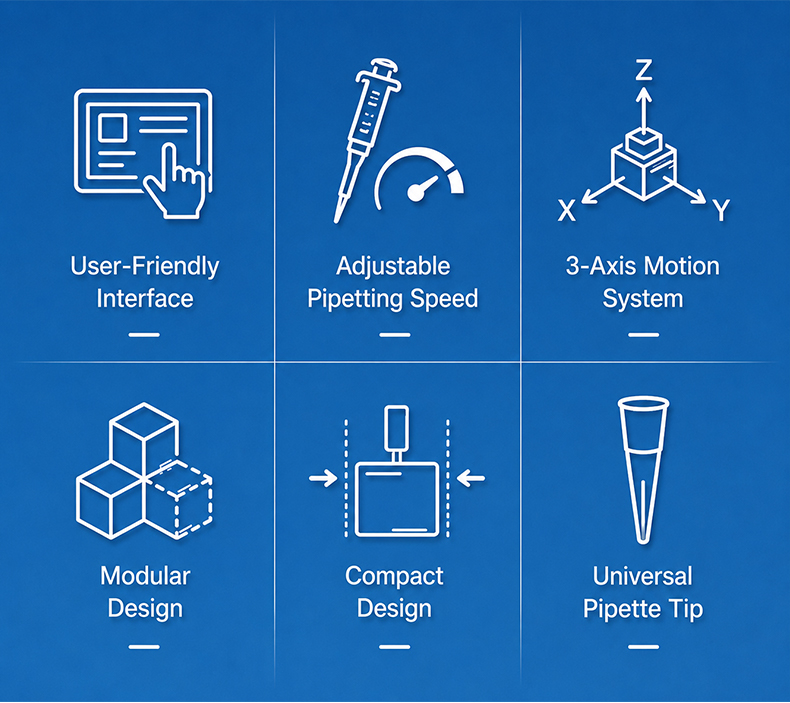
Adjustable aspiration speed for DMSO stock solutions and viscous reagents
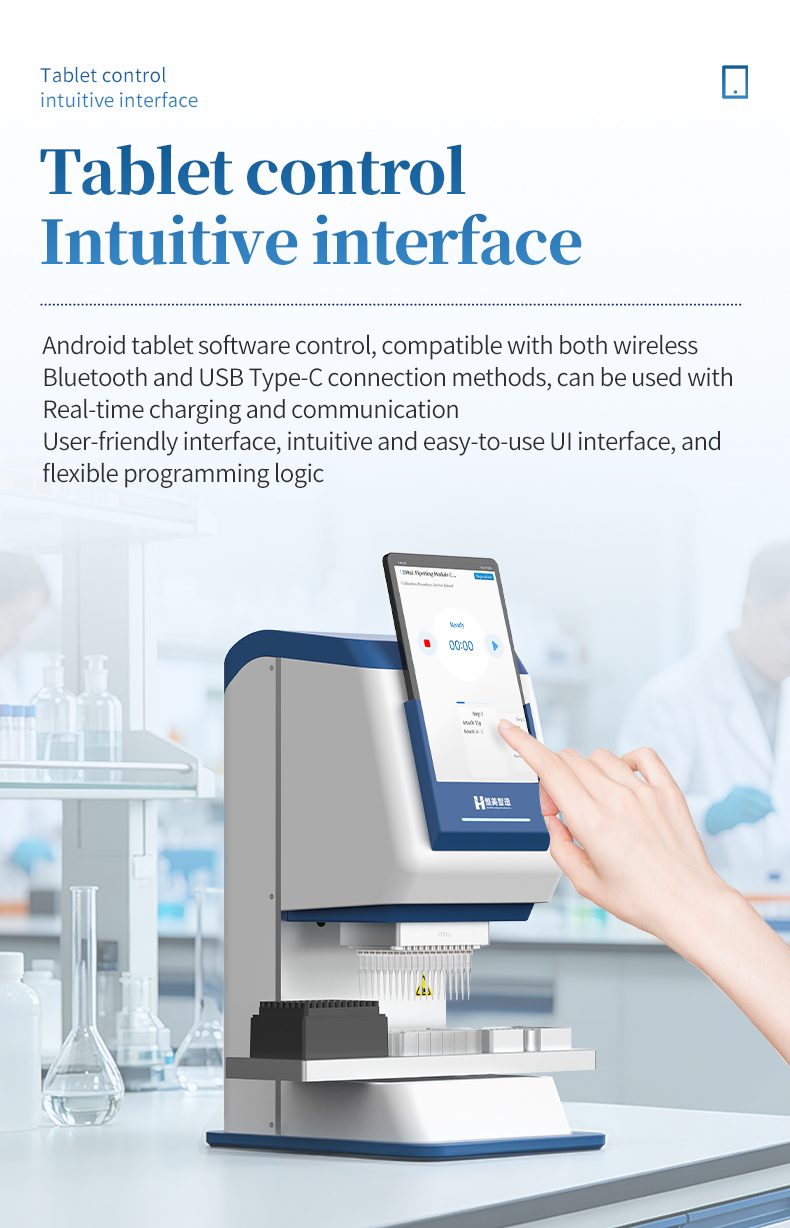
Android tablet control with visual protocol editor reduces training time to under 2 hours
Bluetooth wireless operation enables BSC-internal instrument with external tablet control
USB Type-C with PD protocol supports simultaneous charging and data communication
580 × 350 × 580 mm compact footprint for BSC or fume hood installation
Universal tip compatibility eliminates proprietary consumable lock-in
Technical Specifications
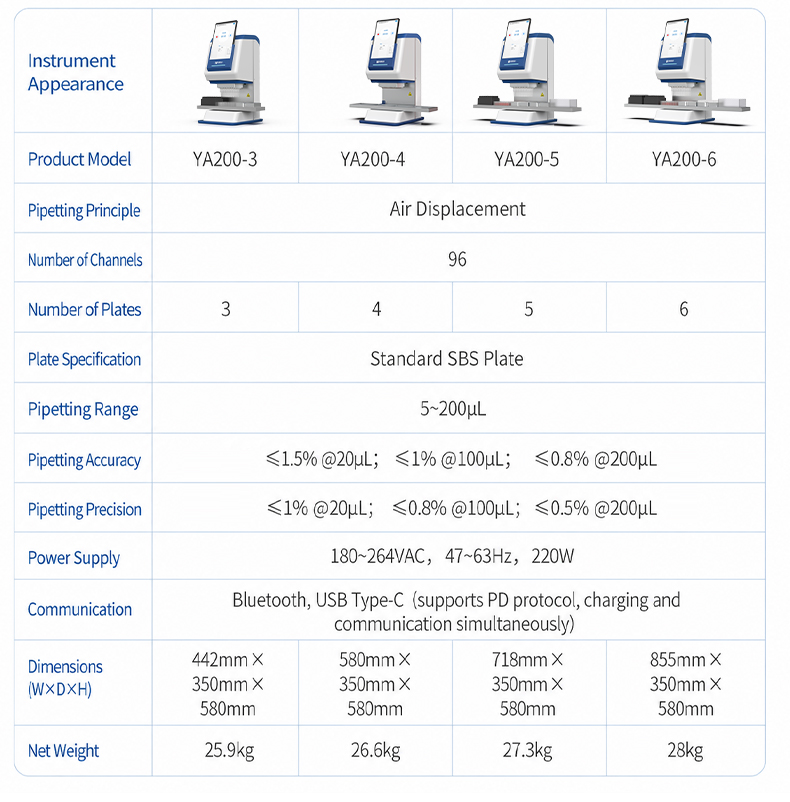
| Parameter | Value |
|---|---|
| Pipetting principle | Air displacement |
| Number of channels | 96 (fixed) |
| Volume range | 5–200 μL |
| Accuracy | ≤1.5% at 20 μL; ≤1% at 100 μL; ≤0.8% at 200 μL |
| Precision (CV) | ≤1% at 20 μL; ≤0.8% at 100 μL; ≤0.5% at 200 μL |
| Deck positions | 4 |
| Plate format | Standard SBS |
| Control interface | Android tablet |
| Connectivity | Bluetooth, USB Type-C (PD) |
| Power supply | 180–264 VAC, 47–63 Hz, 220W |
| Dimensions | 580 × 350 × 580 mm |
| Weight | 26.6 kg |
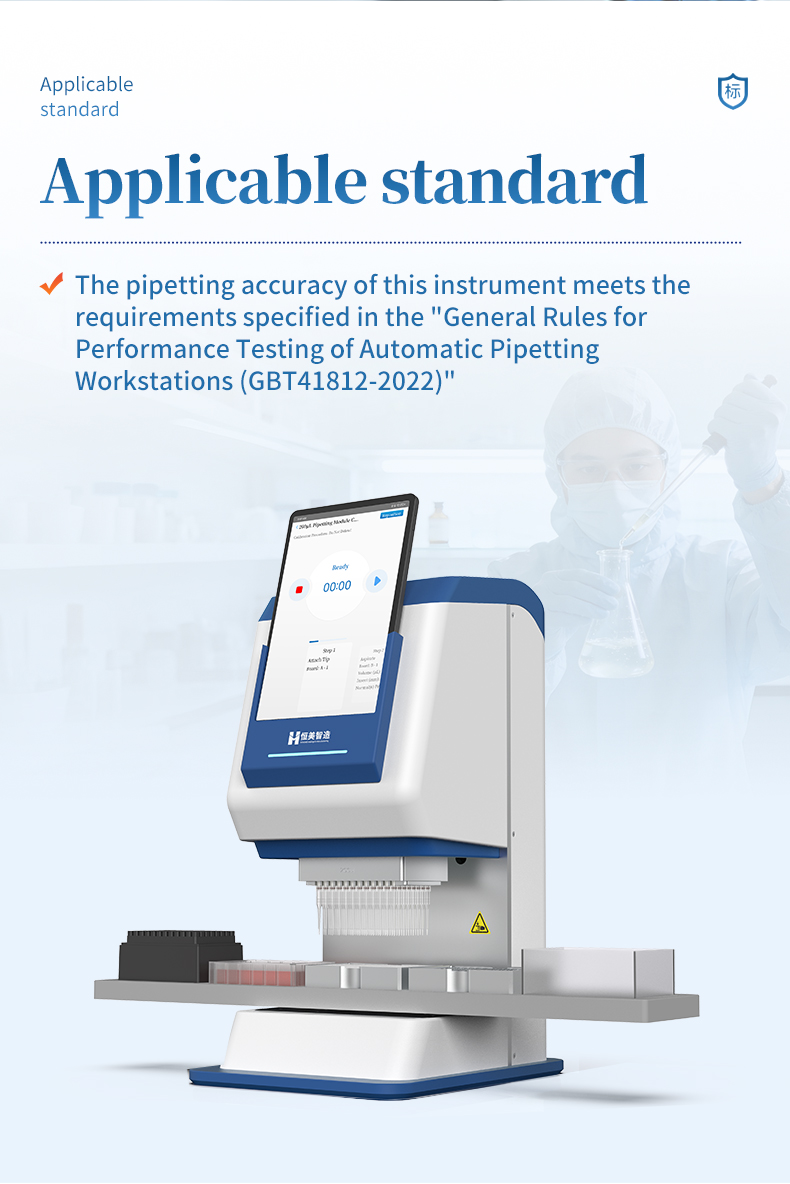
| Compliance standard | GBT 41812-2022 |
FAQ
Q: How does the 4-deck configuration improve screening throughput compared to 3 decks?
A: With 4 decks, compound source plates, diluent reservoirs, destination assay plates and tip boxes can all be loaded simultaneously. This eliminates the need to pause runs for plate swapping between compound addition and dilution steps. In practice, screening teams report 30–50% throughput increases because the instrument runs continuously without operator intervention for plate handling.
Q: Can the YA200-4 handle DMSO stock solutions accurately?
A: Yes. The adjustable aspiration speed allows slower rates for DMSO, which has approximately 2× the viscosity of water. At the slower aspiration setting, the 96-channel head fills each tip completely before dispensing, maintaining ≤1% accuracy even with 100% DMSO stock compounds.
Q: What dose-response formats does the gradient dilution function support?
A: The built-in gradient dilution function supports serial dilution series with 3 to 12 concentration points. The Android tablet protocol editor lets you define dilution factor (2×, 3×, 5×, 10× or custom), number of points, and starting concentration. The instrument automatically calculates and executes all pipetting steps.
Q: Is the workstation suitable for cell-based assay dispensing?
A: Yes. The compact footprint fits inside Class II biosafety cabinets, maintaining aseptic conditions for cell-based assays. The adjustable dispensing speed includes a gentle mode that minimizes shear stress on delicate cell monolayers. Bluetooth connectivity allows the control tablet to remain outside the BSC while the instrument operates inside.
Q: What is the expected ROI for a pharmaceutical screening lab?
A: For a lab processing 50 plates/day, the YA200-4 replaces approximately 2 hours of manual pipetting labor per shift. At a fully-loaded labor cost of $40/hour, the workstation pays for itself within 4–5 months through labor savings alone, before accounting for improved data quality and reduced reagent waste.
Address of this article:https://www.labinstruments.net/automated-pipetting-workstation/wide-range-pipetting-drug-discovery-screening.html