

 Current
location:
Current
location: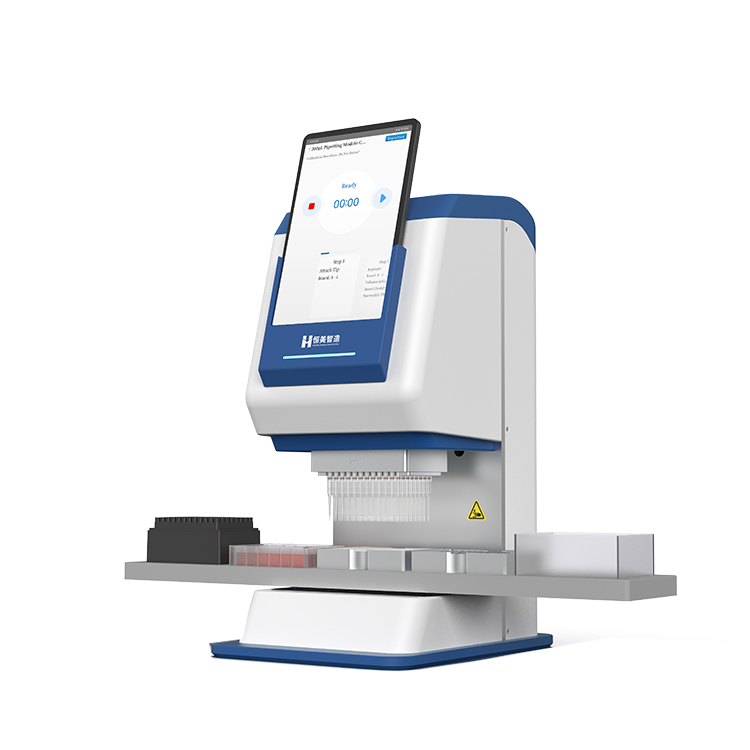
 +86 17853698681
Product Introduction
NGS library preparation is a multi-step process where each enzymatic reaction — fragmentation, end-repair, A-tailing, adapter ligation — requires precise addition of enzymes, buffers, and nucleotides in volumes ranging from 5 to 50 μL. Manual preparation introduces two compounding error sources: volume inaccuracy at each step that accumulates across the workflow, and operator-dependent timing variation that affects enzymatic reaction consistency across the plate.
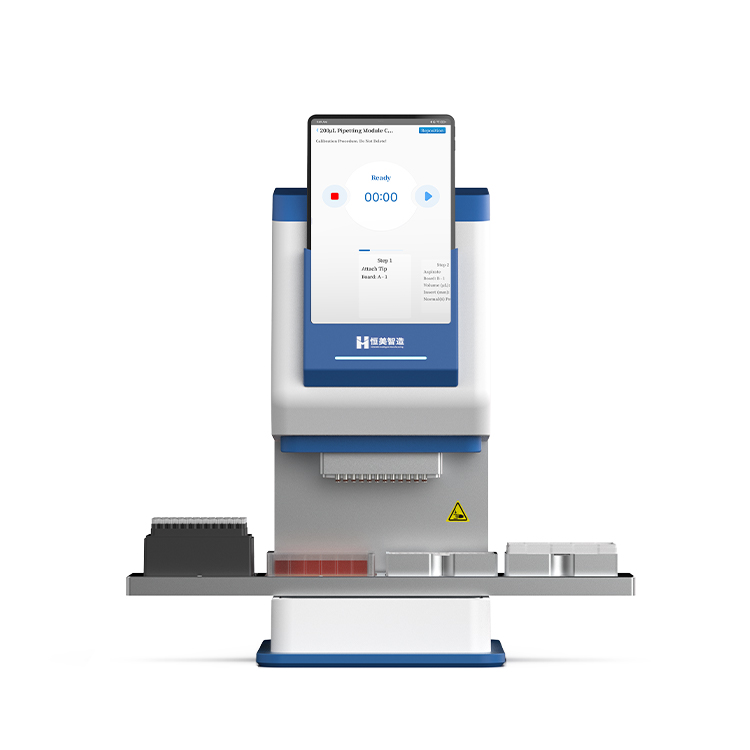
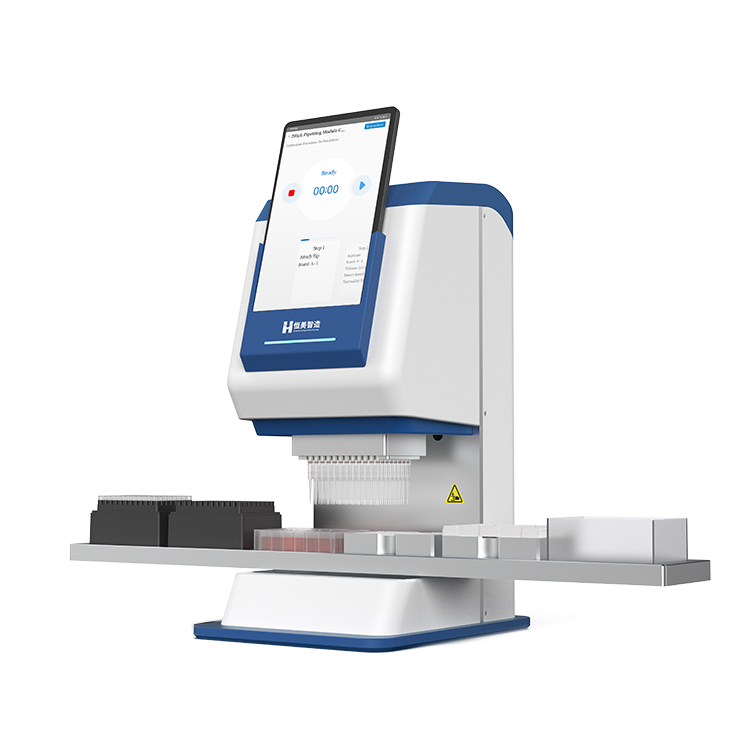
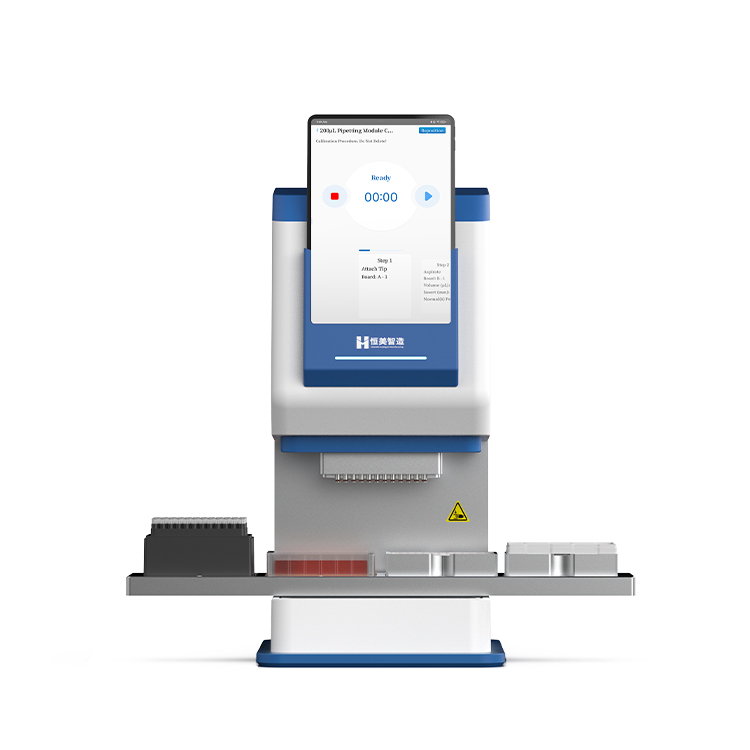
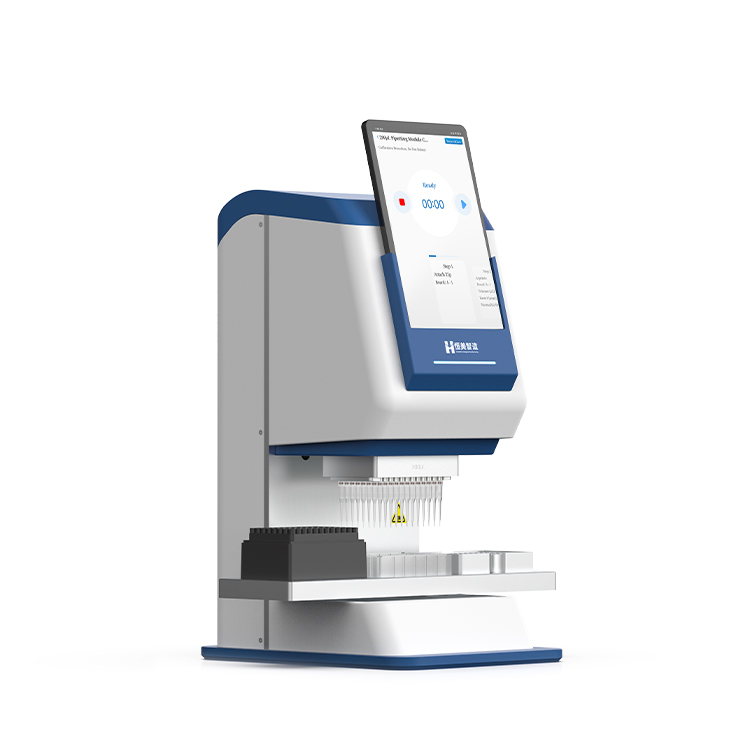
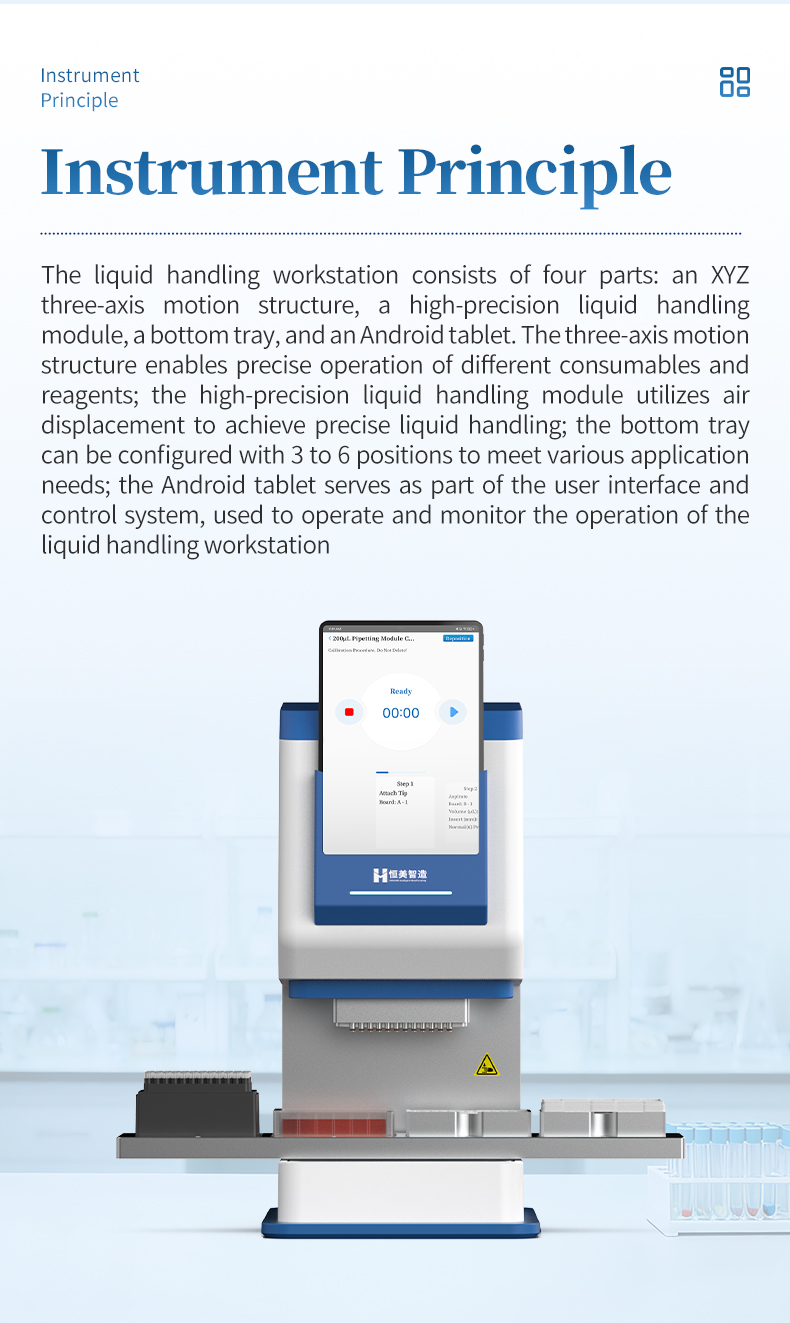
The YA50-4's four deck positions solve the logistics of multi-step library prep by accommodating the source plate, up to two reagent reservoirs (for different enzymes and buffers), and a tip box simultaneously. This eliminates the need for manual reagent swapping between steps — each reagent is pre-loaded on the deck, and the protocol automatically moves between reservoirs. The result is a continuous, unattended workflow that processes a 96-well plate through all library prep steps with consistent timing and ≤1.5% volume accuracy.
For genomics laboratories producing hundreds of libraries per week, the YA50-4 delivers the reproducibility that manual preparation cannot achieve. Batch-to-batch library quality metrics (insert size distribution, adapter dimer rates, coverage uniformity) become more consistent because each library is processed with identical timing and volume precision — eliminating the operator variability that accounts for up to 30% of library quality variation in manual workflows.
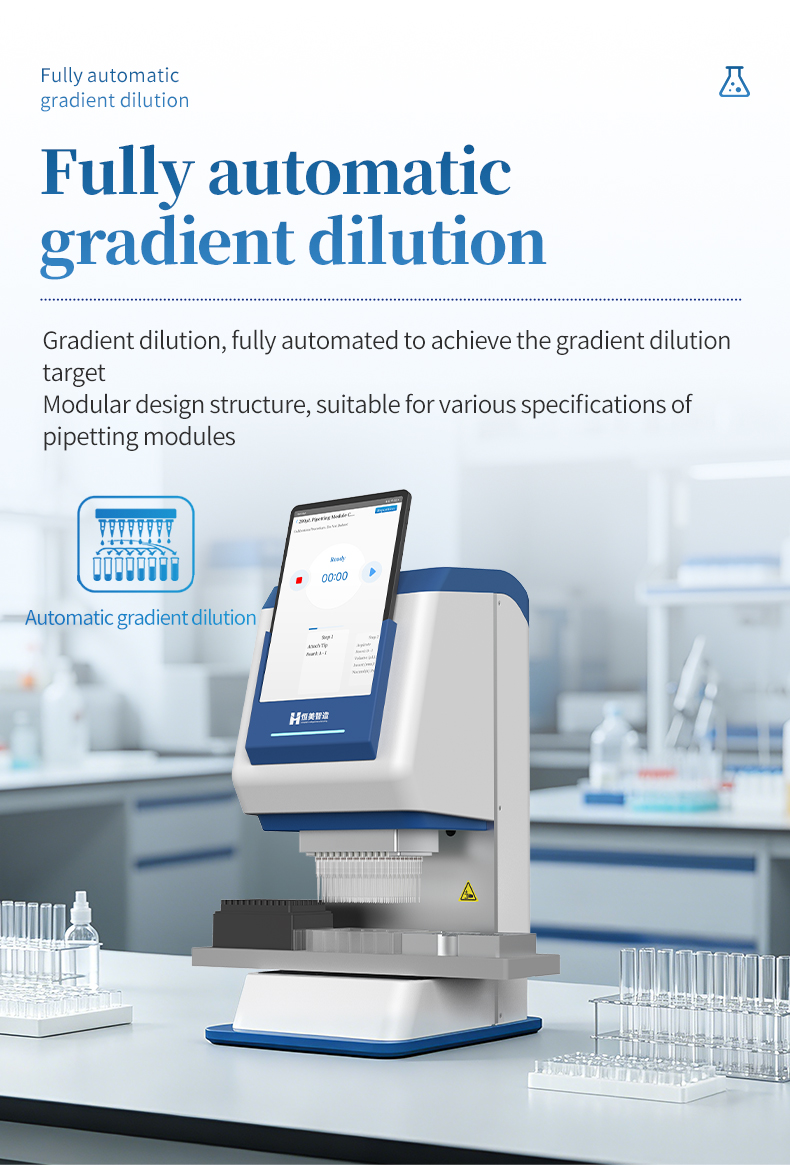
The built-in gradient dilution function enables automated creation of concentration standards and dilution series for quality control steps, while the column-by-column transfer capability supports selective plate reformatting when consolidating libraries from multiple source plates.
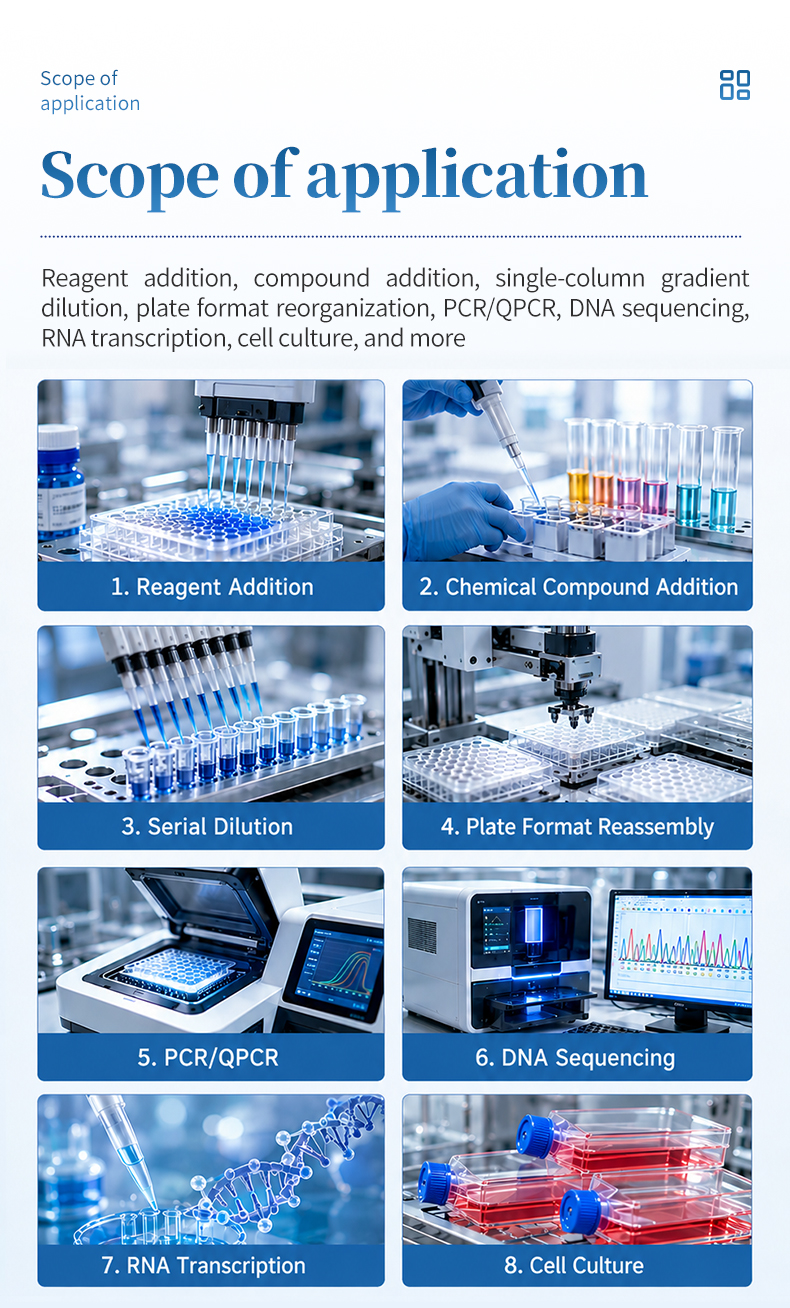
Applications
NGS library construction: Sequential addition of fragmentation enzyme, end-repair mix, A-tailing enzyme, and ligation master mix from separate reservoirs
RNA-seq library prep: In vitro transcription with NTP mix, transcription buffer, and RNA polymerase loaded on separate deck positions
PCR with controls: Separate positive and negative control reservoirs enable diagnostic PCR setup without cross-contamination risk
Sample normalization: Automated concentration adjustment across 96 samples using selective volume dispensing
Plate reformatting: Column-by-column or selective well transfer between 96-well plates for library pooling
Key Features and Advantages
4 deck positions load source plate + 2 reagent reservoirs + tip box for unattended multi-step protocols
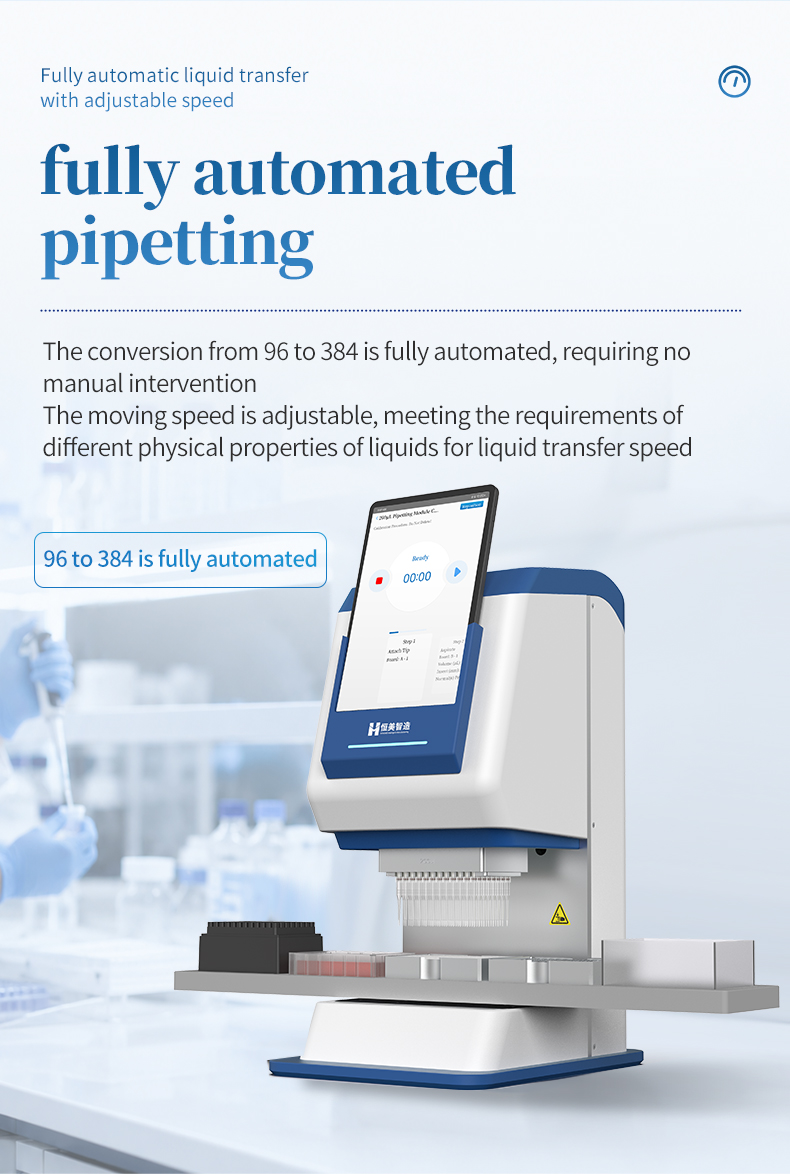
96-channel simultaneous dispensing ensures identical reaction start times across all wells
2–50 μL range covers all standard NGS library prep kit volumes with ≤1.5% accuracy at 20 μL
Separate tip racks per reagent type eliminate cross-contamination between enzymatic steps
Built-in gradient dilution automates concentration series for QC and standard curves
Column-by-column selective transfer supports library pooling and plate reformatting
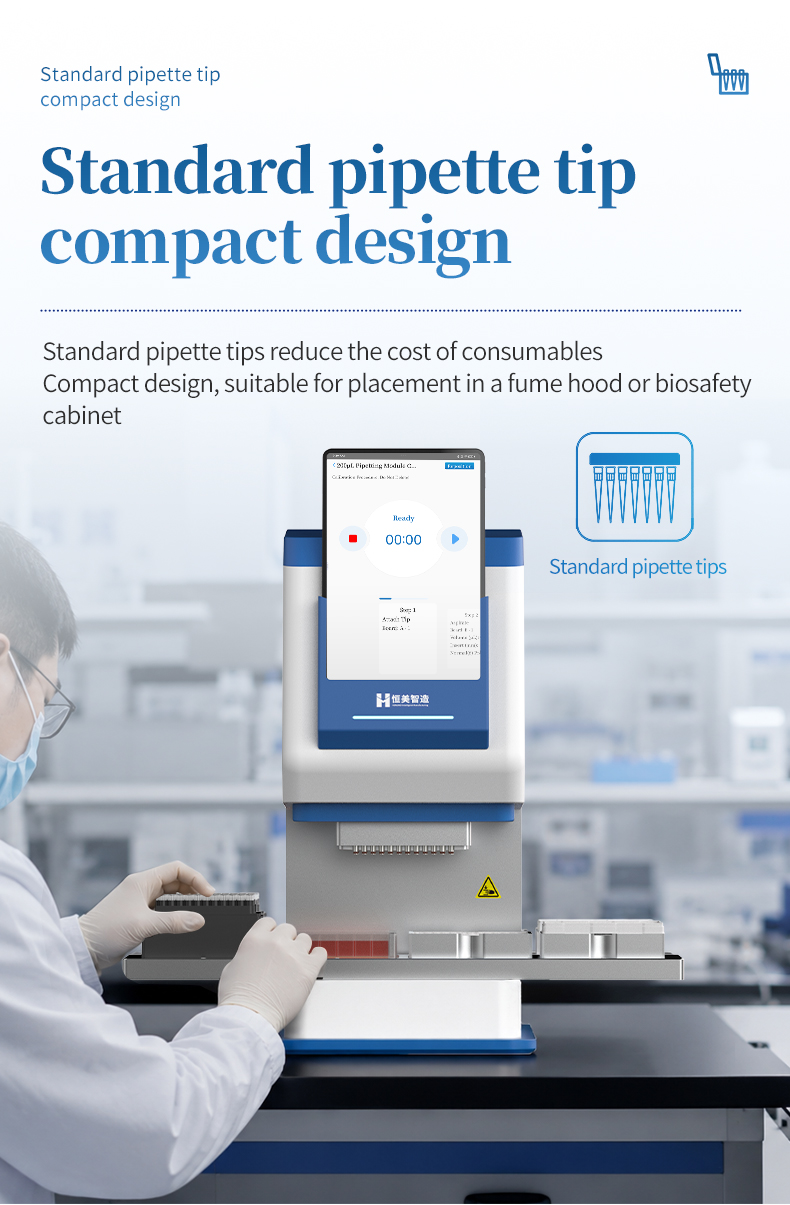
580 × 350 × 580 mm BSC-compatible footprint for biohazardous nucleic acid processing
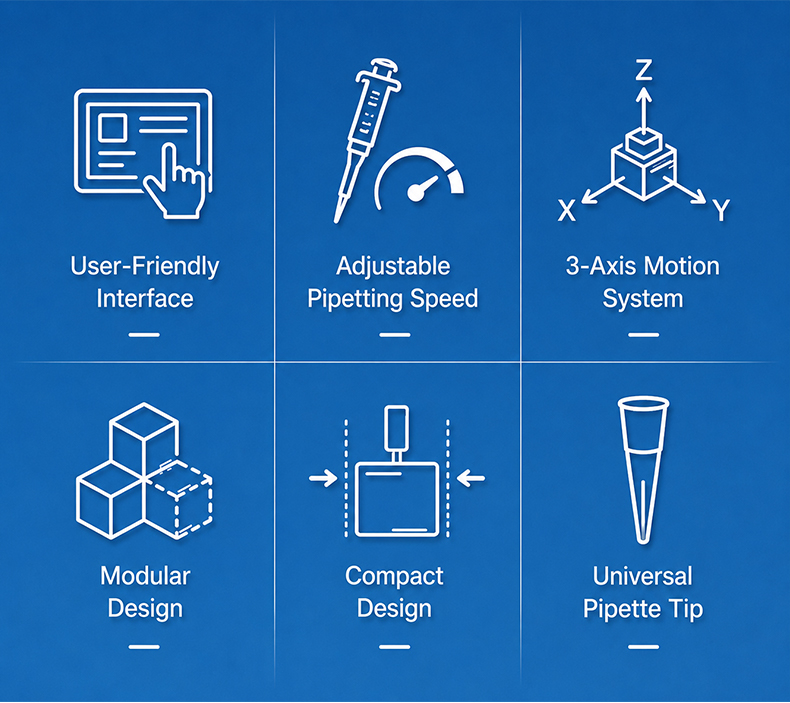
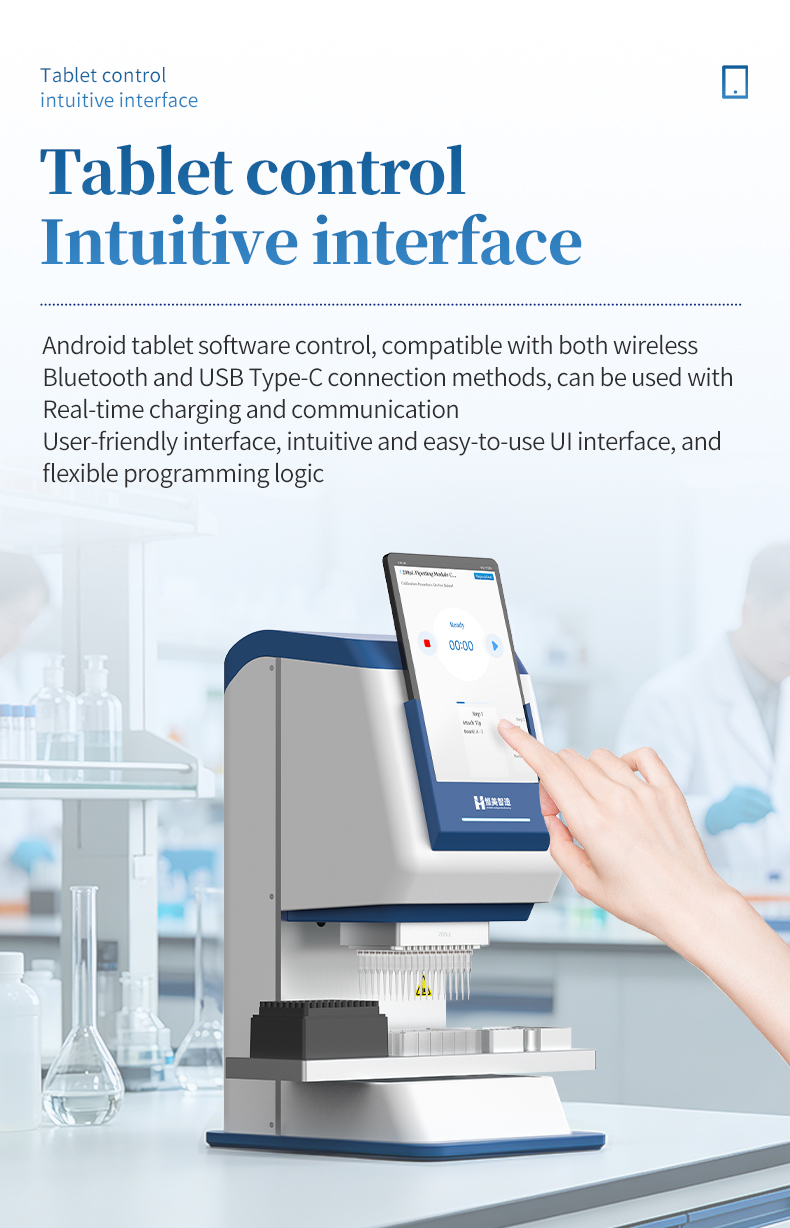
Android tablet control with protocol export/import for multi-site standardization
Adjustable speed for gentle enzyme handling and rapid buffer dispensing within the same protocol
Pre-built NGS library prep templates reduce protocol development time to under 30 minutes
Technical Specifications
| Parameter | Value |
|---|---|
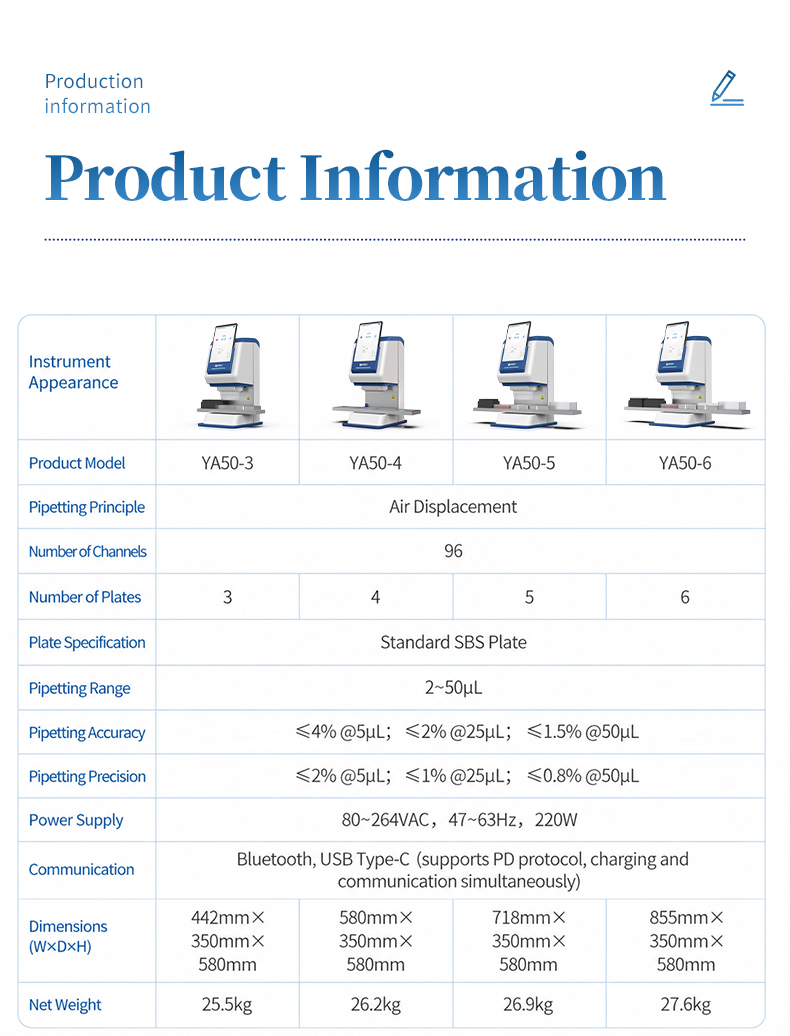
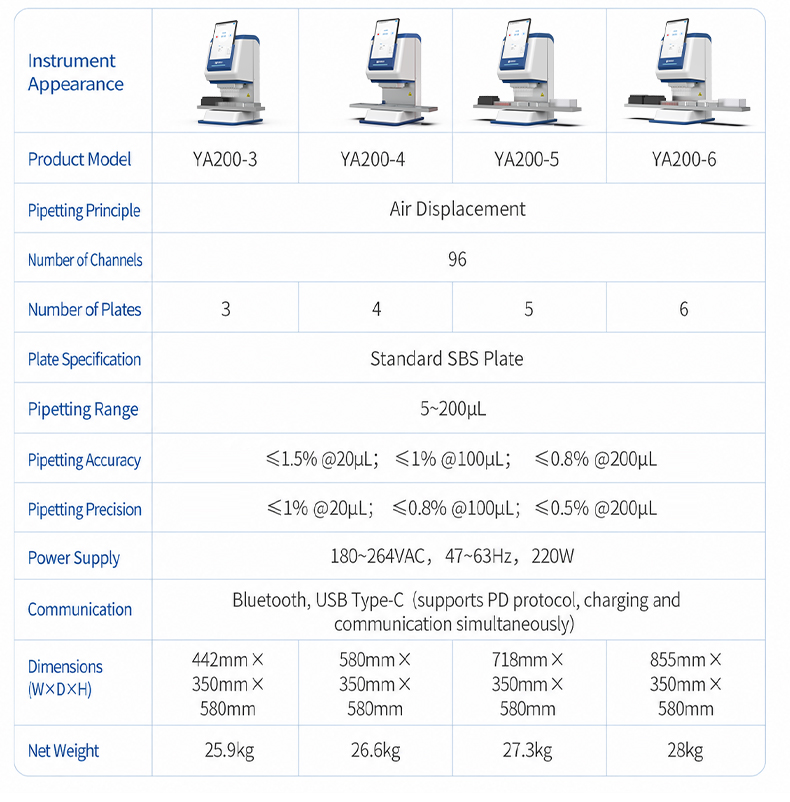
| Pipetting principle | Air displacement |
| Number of channels | 96 (fixed) |
| Volume range | 2–50 μL |
| Accuracy at 20 μL | ≤1.5% |
| Precision (CV) at 20 μL | ≤1% |
| Deck positions | 4 |
| Plate format | Standard SBS |
| Control interface | Android tablet |
| Connectivity | Bluetooth, USB Type-C (PD) |
| Power supply | 180–264 VAC, 47–63 Hz, 220W |
| Dimensions | 580 × 350 × 580 mm |
| Weight | 26.6 kg |
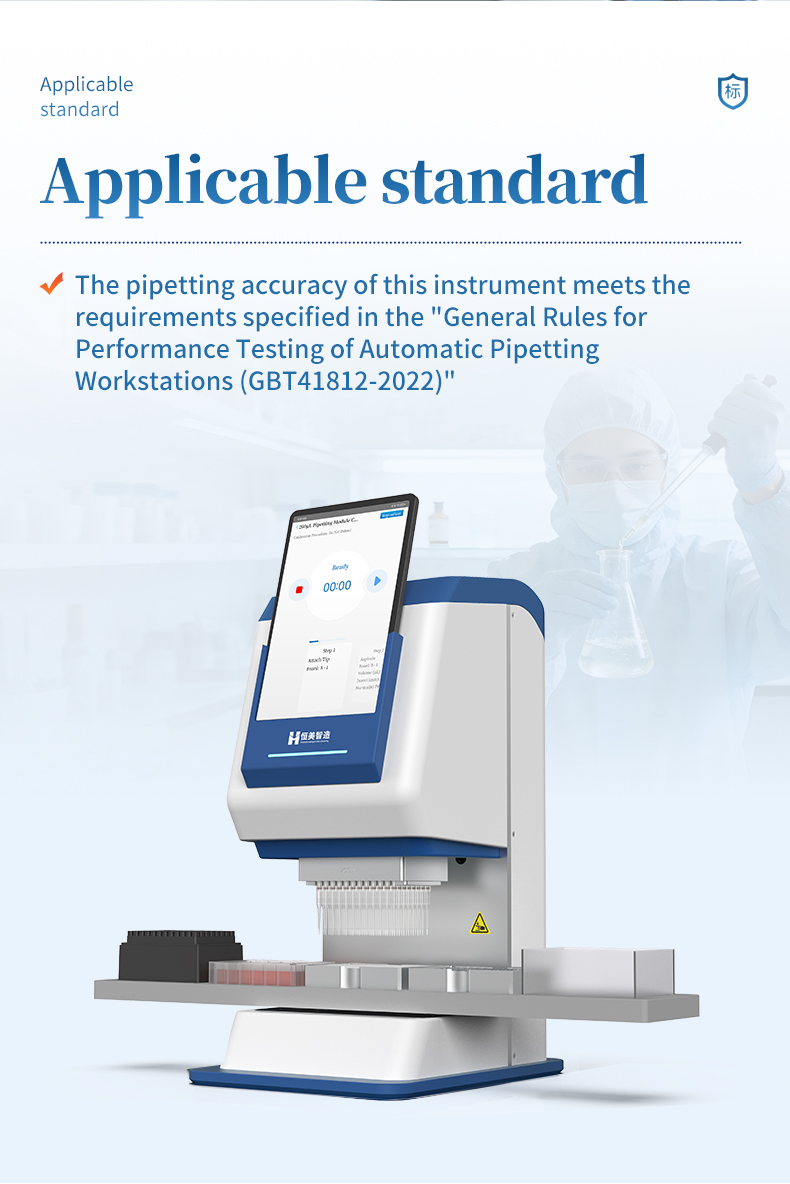
| Compliance standard | GBT 41812-2022 |
FAQ
How does the 4-deck configuration improve NGS library prep compared to 3 decks?
With 3 decks, multi-step protocols requiring more than one reagent type require either manual reagent swapping between steps (introducing timing inconsistency and contamination risk) or using a single reservoir for mixed reagents (which is incompatible with sequential enzymatic reactions). The 4th deck position allows pre-loading two separate reagent reservoirs, enabling continuous unattended operation through multi-step protocols.
Can the YA50-4 handle different enzymatic reaction volumes in the same protocol?
Yes. Each protocol step can be programmed with a different dispensing volume. For example, a fragmentation step may dispense 10 μL enzyme mix, while the ligation step dispenses 25 μL ligation master mix. The system automatically adjusts volumes per step.
How does gradient dilution work on the YA50-4?
The gradient dilution function creates a concentration series across plate columns. The system aspirates from a source well, performs serial dilution by transferring a defined volume to the next column with diluent, mixes by repeated aspiration and dispensing, then repeats through the specified number of dilution points. This automates the creation of standard curves and QC dilution series.
What quality improvements can we expect in NGS library metrics?
Laboratories transitioning from manual to automated library prep typically report: 30–50% reduction in adapter dimer rates, 20–40% improvement in insert size distribution consistency, and 15–25% improvement in coverage uniformity (measured by fold-80 base penalty). These improvements result from consistent timing and volume precision across all 96 wells.
Can protocols be shared between multiple YA50-4 units?
Yes. Protocols are exported via the Android tablet's file sharing function and imported on another unit. This enables standardized library prep across multi-site operations, ensuring identical processing parameters regardless of operator or location.
Address of this article:https://www.labinstruments.net/automated-pipetting-workstation/ngs-library-prep-96-channel-pipetting-station.html