


 Current
location:
Current
location: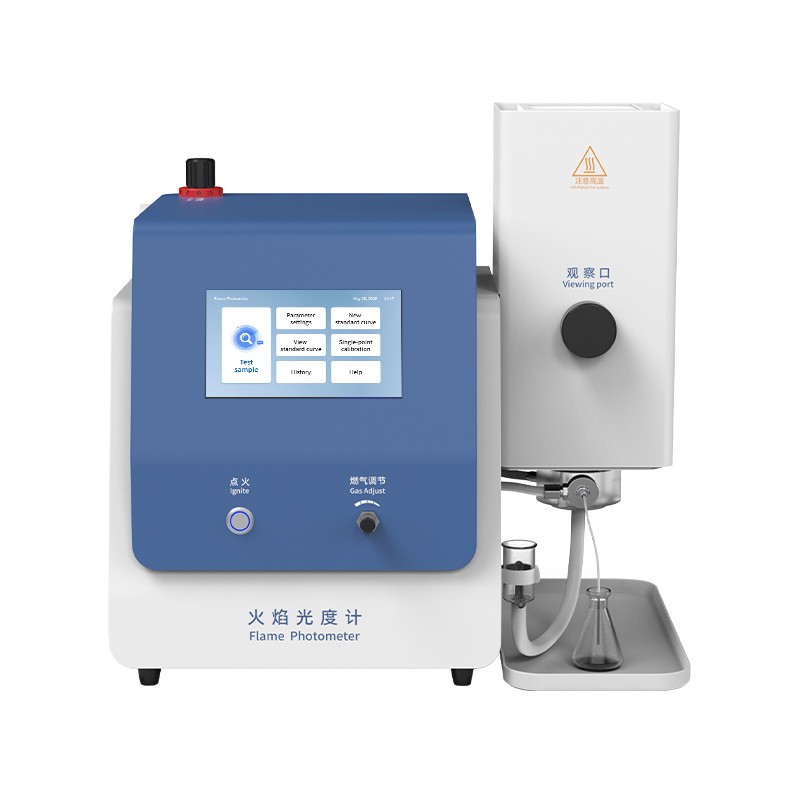
 +86 17853698681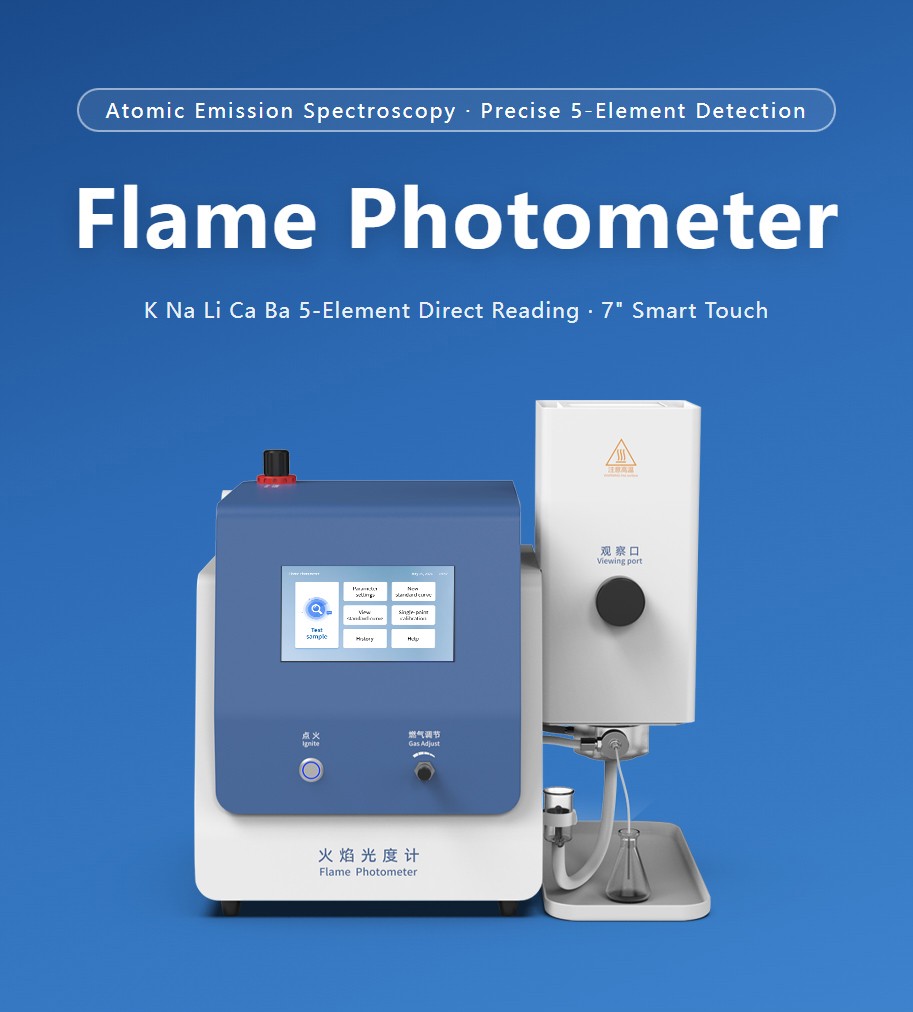

Product Introduction
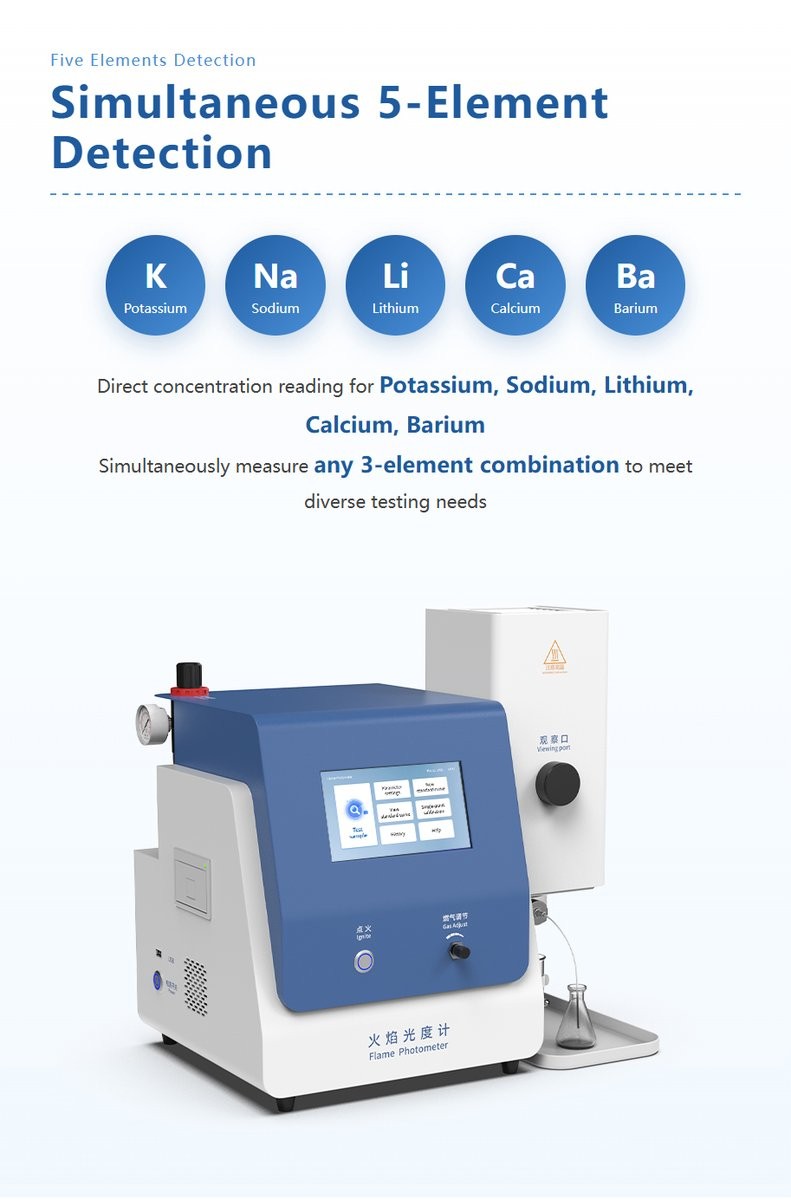
The HM-FP3B Flame Photometer is a specialized three-channel analytical instrument designed for rapid simultaneous quantification of lithium, potassium, and sodium in geological samples and battery materials. As the demand for lithium resource exploration and new energy material characterization grows, laboratories require efficient analytical tools that can process large sample volumes without the operational complexity and cost of atomic absorption spectroscopy (AAS) or inductively coupled plasma (ICP-OES) systems.
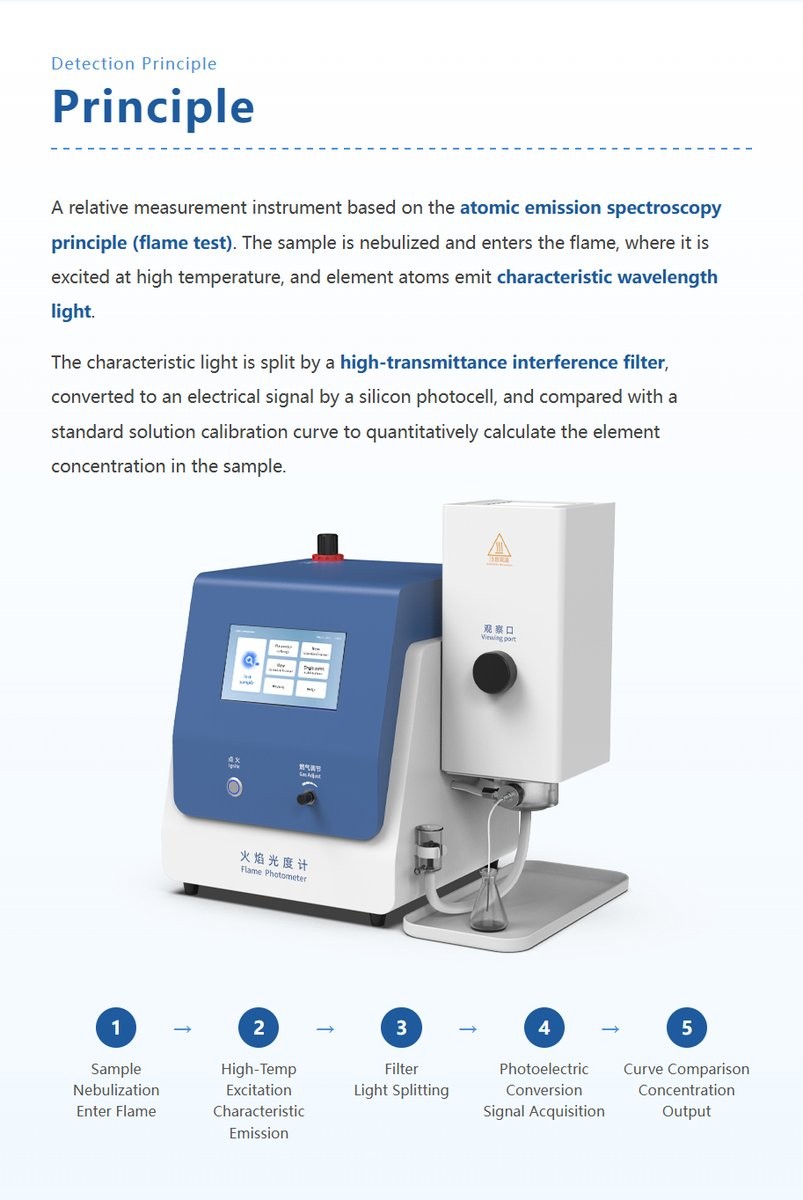
The HM-FP3B addresses this need by employing atomic emission spectroscopy with interference filter spectral separation and silicon photocell detection. Sample solutions are aspirated into a flame, where alkali metal atoms are excited and emit characteristic wavelengths. The interference filters isolate sodium (589nm), potassium (766nm), and lithium (670nm) emission lines, while the silicon photocells convert the emitted light into electrical signals proportional to element concentration. This principle enables direct concentration reading without complex calculations.
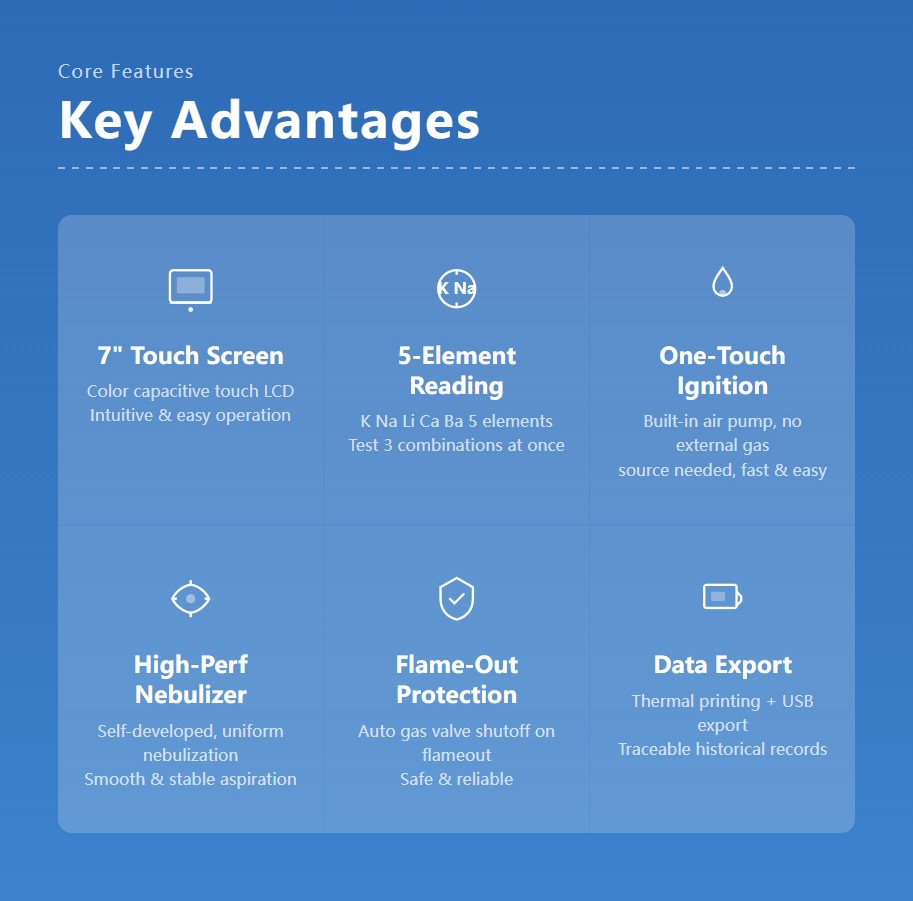
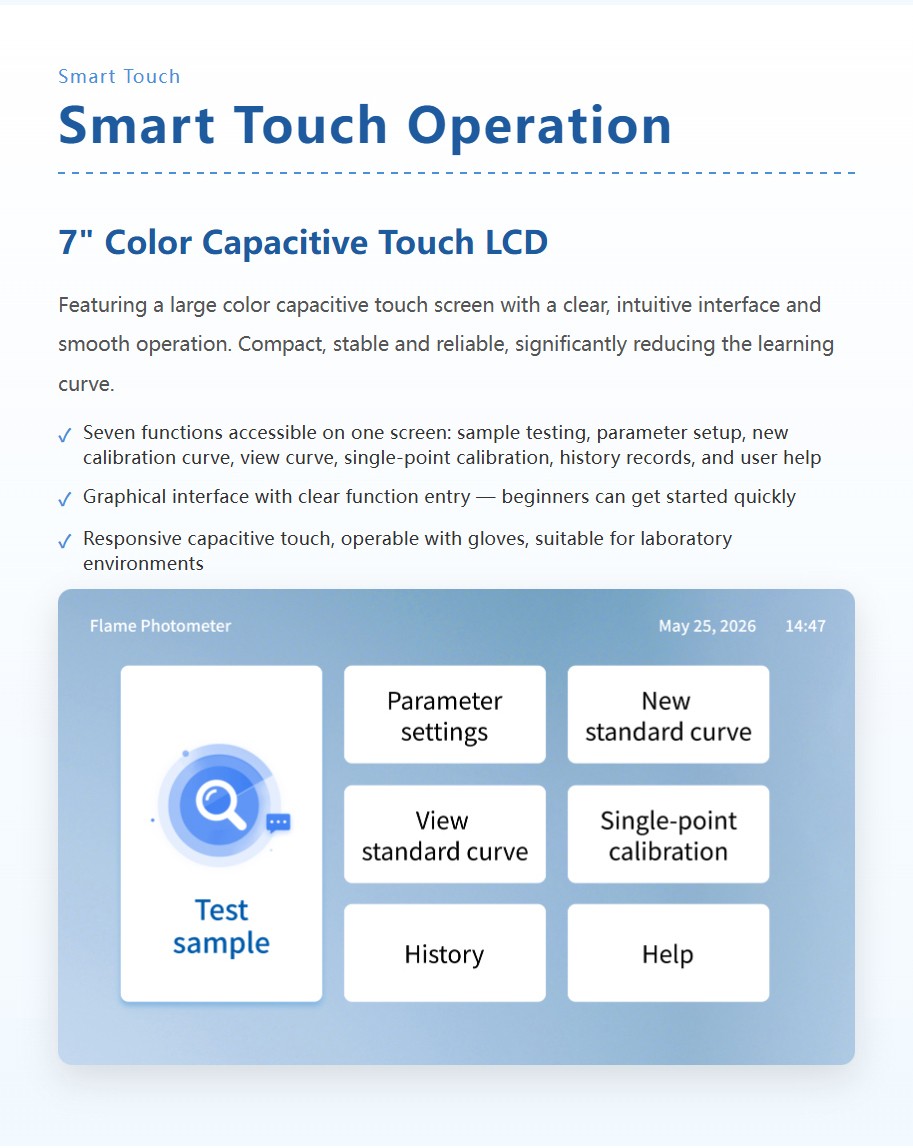
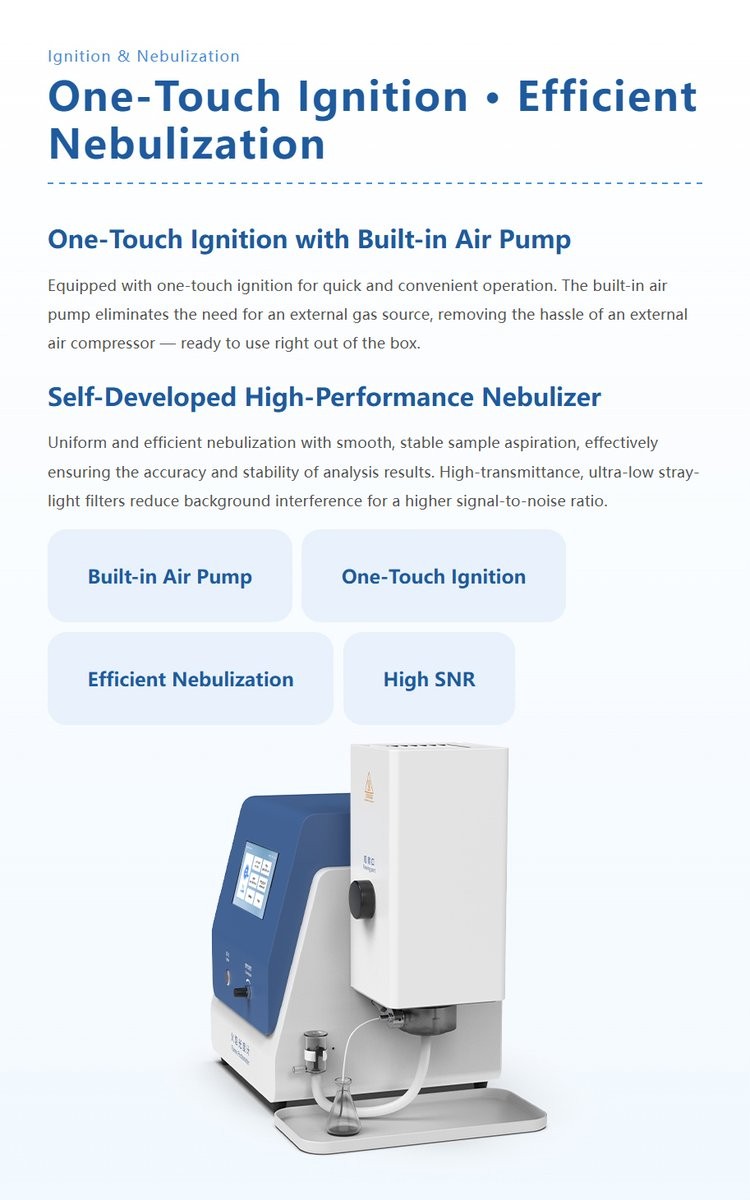
The instrument features a 7-inch color capacitive touch LCD for intuitive operation, calibration curve management, and historical data review. A self-developed high-performance nebulizer ensures consistent sample atomization across varying matrix conditions encountered in ore digests, brine solutions, and battery material extracts. One-touch ignition with a built-in air pump simplifies daily startup, while flame-out protection with automatic gas valve shutoff provides operational safety.
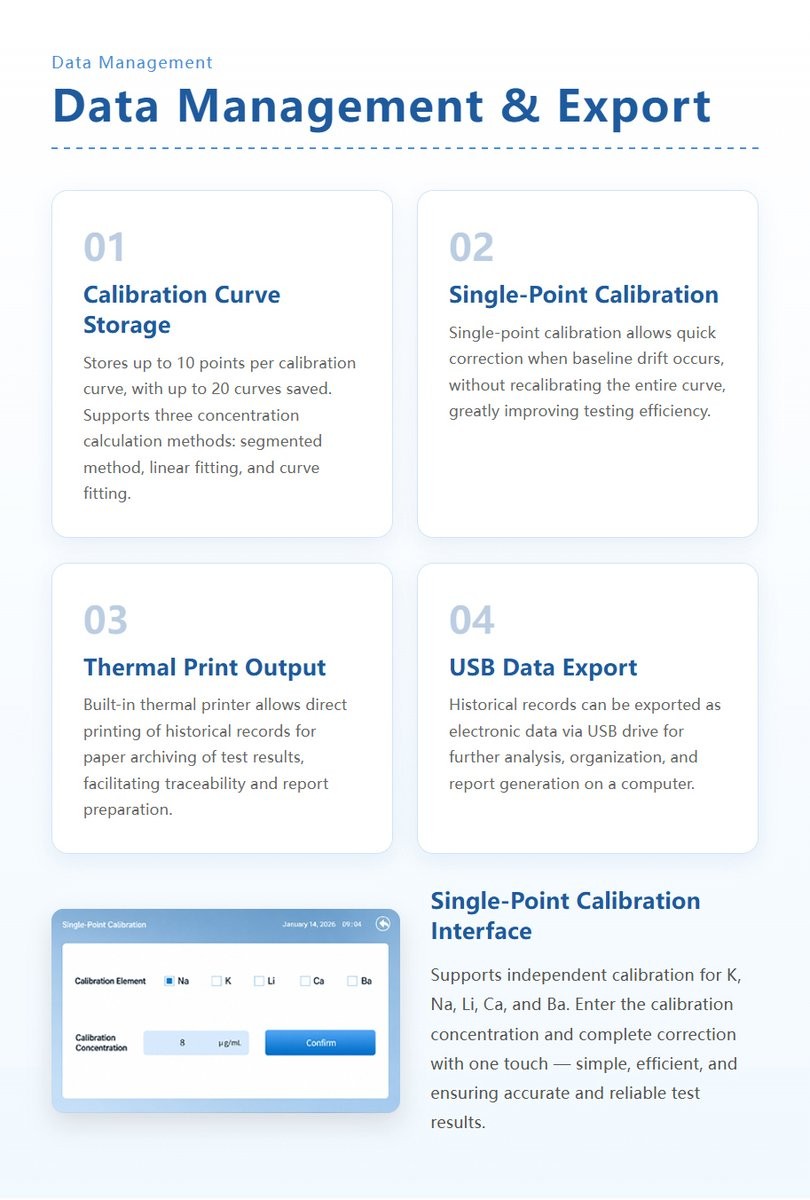
For quantitative analysis, the HM-FP3B supports up to 10-point calibration curves with 20 stored curves, enabling laboratories to maintain calibration data for different sample types. Segmented method, linear fitting, and curve fitting options accommodate both linear and non-linear concentration ranges typical of geological and battery material samples. Single-point calibration corrects for baseline drift during extended analytical runs. Historical records can be printed via the built-in thermal printer or exported through USB drive for traceable data management. The instrument is compliant with JJG630-2007 verification standards and NY/T889-2004 and LY/T series methods for soil and plant analysis, ensuring method validity for laboratory accreditation.
Applications
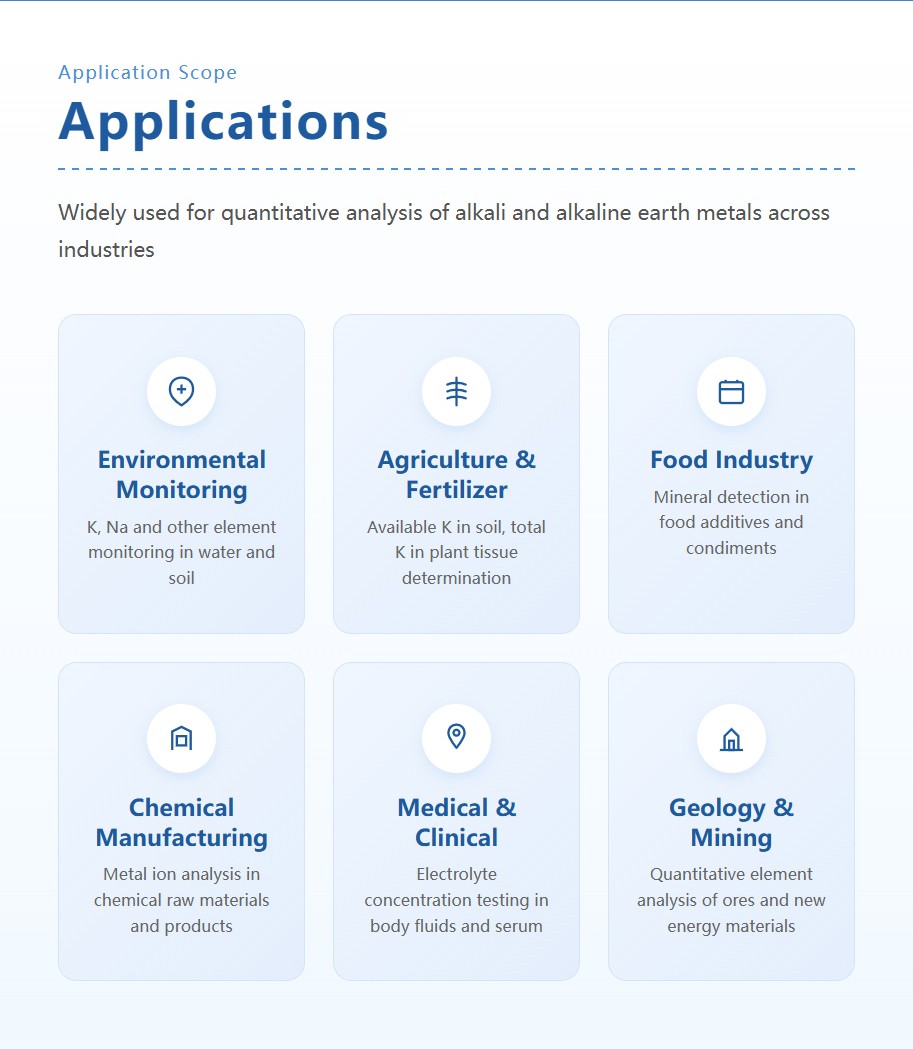
The HM-FP3B serves diverse analytical needs across mining, new energy, and agricultural sectors:
- Geological Survey and Mineral Exploration — Lithium, potassium, and sodium quantification in ore samples, brine solutions, and rock digests for resource assessment and deposit characterization. The HM-FP3B enables rapid screening of large sample sets during exploration campaigns.
- Lithium Battery Material Research and Quality Control — Cathode material composition analysis, electrolyte lithium concentration verification, and precursor purity assessment for battery manufacturing quality assurance.
- Soil Nutrient Analysis — Potassium and sodium determination in soil extracts for agricultural fertility assessment and land management, compliant with NY/T889-2004.
- Plant Tissue Analysis — Alkali metal content measurement in plant digests for nutrient status evaluation and crop management, following LY/T1246-1999 and LY/T1248-1999 methods.
- Clinical and Biomedical Electrolyte Profiling — Sodium, potassium, and lithium measurement in biological fluids for electrolyte balance assessment and therapeutic drug monitoring.
- Chemical Manufacturing Process Control — Alkali metal content monitoring in chemical production processes for batch consistency and quality control verification.
- Environmental Water Screening — Preliminary potassium and sodium screening in water samples as part of environmental baseline assessments.
Key Features & Advantages
- Simultaneous 3-channel measurement of lithium, potassium, and sodium — no sequential channel switching required
- 7-inch color capacitive touch LCD for intuitive operation, calibration management, and data review
- Interference filter spectral separation with <15nm bandwidth for high element selectivity
- Self-developed high-performance nebulizer for consistent atomization across diverse sample matrices
- One-touch ignition with built-in air pump for simplified daily startup
- Up to 10-point calibration curves with 20 stored curves for flexible multi-matrix quantification
- Segmented method, linear fitting, and curve fitting for both linear and non-linear concentration ranges
- Single-point calibration for baseline drift correction during extended analytical runs
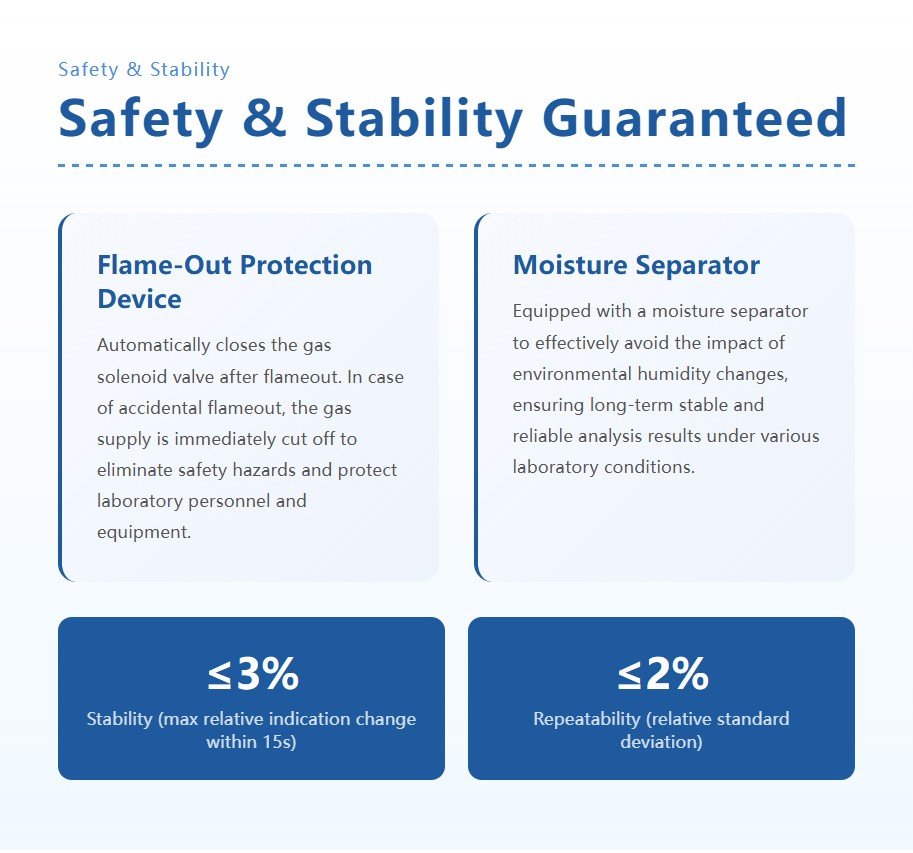
- Flame-out protection with automatic gas valve shutoff for operational safety
- Moisture separator for environmental stability and measurement consistency
- Built-in thermal printer for on-site historical record documentation
- USB drive data export for traceable record management and LIMS integration
- Linear error: Na<0.03, K<0.005, Li<0.021 mmol/L for reliable quantification
- Detection limit: Na<0.008, K<0.004, Li<0.015 mmol/L for adequate sensitivity
- Stability ≤3% (15s) and repeatability ≤2% for consistent analytical performance
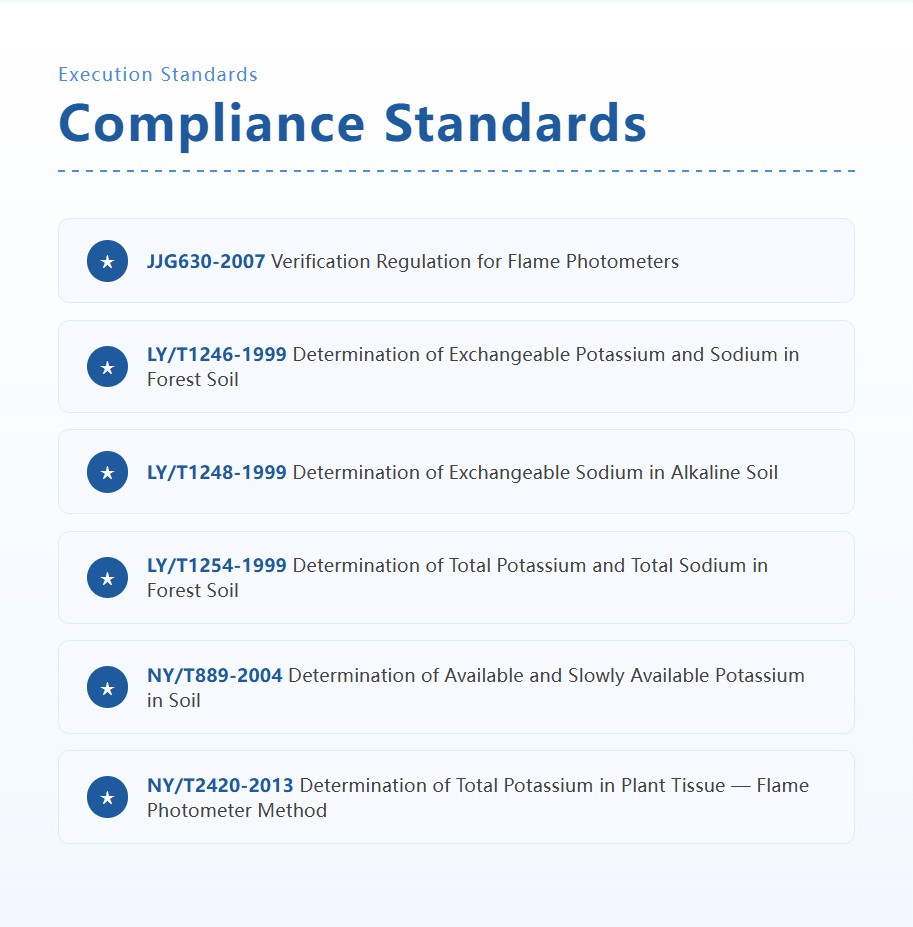
- Compliant with JJG630-2007, NY/T889-2004, and LY/T series standards
Technical Specifications
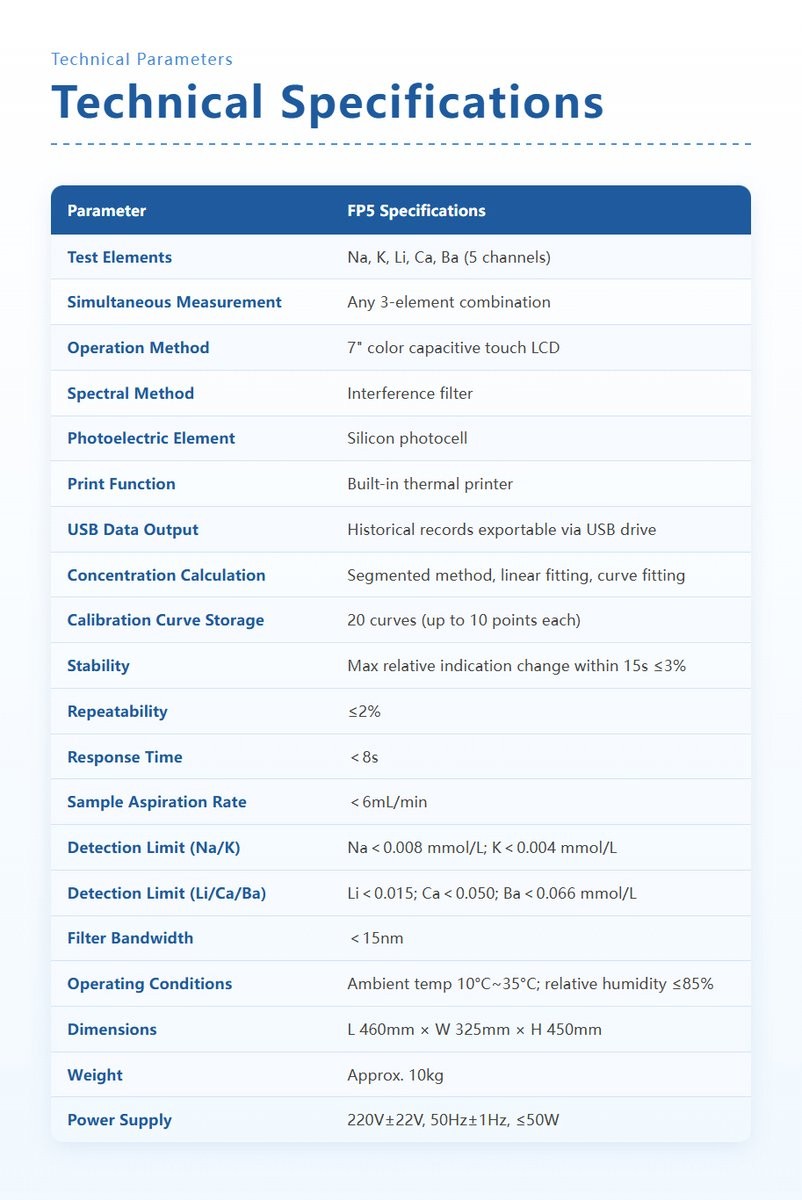
| Parameter | Specification |
|---|---|
| Test Elements | Na, K, Li (3 channels) |
| Linear Error | Na<0.03, K<0.005, Li<0.021 mmol/L |
| Detection Limit | Na<0.008, K<0.004, Li<0.015 mmol/L |
| Operation Mode | 7-inch color capacitive touch LCD |
| Spectral Method | Interference filter |
| Photoelectric Element | Silicon photocell |
| Built-in thermal printer | |
| USB Output | Historical records exportable via USB drive |
| Concentration Calculation | Segmented method, linear fitting, curve fitting |
| Calibration Curve Storage | Up to 10 points per curve, 20 curves total |
| Stability | ≤3% (15s), ≤8% (6 measurements) |
| Repeatability | ≤2% |
| Response Time | <8s |
| Sample Aspiration Rate | <6mL/min |
| Filter Bandwidth | <15nm |
| Filter Center Wavelength Error | Na<5nm, K<7nm, Li<7nm, Ca<7nm, Ba<7nm |
| Operating Conditions | 10°C~35°C, ≤85% RH |
| Dimensions | 460mm × 325mm × 450mm |
| Weight | ~10kg |
| Power | 220V±22V, 50Hz±1Hz, ≤50W |
| Compliance Standards | JJG630-2007, LY/T1246-1999, LY/T1248-1999, LY/T1254-1999, NY/T889-2004, NY/T2420-2013 |
FAQ
Q1: What types of samples can the HM-FP3B analyze for lithium content?
The HM-FP3B is suitable for aqueous solutions containing dissolved alkali metals. For geological samples, ore and rock specimens must be dissolved through acid digestion or alkaline fusion before analysis. Brine solutions can typically be analyzed after simple filtration and dilution. Battery material samples require acid digestion to bring lithium into solution. The instrument handles sample aspiration rates below 6mL/min with a response time under 8 seconds, enabling efficient throughput for routine screening. For complex matrices, matrix-matched calibration standards are recommended to ensure accuracy across varying sample compositions.
Q2: How does the HM-FP3B compare to AAS for lithium determination?
The HM-FP3B offers several advantages over AAS for routine alkali metal screening. It enables simultaneous measurement of lithium, potassium, and sodium in a single aspiration, whereas AAS requires sequential lamp changes and separate measurements. The HM-FP3B also features direct concentration reading without the need for manual calculations, and its operational cost is significantly lower due to simpler gas supply requirements and no hollow cathode lamp replacements. However, AAS may offer lower detection limits for trace-level analysis. For geological and battery material applications within typical concentration ranges, the HM-FP3B provides faster turnaround at a fraction of the per-sample cost.
Q3: What calibration options does the HM-FP3B support?
The HM-FP3B supports flexible calibration strategies. Users can create calibration curves with up to 10 points per curve and store up to 20 curves for different sample types or concentration ranges. Three fitting methods are available: segmented method for piecewise linear calibration, linear fitting for straightforward proportional relationships, and curve fitting for non-linear response ranges. Single-point calibration is also supported for quick baseline drift correction during extended analytical runs. This flexibility accommodates diverse matrix conditions encountered in geological survey and battery material analysis, ensuring accurate quantification across varying sample compositions.
Q4: What safety features are included in the HM-FP3B?
The HM-FP3B incorporates multiple safety features for laboratory operation. Flame-out protection automatically shuts off the gas valve when the flame is extinguished, preventing gas accumulation. A moisture separator maintains environmental stability by removing condensate from the gas supply. The built-in air pump eliminates the need for external compressed air supply, reducing infrastructure requirements. The instrument operates at 220V±22V, 50Hz with power consumption under 50W. Operating conditions require temperatures between 10°C and 35°C with relative humidity below 85%. These features ensure safe, reliable operation in standard laboratory environments without specialized infrastructure.
Q5: What standards does the HM-FP3B comply with?
The HM-FP3B complies with JJG630-2007 (verification regulation of flame photometers), ensuring metrological accuracy and traceability. It also supports analysis methods following LY/T1246-1999, LY/T1248-1999, and LY/T1254-1999 for forestry soil and plant analysis, as well as NY/T889-2004 for soil available potassium and sodium determination and NY/T2420-2013 for plant sample analysis. Compliance with these standards ensures method validity for laboratory accreditation and quality assurance documentation. Laboratories should verify that their specific application requirements align with the applicable standard before adopting the instrument for regulated testing.
Q6: How is data managed and exported on the HM-FP3B?
The HM-FP3B provides comprehensive data management capabilities. Historical measurement records can be printed on-site via the built-in thermal printer, enabling immediate documentation. For digital data management, records can be exported to a USB drive for transfer to laboratory information management systems (LIMS) or archival storage. The 7-inch touch LCD displays historical data for on-screen review, and calibration curves can be stored and recalled for different analytical methods. These features support traceable data management practices required for laboratory quality assurance and regulatory compliance.
Q7: What is the recommended maintenance for the HM-FP3B?
Regular maintenance includes cleaning the nebulizer and burner assembly to prevent sample buildup, checking the moisture separator for condensate accumulation, and verifying the interference filter alignment. The liquid filter and waste liquid container should be checked and emptied regularly. Calibration verification with standard solutions should be performed daily before sample analysis. The built-in air pump requires minimal maintenance but should be inspected periodically for airflow consistency. Following the manufacturer's recommended maintenance schedule ensures consistent analytical performance and extends the instrument's operational lifespan in demanding geological and battery material analysis workflows.
Expert Review
The HM-FP3B's value proposition lies in its ability to deliver simultaneous lithium, potassium, and sodium quantification at a price point significantly below AAS or ICP-OES systems. For geological surveys processing large volumes of ore and brine samples, the instrument's ≤2% repeatability and <8s response time enable high-throughput screening without sacrificing analytical reliability. The 10-point calibration capability and 20 stored curves accommodate the diverse matrix conditions encountered in geological and battery material analysis. While not suitable for trace-level determination, the HM-FP3B excels in the concentration ranges typical of routine alkali metal monitoring in mining and new energy applications. Its compliance with NY/T889-2004 and LY/T series standards ensures method validity for soil and plant analysis workflows. For laboratories focused on barium and water quality monitoring, the HM-FP3C variant may better serve analytical requirements.
Address of this article:https://www.labinstruments.net/pro14/lithium-geological-battery-flame-photometer-analysis.html