


 Current
location:
Current
location: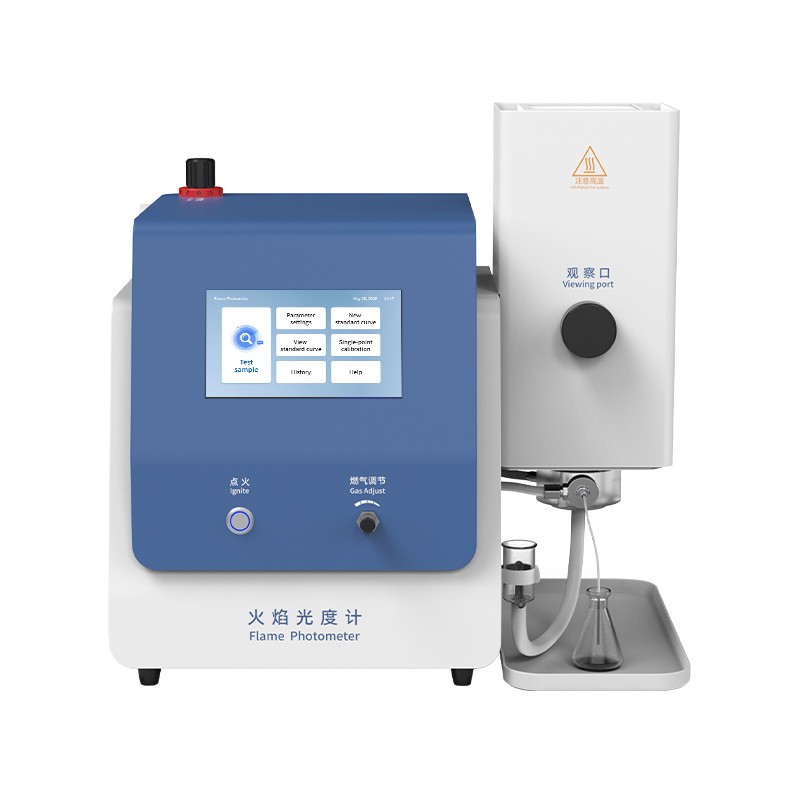
 +86 17853698681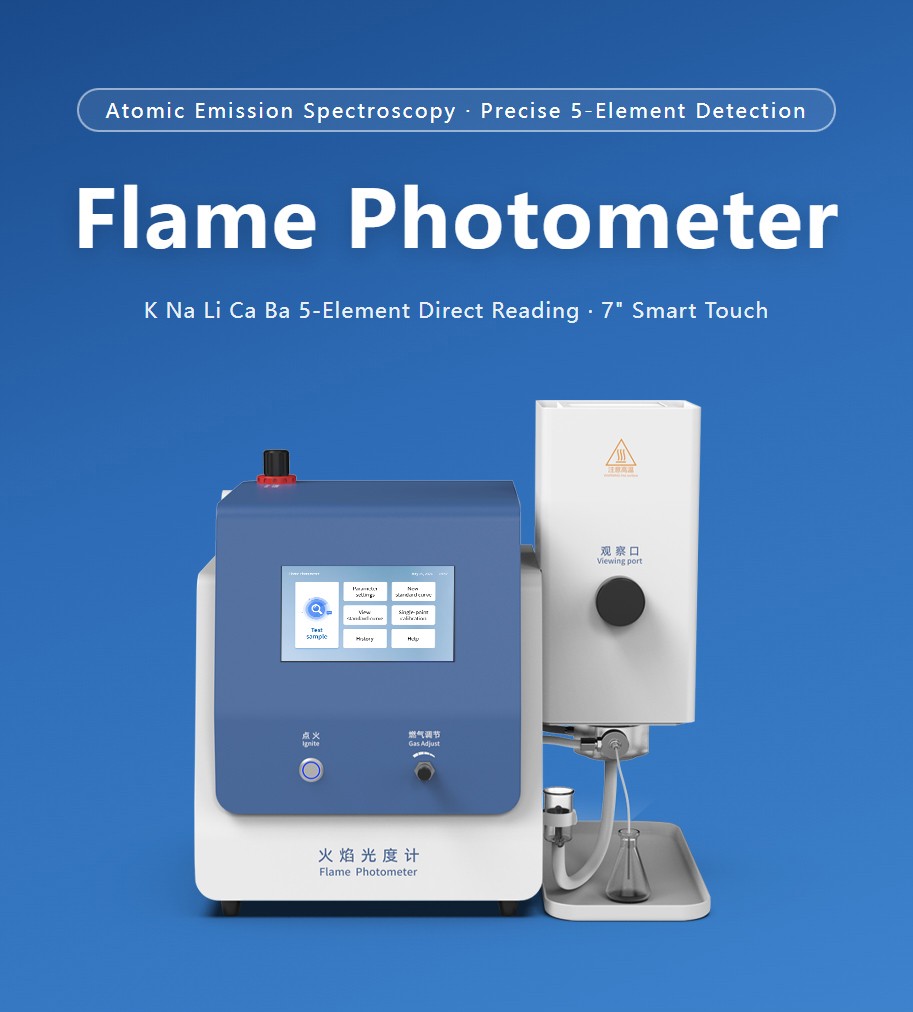

Product Introduction
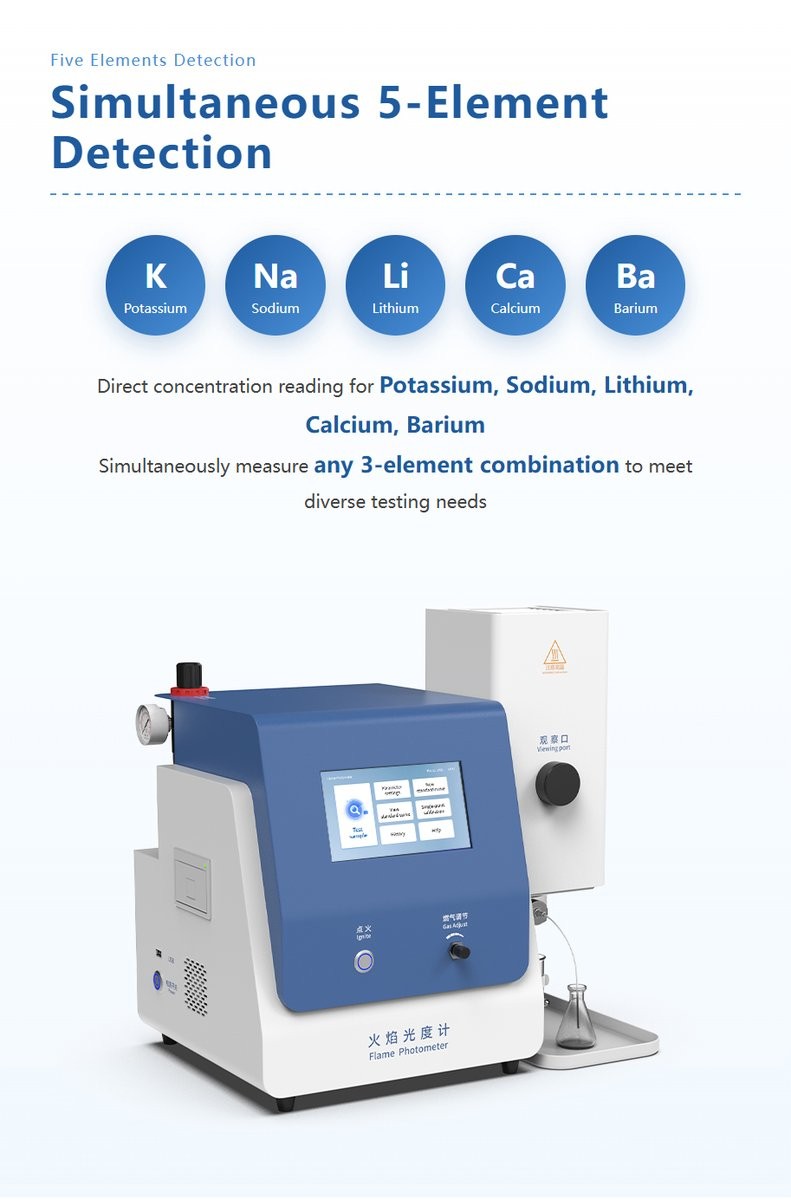
Soil fertility assessment, geological survey, and environmental monitoring laboratories face a persistent challenge: the need to quantify multiple alkali and alkaline earth metals across hundreds of samples within tight reporting deadlines. Traditional sequential atomic absorption spectroscopy requires separate lamp changes and calibration runs for each element, creating bottlenecks that delay results and increase consumable costs. The HM-FP4 Flame Photometer addresses this workflow gap by providing four independent detection channels — potassium, sodium, lithium, and calcium — in a single benchtop instrument that completes a full multi-element analysis from one aspiration event.
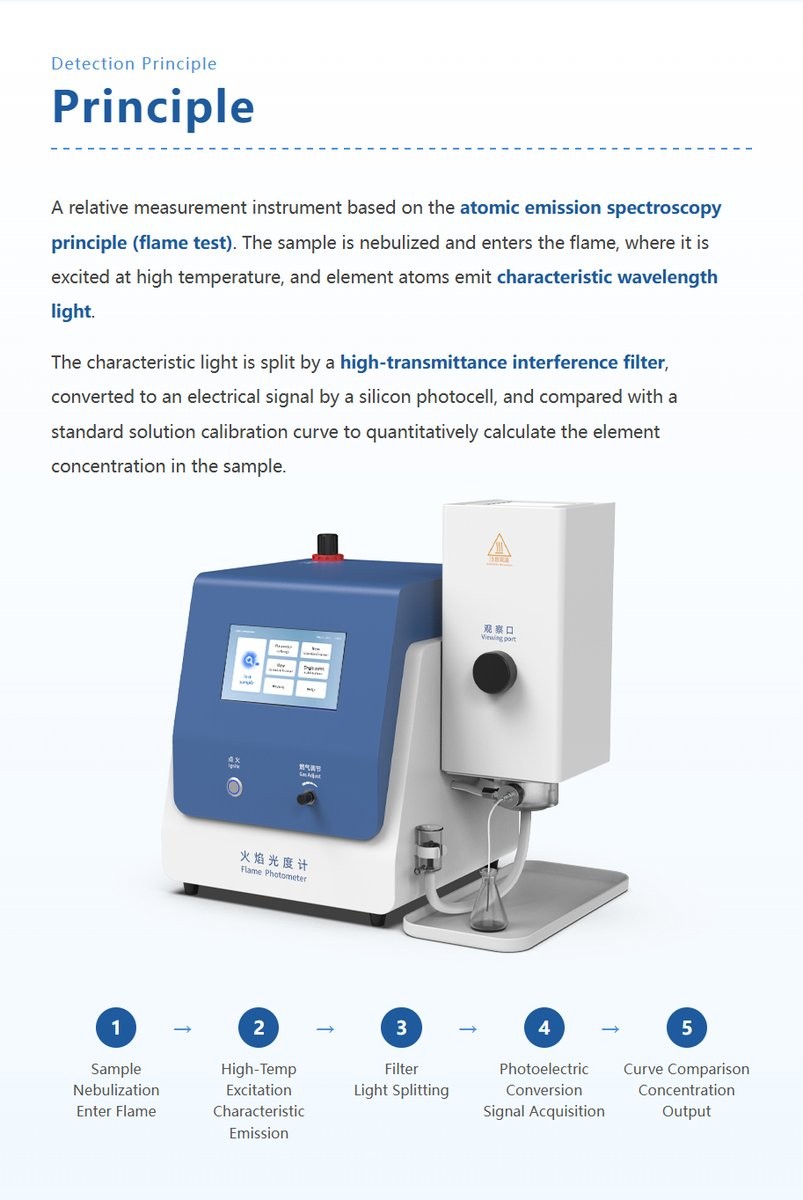
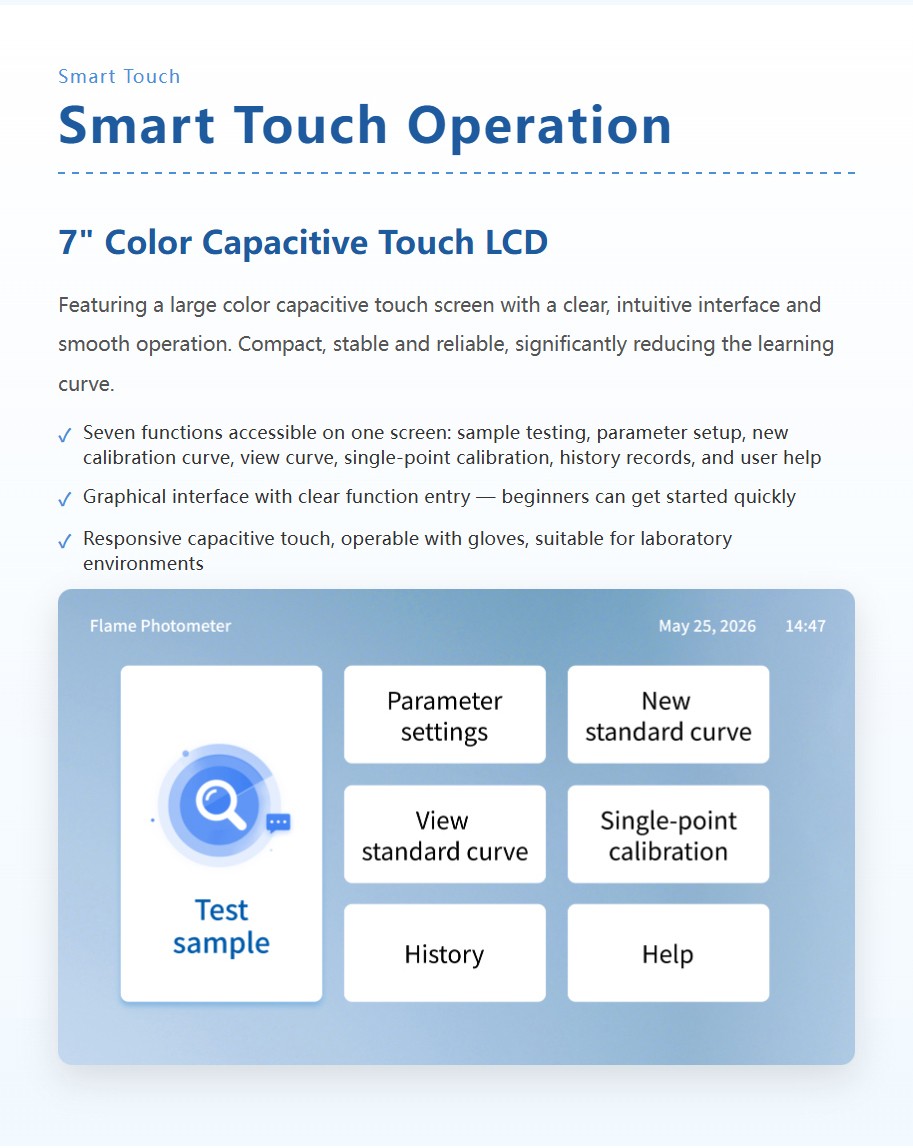
The HM-FP4 uses interference filter spectral separation with silicon photocell detectors, an approach proven over decades for alkali metal determination in soil extracts, rock digest solutions, and biological fluids. Each channel's high-transmittance, ultra-low stray-light filter isolates the element's characteristic emission line, enabling direct concentration readout without mathematical cross-correction. The 7-inch color capacitive touch LCD consolidates instrument control, calibration management, and result display into one intuitive interface that reduces training time for new operators.
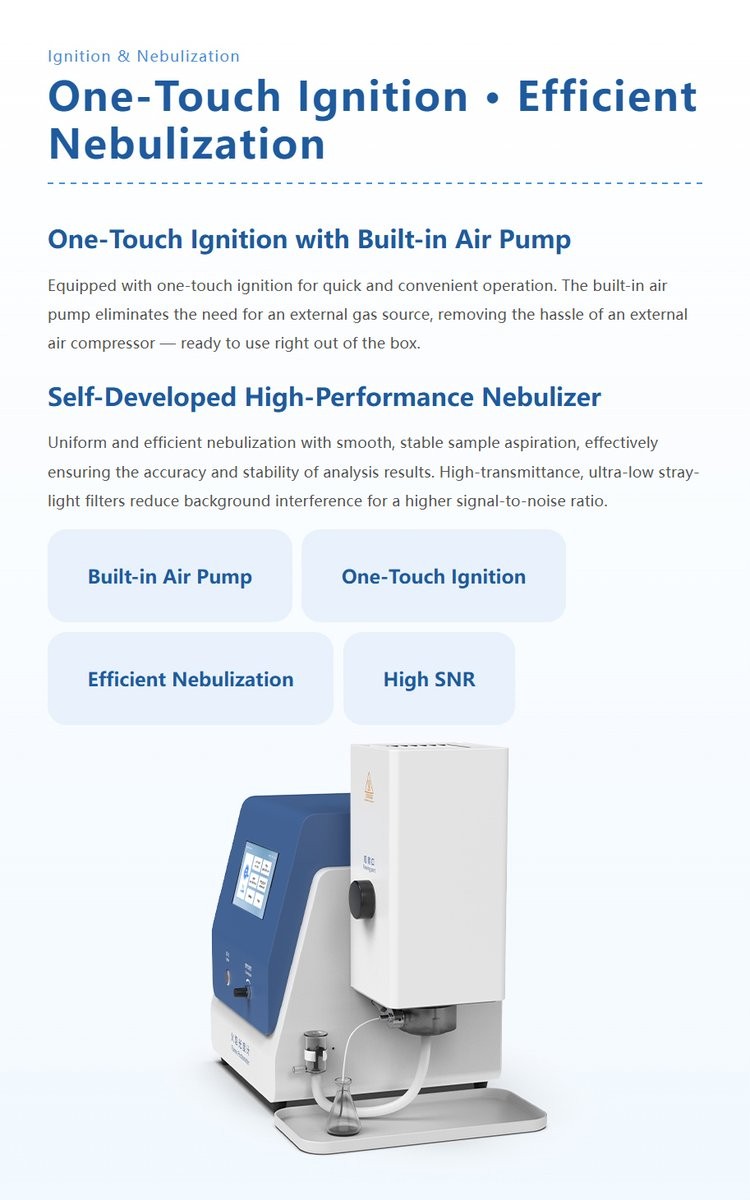
A self-developed high-performance nebulizer delivers consistent sample aspiration below 6 mL/min, minimizing sample consumption while maintaining flame stability. One-touch ignition with a built-in air pump removes the need for an external compressor, keeping bench footprint compact. For laboratories running large sample batches, up to 10 calibration points per element and 20 stored curves support segmented fitting, linear fitting, and curve fitting modes — allowing quick method switching between soil extract protocols and geological digest methods. Built-in thermal printing and USB drive export ensure every measurement is documented for audit trails and quality management systems. Explore our full range of flame photometer instruments for your laboratory's analytical needs.
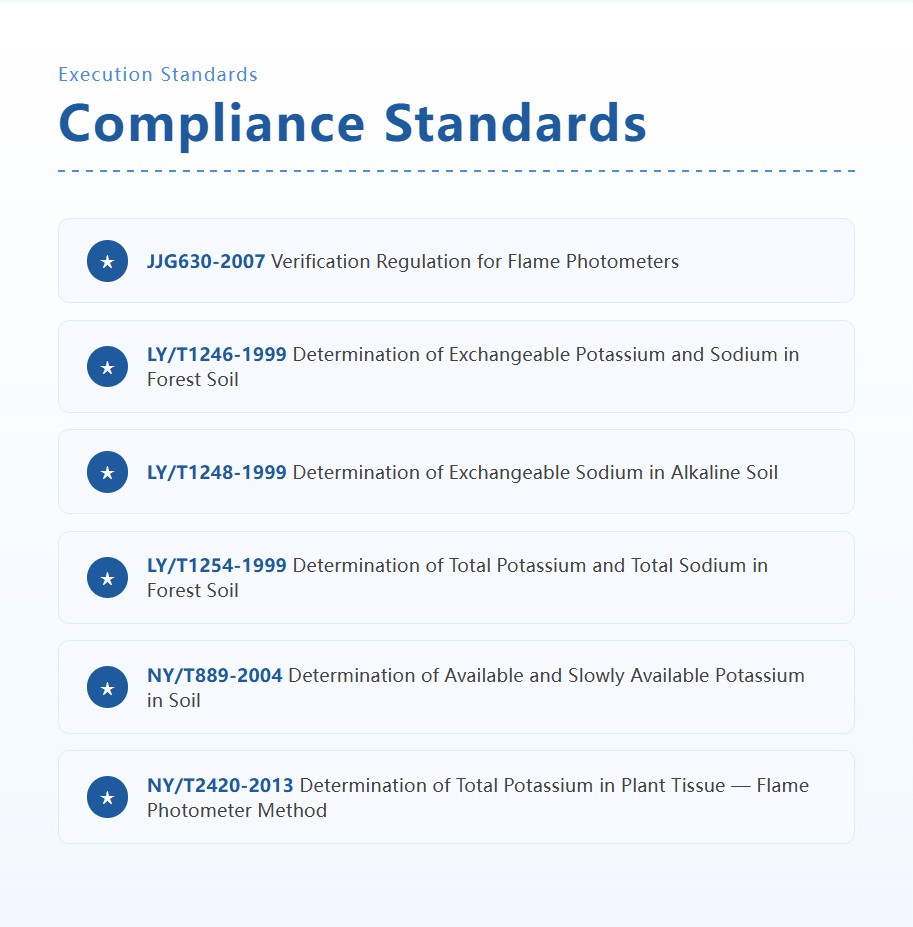
The HM-FP4 complies with JJG630-2007 flame photometer verification regulation and aligns with LY/T1246-1999, LY/T1248-1999, LY/T1254-1999, NY/T889-2004, and NY/T2420-2013 soil and plant analysis standards, making it a reliable choice for accredited testing laboratories seeking method-compliant instrumentation.
Applications
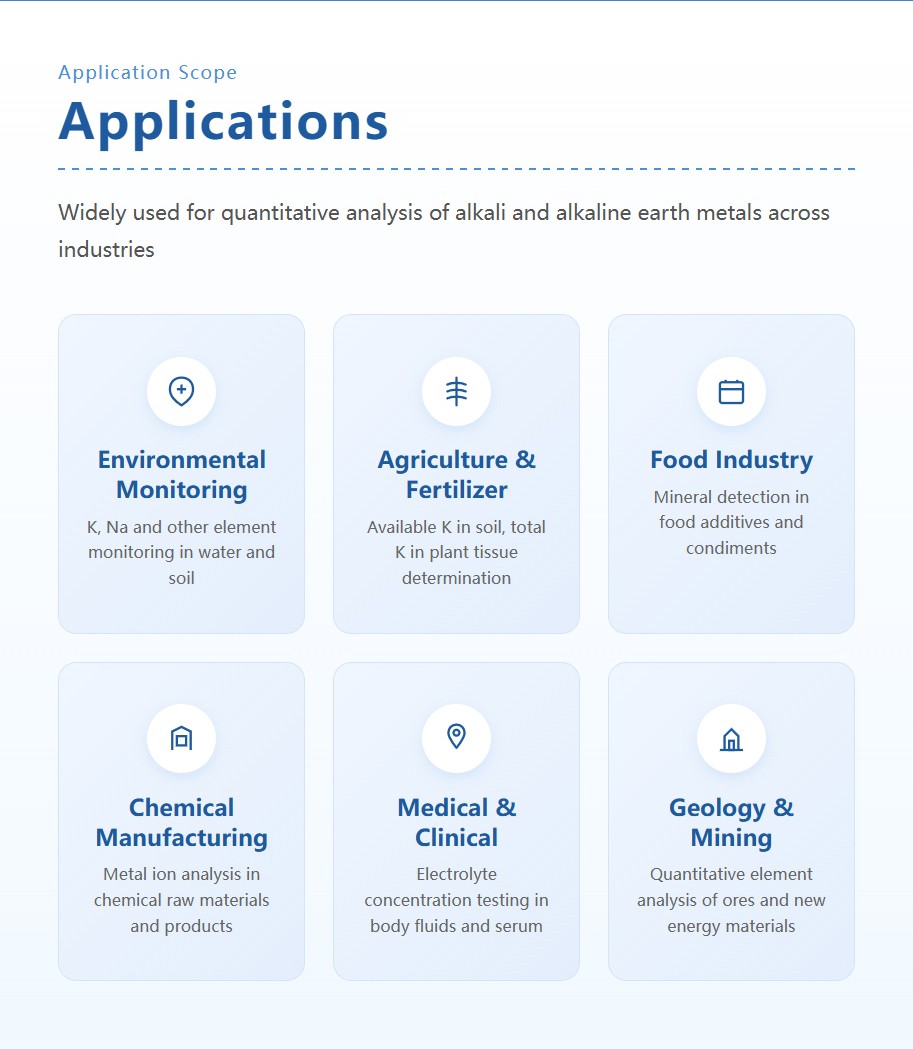
- Soil Fertility Mapping: Determination of exchangeable potassium, sodium, and calcium in agricultural soils to guide fertiliser recommendations and precision agriculture programs
- Geological Exploration: Quantification of alkali metals in rock, mineral, and sediment samples during regional geochemical surveys and ore body delineation
- Environmental Baseline Studies: Measurement of dissolved K, Na, Li, Ca in surface water, groundwater, and leachate samples for environmental impact assessments
- Plant Tissue Diagnostics: Potassium and calcium nutrition analysis in leaf, grain, and fruit samples to optimise crop management strategies
- Fertiliser Quality Assurance: Verification of declared potassium and sodium content in compound, blended, and organic fertilisers before market release
Key Features & Advantages
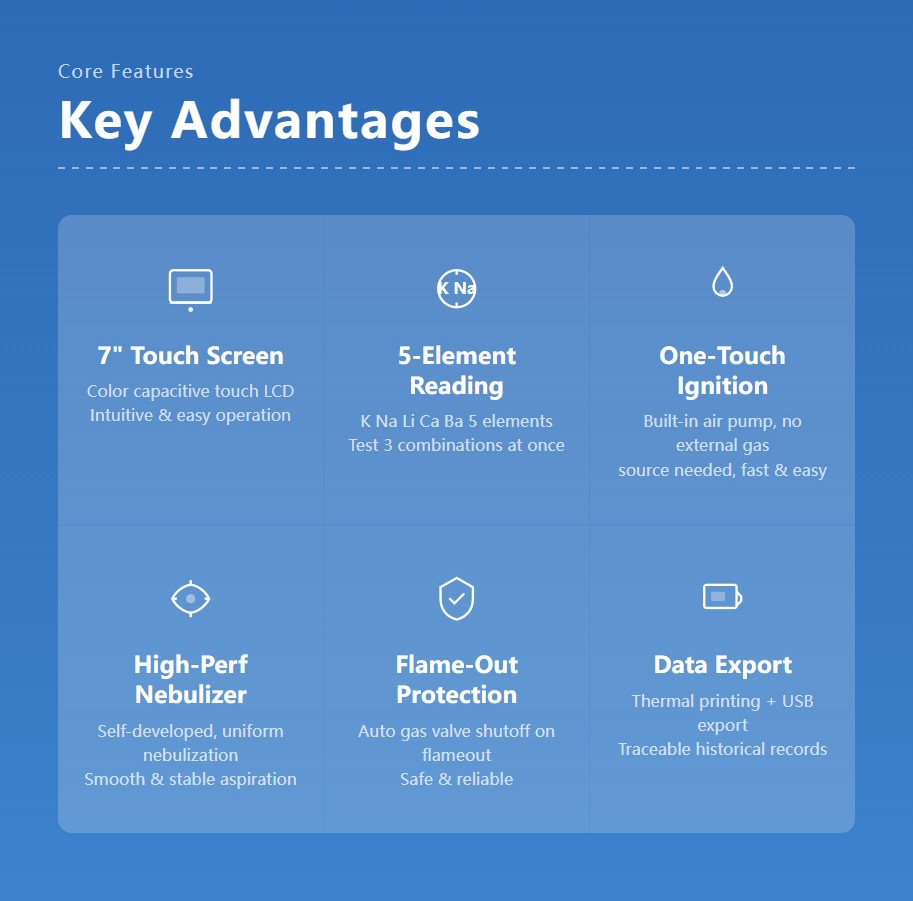
- Four independent detection channels for K, Na, Li, Ca allow any three-element combination to be measured simultaneously from a single aspiration, cutting analysis time by up to 75% compared to sequential methods
- High-transmittance interference filters with ultra-low stray light deliver clean spectral separation, eliminating the need for mathematical cross-element correction in routine soil and geological testing
- 7-inch color capacitive touch LCD with icon-based menu navigation reduces operator training time and minimises data-entry errors during high-throughput sample runs
- Self-developed high-performance nebulizer maintains stable aspiration below 6 mL/min, ensuring reproducible flame conditions across operators and throughout extended working sessions
- One-touch ignition with built-in air pump eliminates external compressor dependency, simplifies daily startup, and reduces overall bench footprint
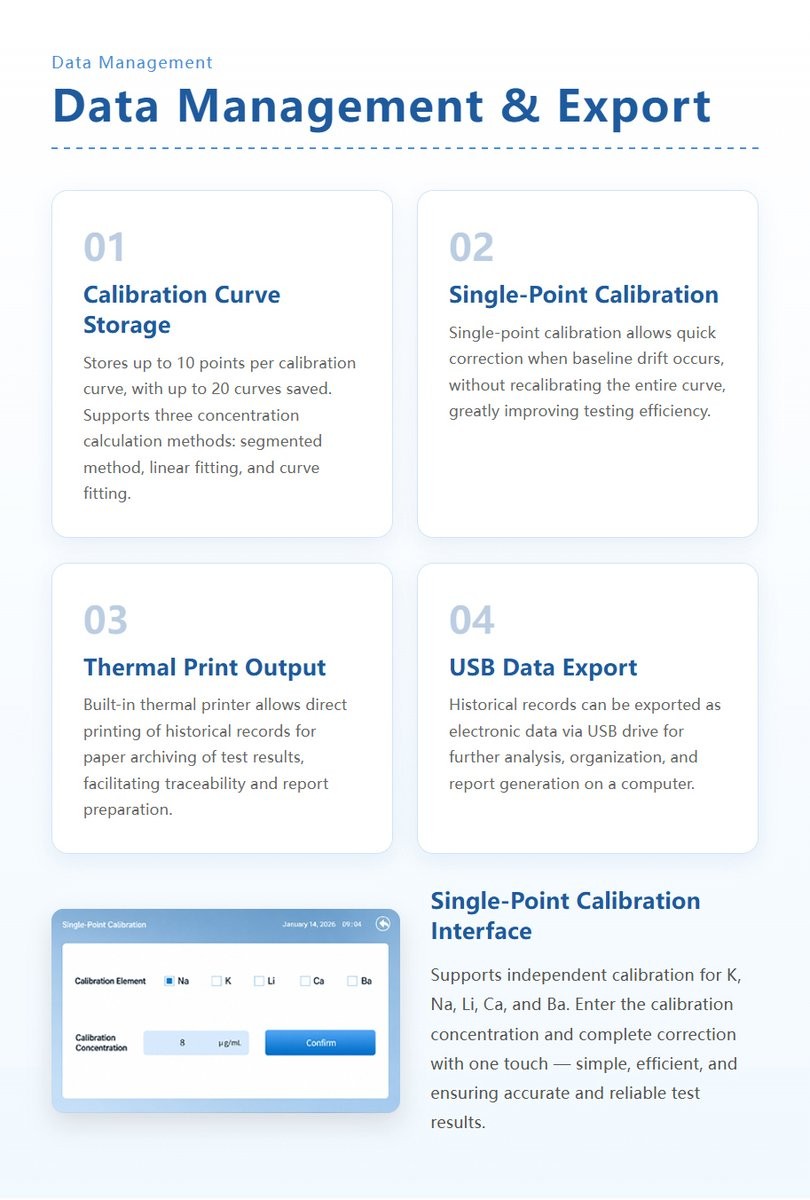
- Up to 10-point calibration curves per element with 20 stored methods — supporting segmented, linear, and curve fitting — allow rapid switching between soil extract and geological digest protocols without re-standardisation
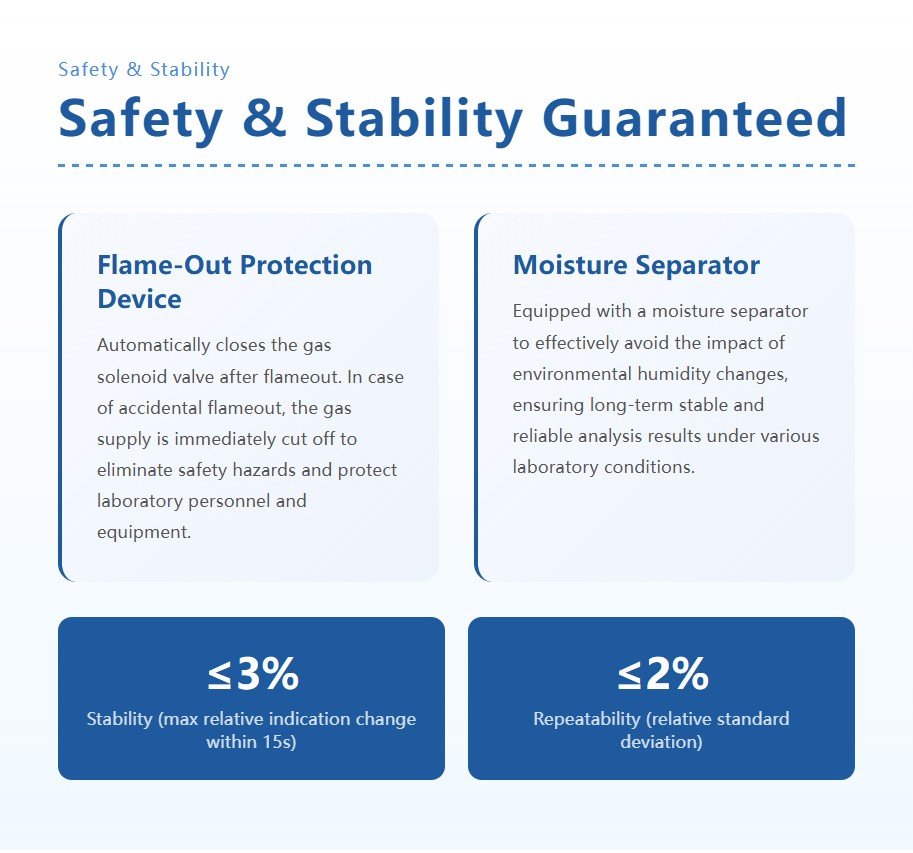
- Moisture separator protects sensitive optical and electronic components from humidity-induced signal drift, ensuring consistent performance in tropical and subtropical laboratory environments
- Flame-out protection with automatic gas valve shutoff prevents unburned gas release, enhancing safety during unattended batch runs and after-hours operation
- Single-point calibration for baseline drift correction allows operators to maintain accuracy between full calibration cycles, reducing standard solution consumption and instrument downtime
- Built-in thermal printer generates instant hard-copy records; USB drive export enables digital archiving and integration with laboratory information management systems (LIMS)
- Concentration calculation modes — segmented method, linear fitting, and curve fitting — accommodate both linear and non-linear calibration behaviour typical of flame emission at varying concentration ranges
- Stability ≤3% (15s) and repeatability ≤2% meet the precision requirements of accredited testing laboratories performing soil fertility and geological analysis
- Filter center wavelength errors within Na<5nm, K<7nm, Li<7nm, Ca<7nm ensure each channel targets the correct emission line without spectral overlap
- Compact dimensions (460 mm × 325 mm × 450 mm) and ~10 kg weight allow easy relocation between benches or field laboratories
- Low power consumption (≤50W) reduces operating costs and heat generation in air-conditioned laboratory spaces
- Full compliance with JJG630-2007 and multiple soil/plant analysis standards (LY/T1246-1999, LY/T1248-1999, LY/T1254-1999, NY/T889-2004, NY/T2420-2013) supports accreditation documentation
Technical Specifications
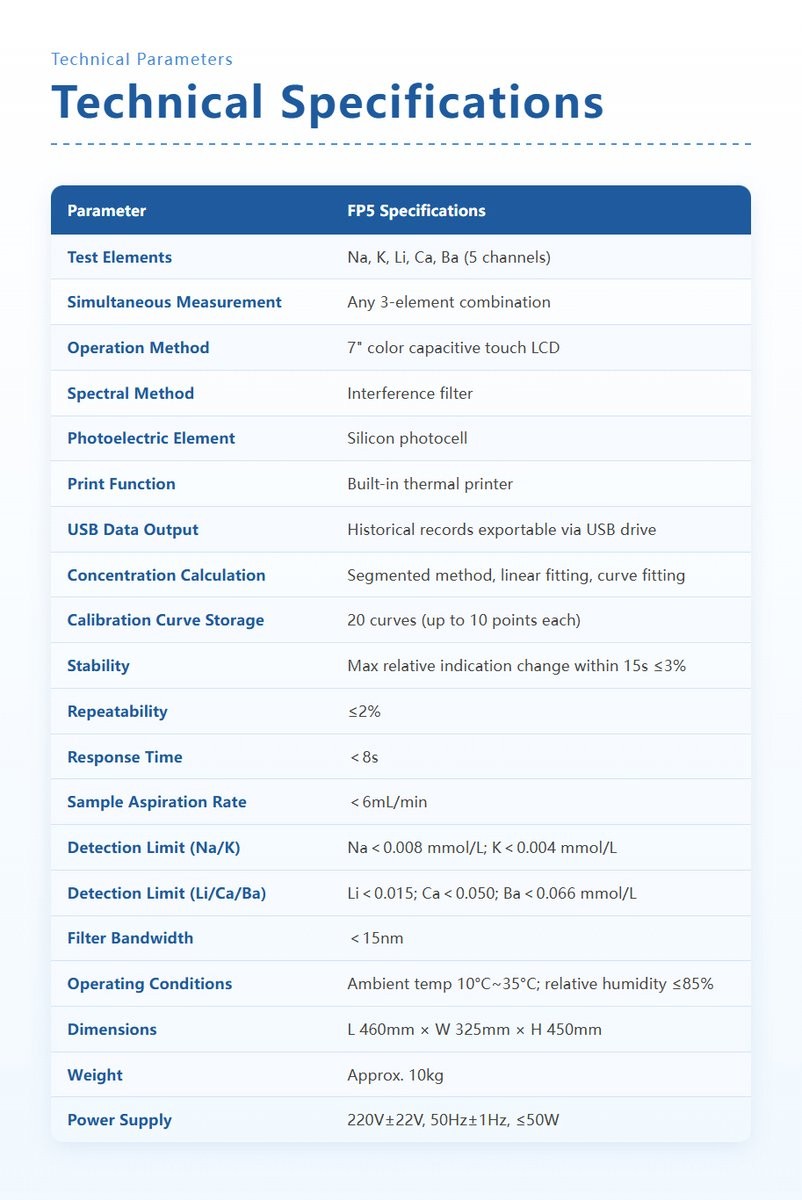
| Parameter | Specification |
|---|---|
| Product Model | HM-FP4 |
| Test Elements | Na, K, Li, Ca (4 channels) |
| Operation Method | 7-inch color capacitive touch LCD |
| Spectral Method | Interference filter |
| Photoelectric Element | Silicon photocell |
| Concentration Calculation | Segmented method, linear fitting, curve fitting |
| Calibration Curve Storage | Up to 10 points per curve, 20 curves total |
| Stability | ≤3% (15s), ≤8% (6 measurements) |
| Repeatability | ≤2% |
| Response Time | <8s |
| Sample Aspiration Rate | <6 mL/min |
| Filter Bandwidth | <15 nm |
| Filter Center Wavelength Error | Na<5 nm, K<7 nm, Li<7 nm, Ca<7 nm |
| Linear Error (Na) | <0.03 mmol/L |
| Linear Error (K) | <0.005 mmol/L |
| Linear Error (Li) | <0.021 mmol/L |
| Linear Error (Ca) | <0.075 mmol/L |
| Detection Limit (Na) | <0.008 mmol/L |
| Detection Limit (K) | <0.004 mmol/L |
| Detection Limit (Li) | <0.015 mmol/L |
| Detection Limit (Ca) | <0.050 mmol/L |
| Built-in thermal printer | |
| USB Output | Historical records exportable via USB drive |
| Operating Conditions | 10 °C–35 °C, ≤85% RH |
| Power Supply | 220V±22V, 50Hz±1Hz, ≤50W |
| Dimensions | 460 mm × 325 mm × 450 mm |
| Weight | ~10 kg |
| Standards Compliance | JJG630-2007, LY/T1246-1999, LY/T1248-1999, LY/T1254-1999, NY/T889-2004, NY/T2420-2013 |
FAQ
The HM-FP4 provides four independent detection channels for potassium (K), sodium (Na), lithium (Li), and calcium (Ca). The instrument allows any combination of up to three elements to be measured simultaneously from a single aspiration event. This multi-element capability is particularly valuable for soil fertility laboratories that need to report both potassium and calcium in every sample, as well as geological survey teams analyzing alkali metal profiles in rock and sediment digests. Each channel uses a dedicated interference filter and silicon photocell detector, so there is no cross-talk between element readings.
For alkali metal determination in soil extracts, flame photometry offers significant operational advantages over AAS. The HM-FP4 requires no hollow cathode lamp changes between elements, eliminating a major source of downtime in sequential AAS workflows. A single aspiration delivers results for up to three elements simultaneously, whereas AAS measures one element per run. Sample consumption is below 6 mL/min, and the instrument needs no warm-up period for lamp stabilisation. For laboratories processing hundreds of soil samples per day, the HM-FP4 can reduce per-sample analysis time by 60-75% while maintaining precision within 2% repeatability, well within the requirements of NY/T889-2004 and related soil testing standards.
The HM-FP4 supports three calibration calculation modes: segmented method, linear fitting, and curve fitting. Each element channel can store a calibration curve with up to 10 standard points, and the instrument holds a total of 20 curves in memory. This capacity allows laboratories to maintain separate calibration sets for different sample matrices — for example, one curve set optimised for dilute soil extracts and another for concentrated geological digest solutions. Single-point recalibration can correct baseline drift between batches without re-running the full standard series, saving both time and reagent consumption during high-throughput testing periods.
The HM-FP4 incorporates a flame-out protection system that automatically shuts off the gas supply valve if the flame is extinguished unexpectedly. This prevents the release of unburned gas into the laboratory environment, a critical safety feature during unattended batch runs or after-hours automated sequences. Additionally, the instrument includes a moisture separator that shields optical and electronic components from humidity-induced drift, improving long-term measurement stability. The one-touch ignition system with built-in air pump eliminates the need for an external compressor, reducing both bench clutter and potential leak points in the gas delivery path.
Every measurement on the HM-FP4 can be printed instantly via the built-in thermal printer, providing a physical audit trail for quality management systems and regulatory inspections. For digital record keeping, historical data can be exported via USB drive to a computer for integration with laboratory information management systems (LIMS) or spreadsheet-based reporting tools. The 7-inch touchscreen displays real-time results, calibration status, and instrument diagnostics, allowing operators to monitor performance during extended sample runs. This combination of thermal printing and USB export supports both paper-based and electronic documentation workflows required by accredited testing laboratories.
The HM-FP4 meets the requirements of JJG630-2007, China's national flame photometer verification regulation, which governs instrument accuracy, stability, and repeatability performance. It also aligns with multiple forestry and agricultural industry standards including LY/T1246-1999 (forest soil potassium determination), LY/T1248-1999 (forest soil calcium and magnesium), LY/T1254-1999 (forest soil sodium), NY/T889-2004 (soil available potassium), and NY/T2420-2013 (plant potassium determination). This broad standard compliance makes the HM-FP4 suitable for use in government testing stations, third-party accredited laboratories, and agricultural extension services that require method-validated instrumentation.
Address of this article:https://www.labinstruments.net/pro14/multi-element-flame-photometer-soil-analysis.html