

 Current
location:
Current
location: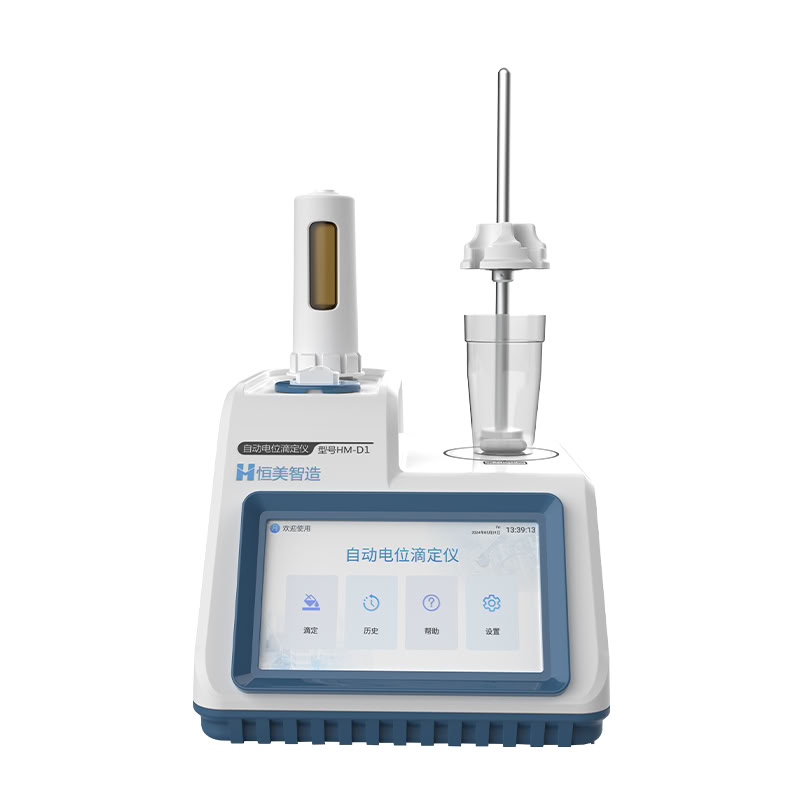
 +86 17853698681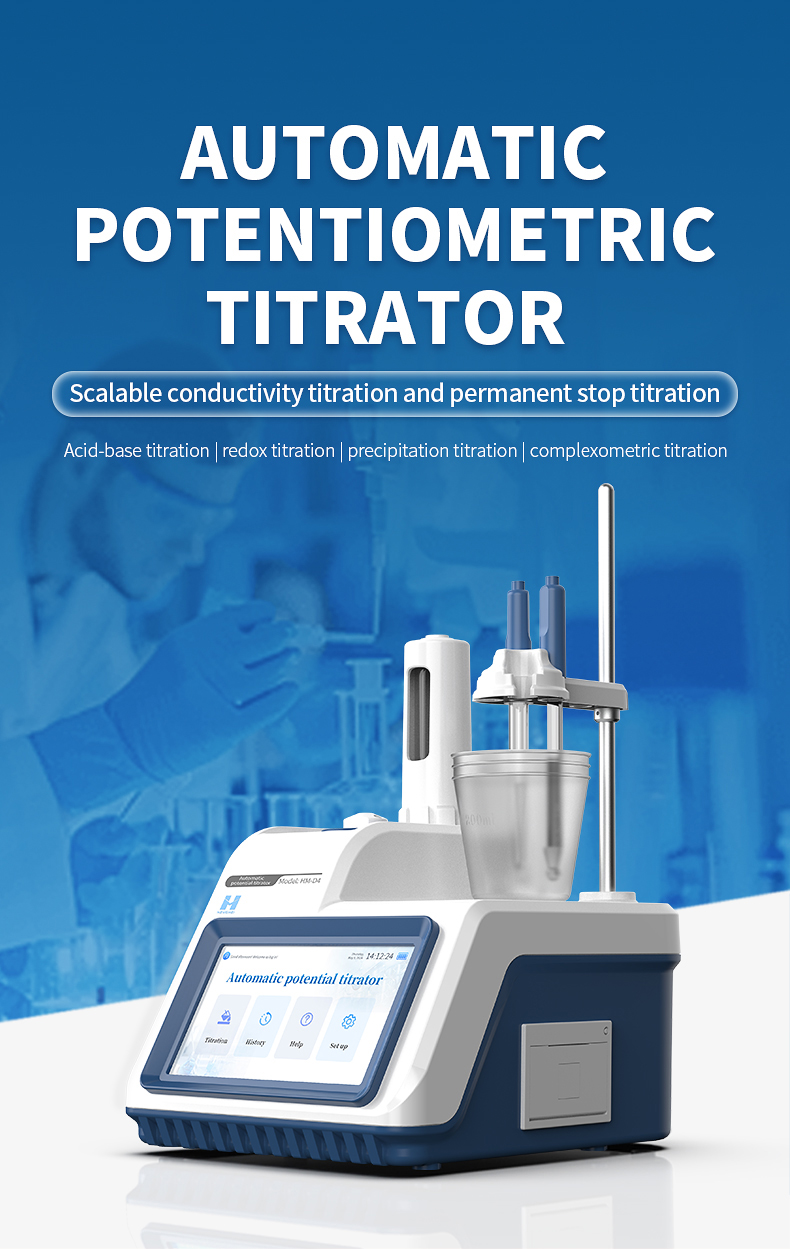



Product Introduction
Pharmaceutical quality control laboratories operate under stringent regulatory frameworks that demand precise, reproducible, and fully documented volumetric analysis. Key pharmacopeia methods — including iodometric titration for vitamin C assay, sodium nitrite diazotization for sulfonamide drug quantification, and bromometric analysis for aromatic compound determination — rely on dead-stop endpoint detection, a technique fundamentally different from standard potentiometric titration. Dead-stop titration applies a small constant polarization voltage across dual platinum electrodes and monitors the abrupt current transition that occurs when the reversible redox couple at the equivalence point appears or disappears.
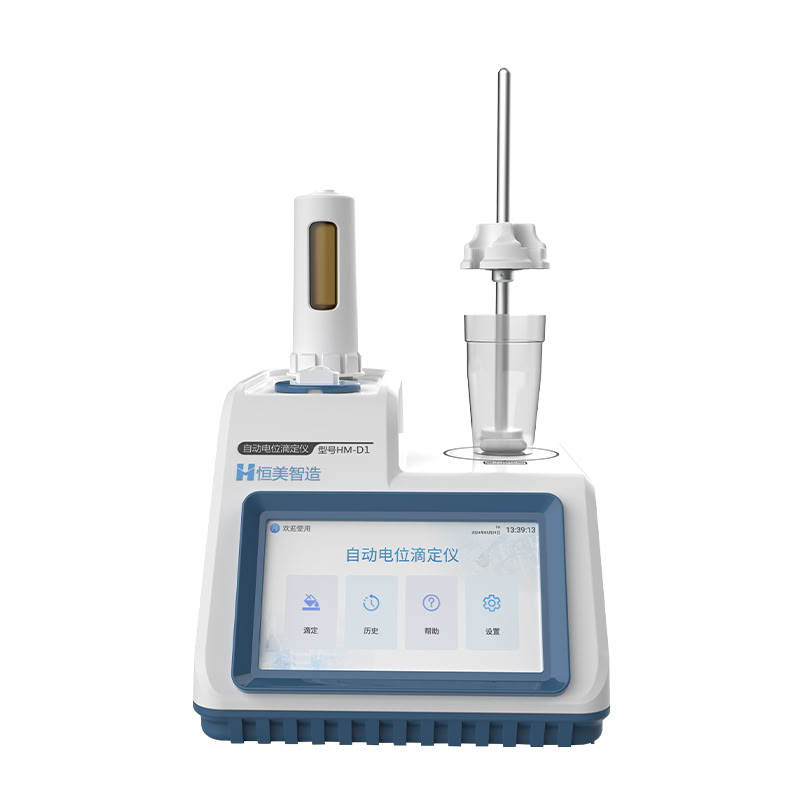
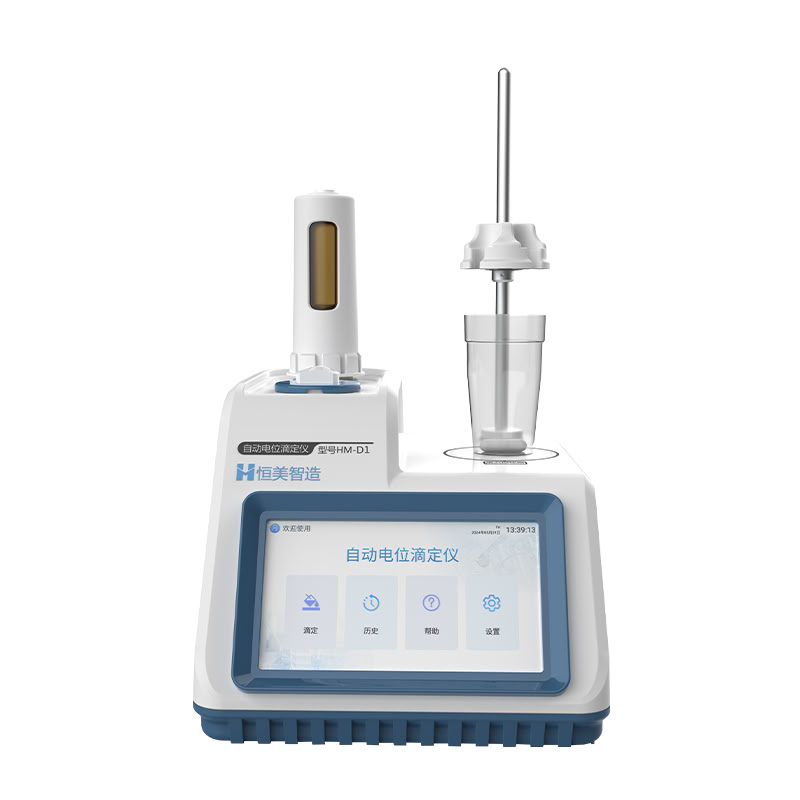
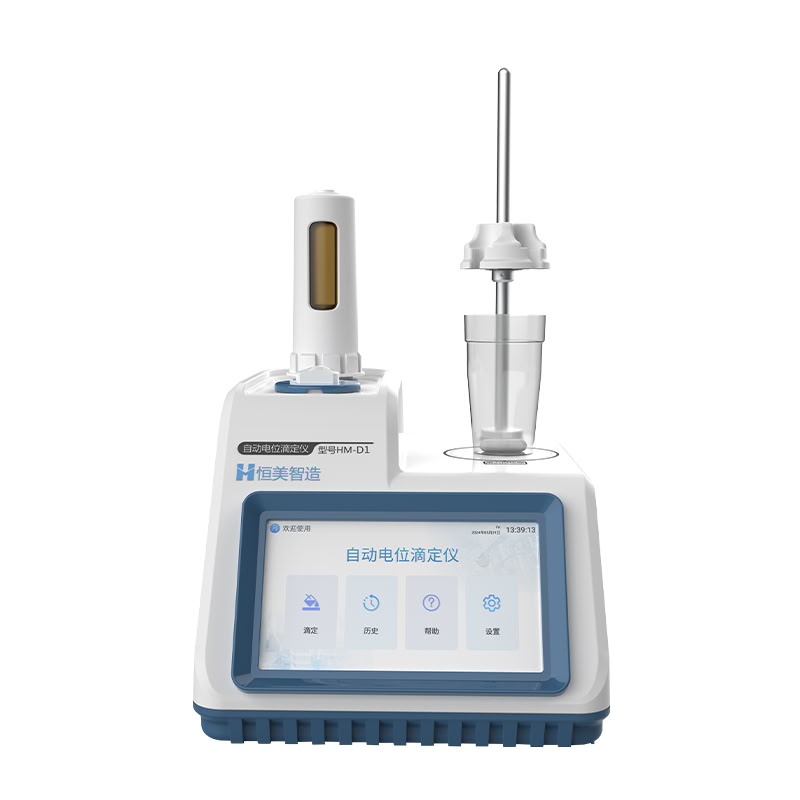
The HM-D3 Automatic Potentiometric Titrator integrates a dedicated dead-stop detection module alongside the standard four-method potentiometric platform, creating a comprehensive five-method analytical system purpose-built for pharmaceutical QA/QC workflows. The dead-stop module provides three selectable polarization voltages — 30 mV, 50 mV, and 100 mV (each ±1 mV accurate) — matching the specific requirements of different pharmacopeia methods. The 0.00 μA to 200 μA current measurement range captures the sharp current transition at the endpoint with high sensitivity, even in dilute systems where the signal change is subtle.
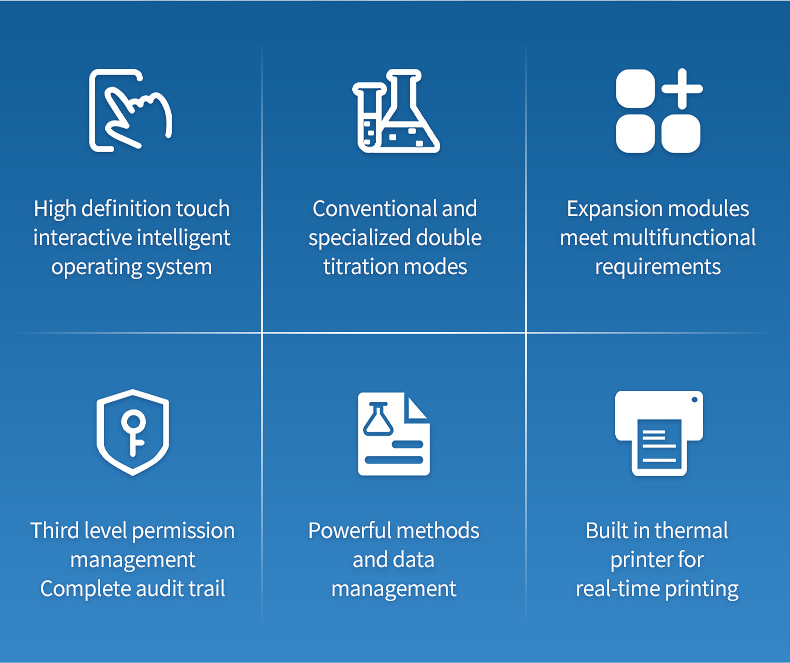
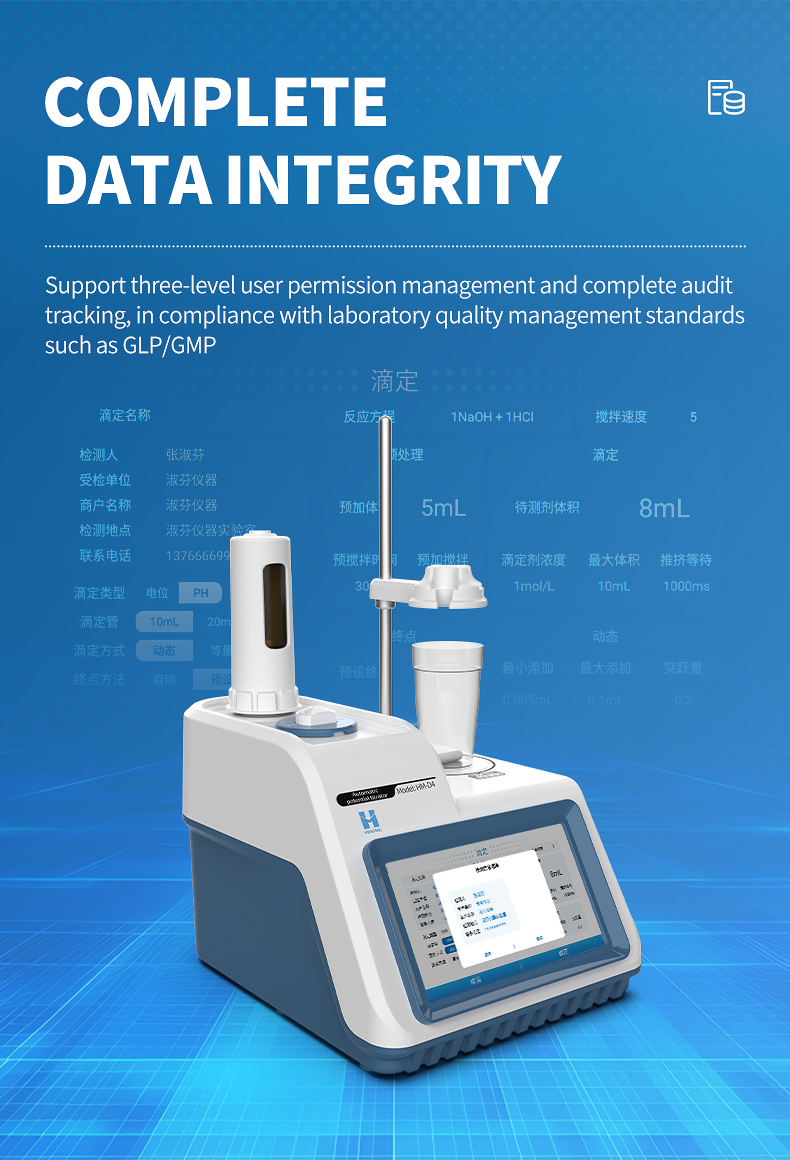
For pharmaceutical laboratories operating under Good Manufacturing Practice (GMP) conditions, the HM-D3's data integrity infrastructure is as critical as its analytical performance. The instrument provides three-level user permission management, a complete electronic audit trail that records every parameter change and result modification, power-off data protection, and system self-diagnosis with automatic alarms. Combined with PDF/Excel dual-format export, Wi-Fi LIMS connectivity, and 100,000-record storage capacity, the HM-D3 delivers a fully compliant, fully traceable analytical workflow from sample preparation through final report generation.
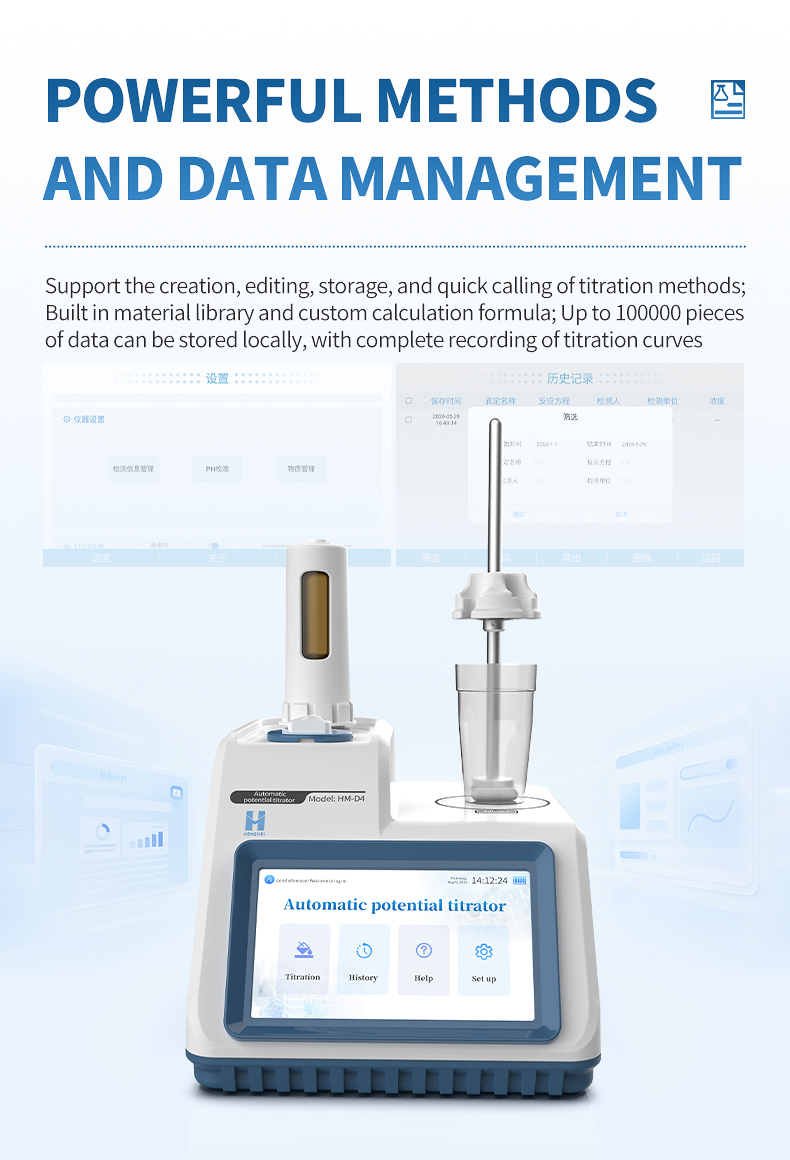
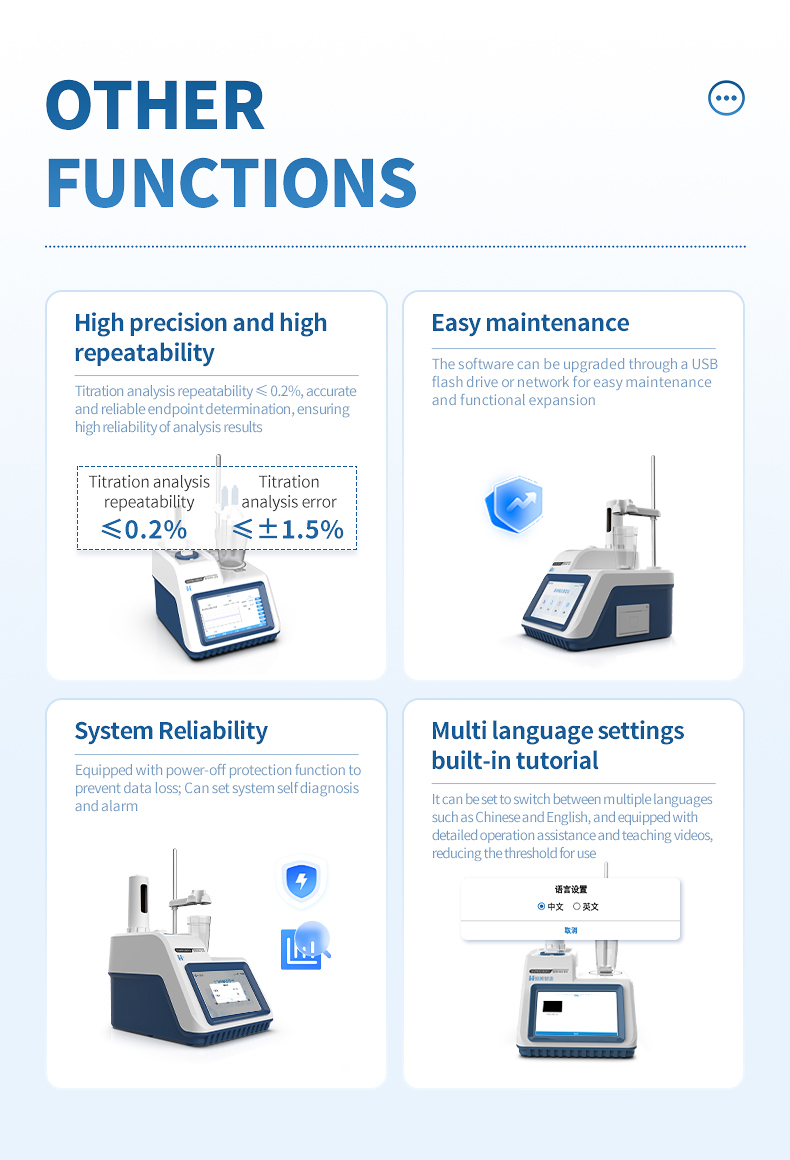
The Android 10 touchscreen interface with real-time current-volume curve display transforms what was traditionally a manual, experience-dependent technique into an automated, reproducible process. Technicians simply select the pre-configured pharmacopeia method, load the sample, and the instrument handles titrant dispensing, current monitoring, endpoint detection, and result calculation — reducing analyst-to-analyst variability to ≤0.2% repeatability.
Applications
Vitamin C (Ascorbic Acid) Assay: Iodometric titration with dead-stop endpoint detection for active ingredient quantification in pharmaceutical formulations and nutritional supplements per USP and EP methods
Sulfonamide Drug Quantification: Sodium nitrite diazotization titration for sulfamethoxazole, sulfadiazine, and other sulfa drugs per pharmacopeia aromatic primary amine determination protocols
Dissolved Oxygen Determination: Winkler method iodometric titration with dead-stop detection for environmental water quality and pharmaceutical water system monitoring
Sulfite and Preservative Analysis: Iodine-based back-titration for sulfite content in food products, wine, and pharmaceutical excipients
Aromatic Amine Characterization: Diazotization titration for intermediate compounds in active pharmaceutical ingredient synthesis pathways
Residual Chlorine Measurement: Iodometric determination of free and total residual chlorine in pharmaceutical water systems and cleaning validation rinse samples
Raw Material Identity Testing: Standard acid-base and redox potentiometric titration for incoming raw material verification against pharmacopeia specifications
Key Features & Advantages
Pharmacopeia-Aligned Dead-Stop Detection: Three polarization voltages (30/50/100 mV) match specific USP, EP, and Chinese Pharmacopoeia method requirements, eliminating the need for manual electrode bias adjustment.
High-Sensitivity Current Monitoring: 0.00 μA to 200 μA range with ±1.0% FS accuracy captures the sharp current transition at dead-stop endpoints, even in dilute pharmaceutical preparations.
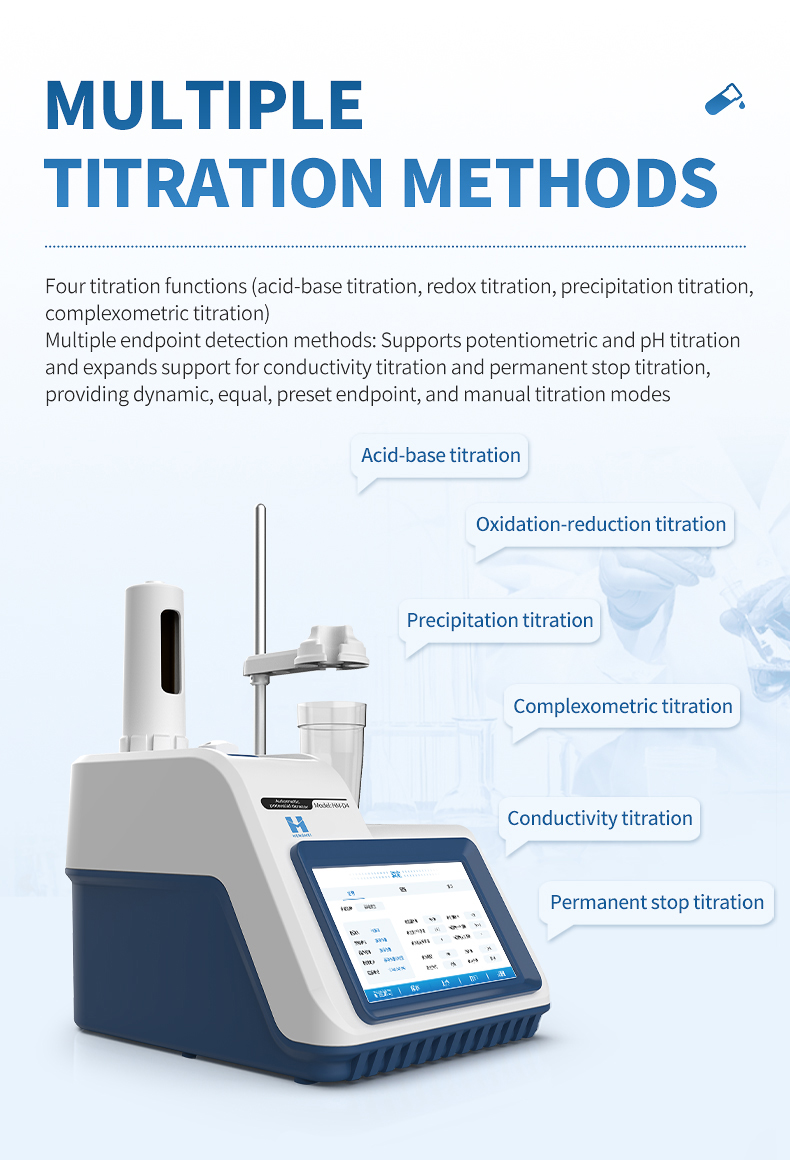
Five-Method Analytical Platform: Dead-stop plus four potentiometric methods (acid-base, redox, precipitation, complexometric) cover the full spectrum of pharmacopeia-required titration techniques in one instrument.
Automated Endpoint Determination: Real-time current-volume curve tracking with algorithmic inflection point detection replaces manual amperometric observation, reducing analyst-dependent variability to ≤0.2%.
Complete GMP Data Integrity Suite: Three-level permissions, immutable audit trail, electronic signatures, power-off data protection, and automatic system alarms meet FDA 21 CFR Part 11 and EU GMP Annex 11 requirements.
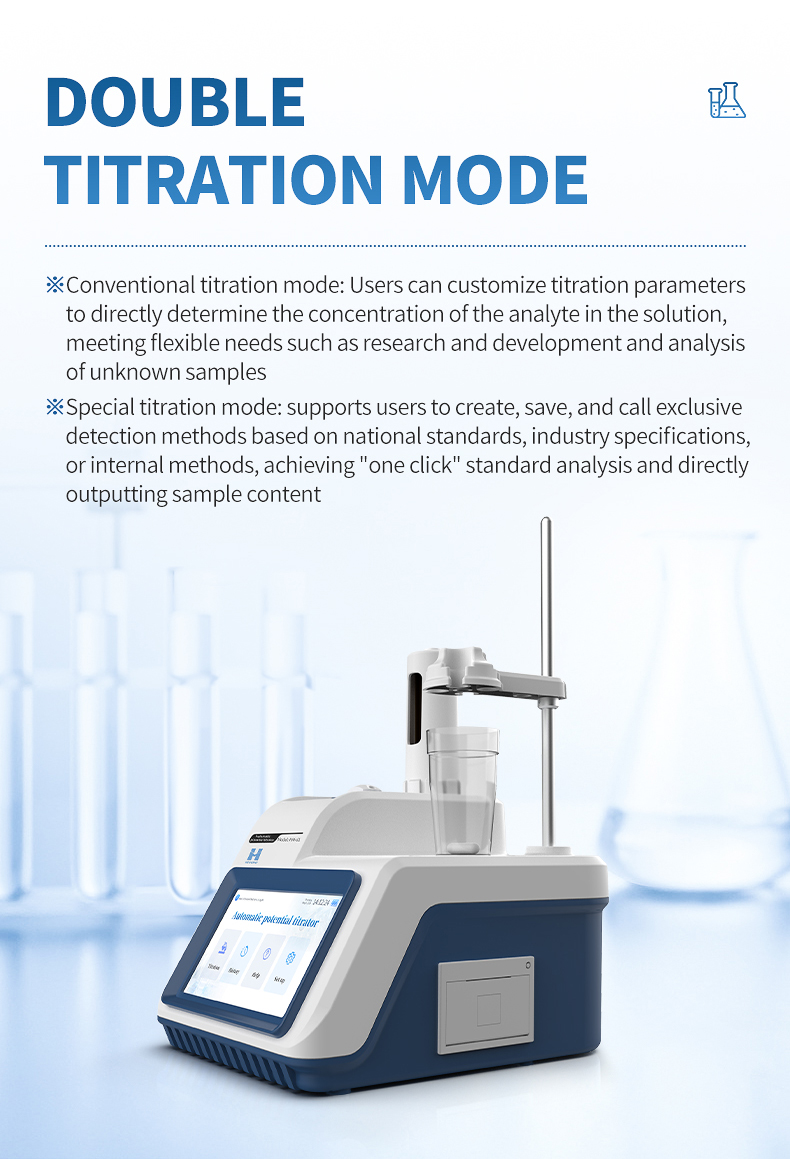
Pre-Configured Pharmacopeia Methods: Method library includes templates for common pharmacopeia assays; technicians select the method and the instrument handles all parameters automatically.
Custom Formula Engine: Embed pharmacopeia-specific calculation formulas directly into methods, ensuring results are output in the required units (mg/g, %, mg/tablet) without manual computation.
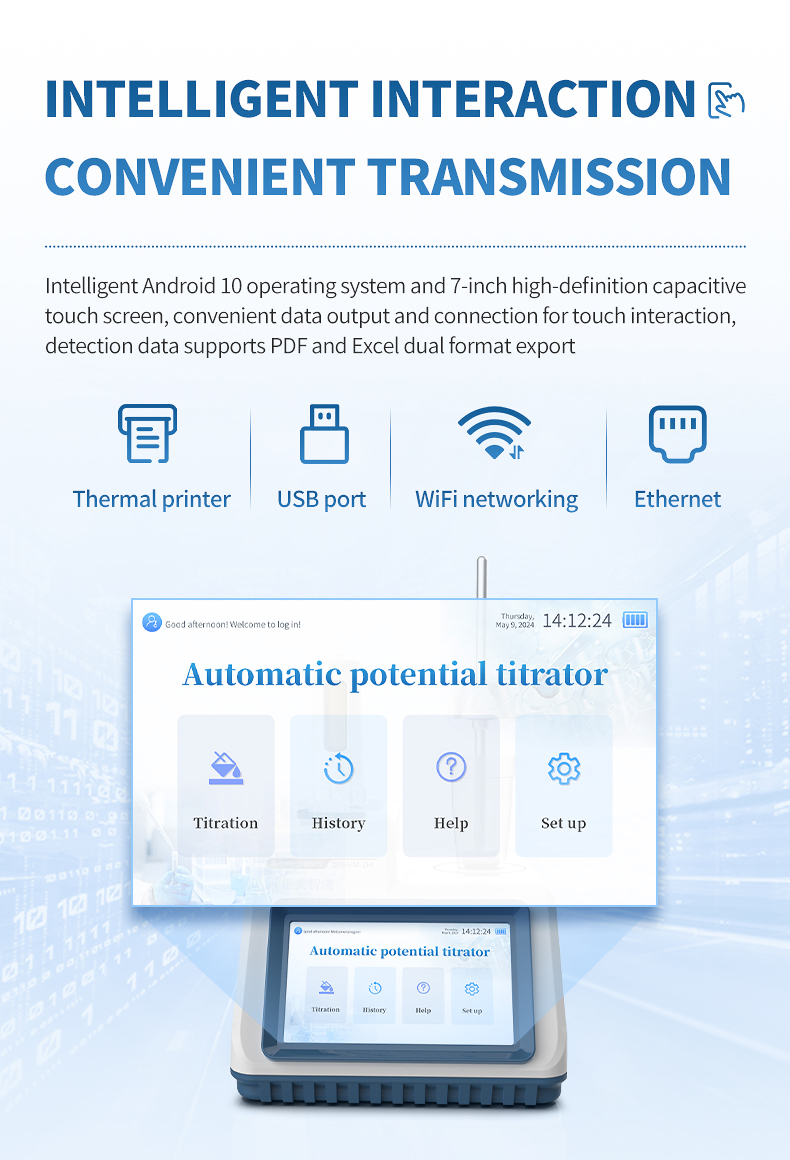
Android 10 Touchscreen Interface: 7-inch display shows real-time current curve, titrant volume, and endpoint marker simultaneously — providing visual confirmation that mirrors pharmacopeia acceptance criteria.
Multi-Format Data Export: PDF for batch record filing, Excel for statistical trend analysis, Wi-Fi for direct LIMS upload, and built-in thermal printer for immediate bench-side documentation.
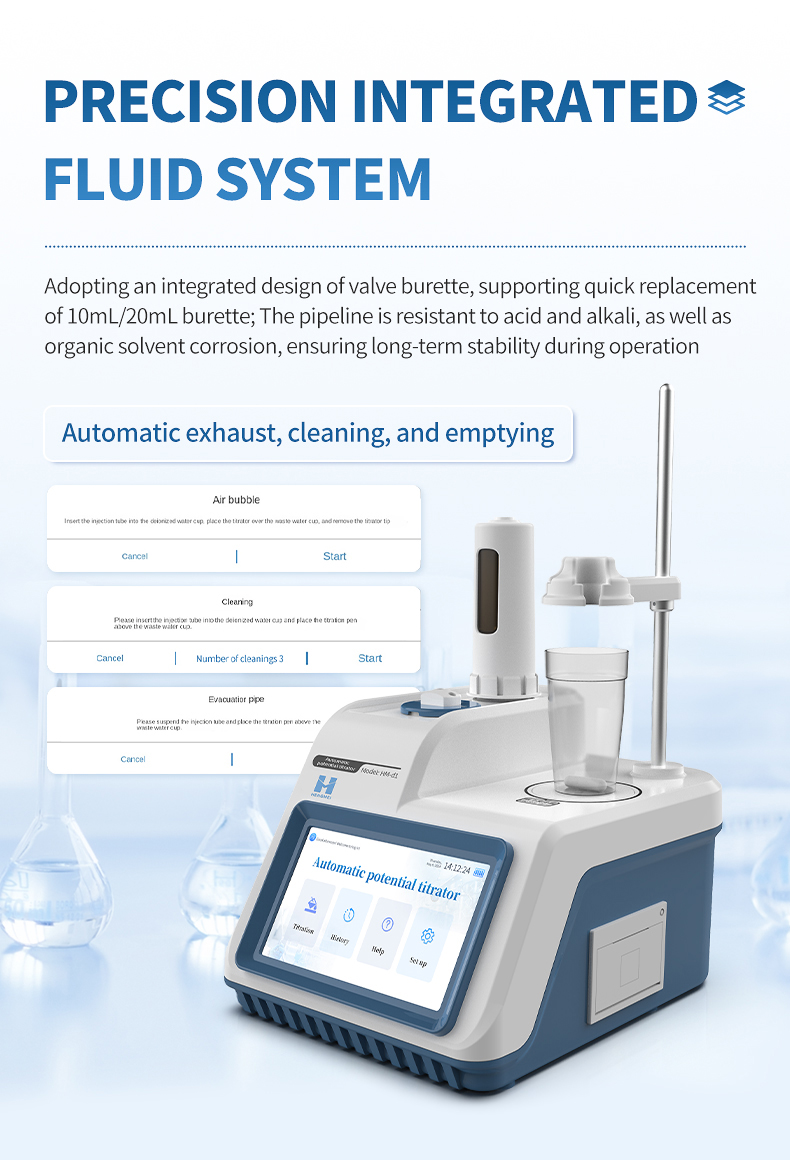
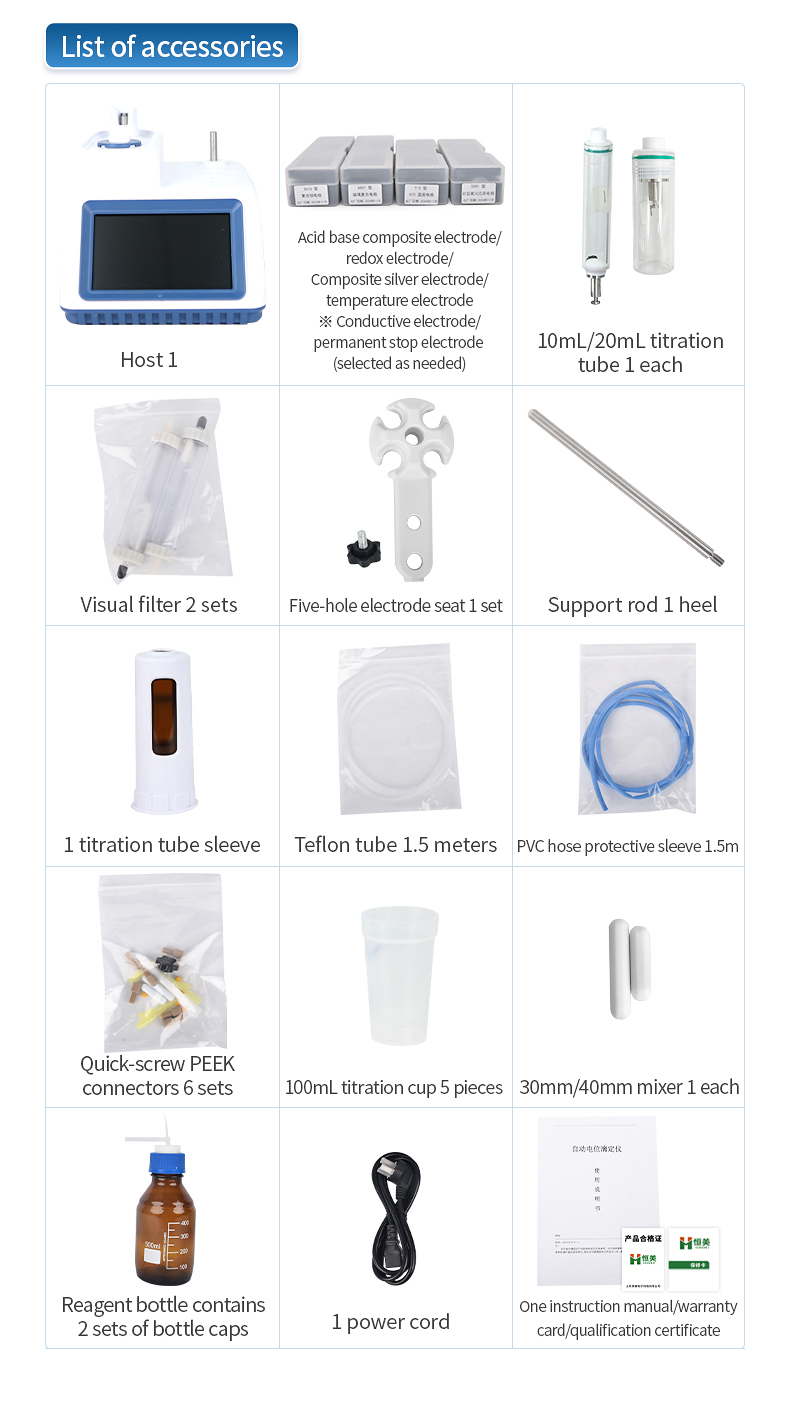
Corrosion-Resistant Quick-Swap System: Chemical-resistant fluid path with 10 mL / 20 mL quick-swap burettes enables fast reagent changeover between iodometric and diazotization workflows.
Automatic Maintenance Routines: Built-in cleaning, degassing, and pipe evacuation functions prevent cross-contamination between different titrant chemistries.
Regulatory Inspection Readiness: Complete electronic records with timestamp, operator ID, method version, and calibration status allow instant retrieval during GMP audits and regulatory inspections.
Technical Specifications
| Parameter | Specification |
|---|---|
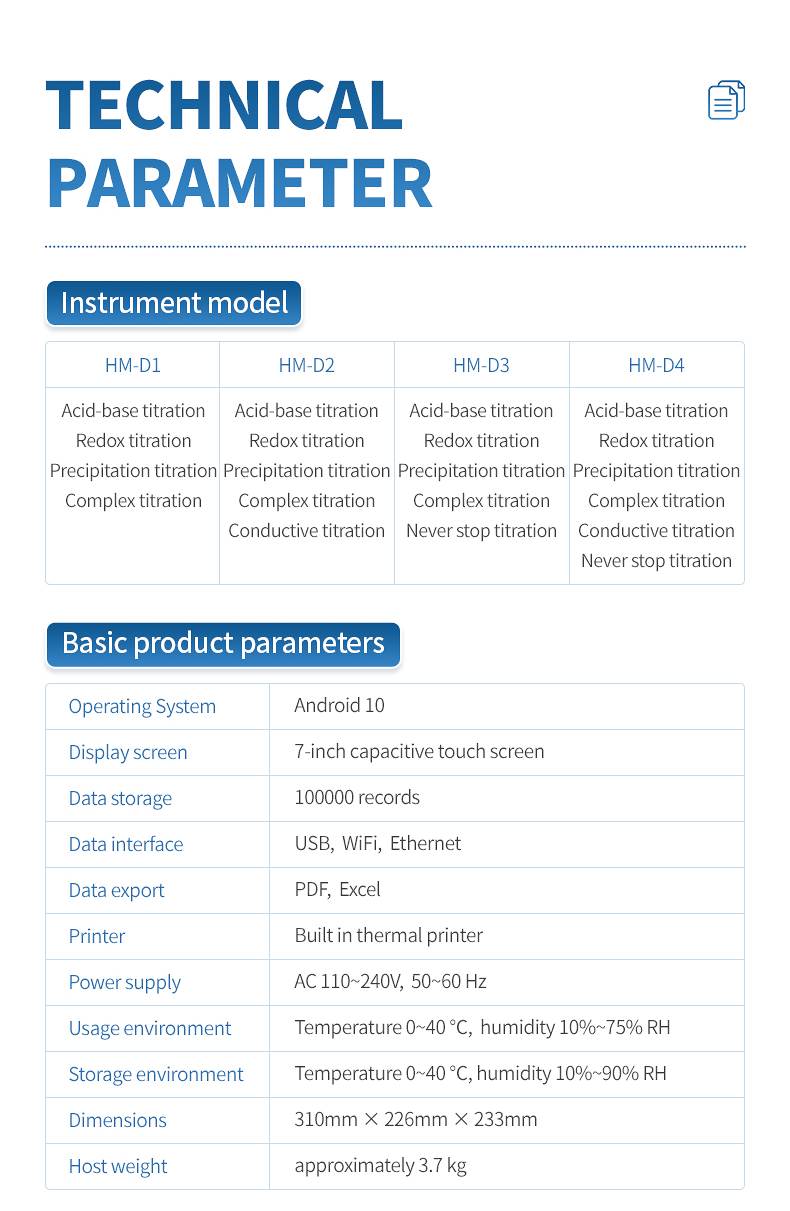
| Titration Methods | Acid-base, Redox, Precipitation, Complexometric, Dead-stop |
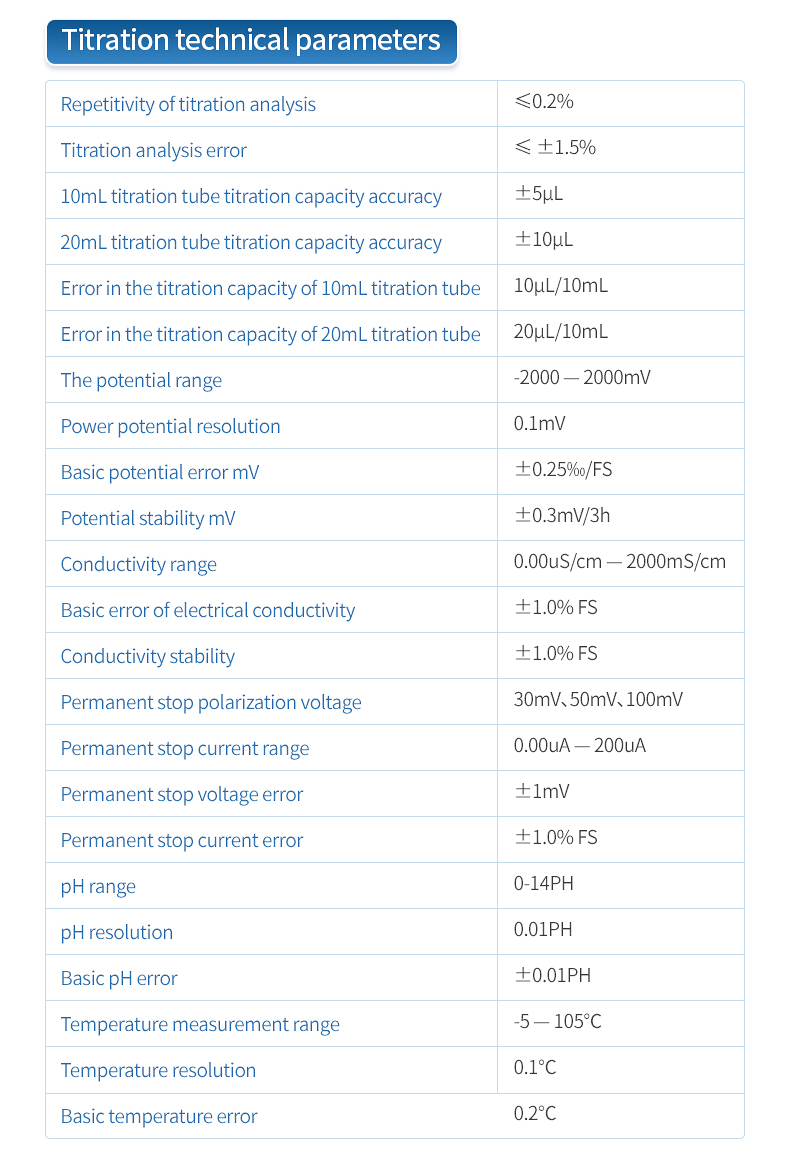
| Repeatability | ≤ 0.2% |
| Analysis Error | ≤ ±1.5% |
| Burette Options | 10 mL (±5 μL) / 20 mL (±10 μL), quick-swap |
| Potential Measurement | -2,000~+2,000 mV, 0.1 mV resolution, ±0.25‰ FS |
| pH Measurement | 0~14 pH, 0.01 pH resolution, ±0.01 pH accuracy |
| Dead-Stop Polarization | 30 mV, 50 mV, 100 mV (±1 mV) |
| Dead-Stop Current Range | 0.00 μA ~ 200 μA |
| Current Error | ±1.0% FS |
| Temperature | -5~105 °C, 0.1 °C resolution, ±0.2 °C accuracy |
| Endpoint Detection | Dynamic, equal-volume, preset endpoint, manual modes |
| Display | 7-inch capacitive touchscreen, Android 10 |
| Data Storage | 100,000 records with full titration curves |
| Data Export | PDF, Excel, built-in thermal printer |
| Connectivity | USB, Wi-Fi, Ethernet |
| Power | AC 110~240V, 50~60 Hz (universal) |
| Operating Conditions | 0~40 °C, 10%~75% RH |
| Dimensions | 310×226×233 mm |
| Weight | ~3.7 kg |
FAQ
Q1: What is dead-stop titration and how does it differ from potentiometric titration?
Dead-stop titration applies a small constant voltage (typically 30–100 mV) across two platinum electrodes immersed in the titration solution, then monitors the current flowing between them. At the equivalence point, the appearance or disappearance of a reversible redox couple causes an abrupt current transition — from near-zero to measurable, or vice versa. Unlike potentiometric titration, which measures the potential difference between a reference and indicator electrode, dead-stop detection specifically responds to the presence of reversible redox species. This makes it uniquely suited for iodometric and diazotization titrations where the endpoint is defined by the first trace excess of iodine or nitrite.
Q2: Which pharmacopeia methods specifically require dead-stop endpoint detection?
Several pharmacopeia methods mandate or recommend dead-stop detection. The USP and EP iodometric assays for vitamin C (ascorbic acid) use dead-stop to detect the first excess of iodine at the endpoint. Sodium nitrite diazotization titration for sulfonamide drugs (USP general chapter on nitrite titration) uses dead-stop to detect excess nitrous acid. The Chinese Pharmacopoeia also specifies dead-stop detection for multiple assays including isoniazid, procaine hydrochloride, and sodium aminosalicylate. The HM-D3's three polarization voltages cover all these requirements.
Q3: How does the HM-D3 ensure GMP compliance for pharmaceutical batch release testing?
The HM-D3 implements a comprehensive data integrity framework aligned with FDA 21 CFR Part 11 and EU GMP Annex 11. Three-level user permissions (Administrator, Supervisor, Operator) control access to method creation, parameter modification, and result approval. Every action is logged in an immutable audit trail with timestamp, user ID, and change details. Power-off data protection ensures no results are lost during unexpected shutdowns. System self-diagnosis continuously monitors electrode health, burette performance, and temperature calibration, generating automatic alarms when parameters drift outside validated ranges.
Q4: Can the HM-D3 perform both iodometric and diazotization titrations on the same instrument without reconfiguration?
Yes. The HM-D3's method library stores separate pre-configured methods for iodometric and diazotization workflows, each with its own polarization voltage setting, titrant specification, and calculation formula. Switching between methods takes seconds on the touchscreen — the instrument automatically adjusts the polarization voltage (e.g., 50 mV for iodometry, 30 mV for diazotization) and loads the corresponding endpoint detection parameters. The quick-swap burette design allows reagent changeover in under a minute, and the automatic cleaning routine flushes the fluid path between different chemistries.
Q5: What is the advantage of the HM-D3's automated dead-stop detection over manual amperometric endpoint observation?
Manual dead-stop titration requires the analyst to continuously monitor a microammeter needle and visually identify the current transition point — a technique-dependent skill that introduces significant operator variability. The HM-D3 automates this process entirely: the instrument continuously records the current-volume data, applies algorithmic inflection point detection to identify the exact endpoint, and calculates results using the embedded pharmacopeia formula. This reduces analyst-to-analyst variability to ≤0.2% repeatability and eliminates the experience-dependent judgment that makes manual dead-stop titration difficult to standardize across shifts and laboratories.
Q6: How does the HM-D3 handle method transfer between pharmaceutical manufacturing sites?
The HM-D3's method library stores all titration parameters — including polarization voltage, titrant concentration, endpoint criteria, and calculation formulas — as portable digital method files. These can be exported via USB flash drive and imported into another HM-D3 instrument at a different manufacturing site, ensuring identical analytical conditions across facilities. The method version control feature tracks all modifications with timestamps and operator IDs, providing the documentation trail required for inter-site method transfer protocols under GMP guidelines.
Q7: What maintenance is required to keep the dead-stop electrodes performing reliably?
Dead-stop platinum electrodes require minimal but specific maintenance: after each titration session, rinse the electrodes with deionized water and gently wipe with a soft tissue to remove any adsorbed species. If the current response becomes sluggish, a brief soak in dilute nitric acid (1:10) followed by thorough rinsing restores electrode sensitivity. The HM-D3's built-in electrode health diagnostic monitors baseline current stability and alerts the operator when cleaning or replacement is recommended. Under normal pharmaceutical lab usage, platinum electrodes typically last 2–3 years before replacement.
Address of this article:https://www.labinstruments.net/pro24/dead-stop-titrator-pharmaceutical-iodometric.html