

 Current
location:
Current
location: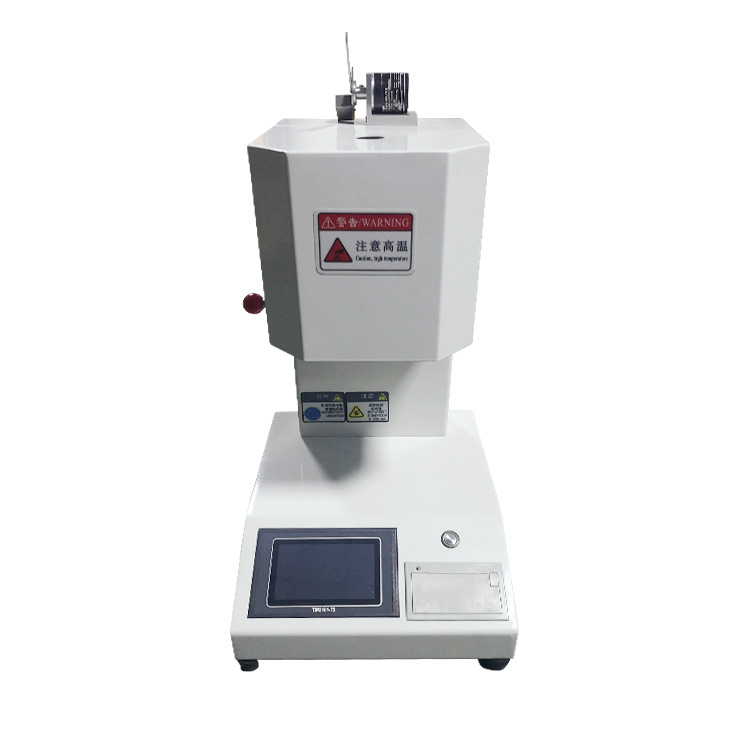
 +86 17853698681






Product Introduction
In the plastics manufacturing industry, maintaining consistent melt flow properties across resin batches is critical for downstream processing quality. Variations in MFR values directly affect injection molding fill behavior, extrusion throughput, and final product mechanical performance. The HM-RZ melt flow rate tester provides production laboratories with a reliable, standardized method to detect these variations before materials enter the manufacturing line.
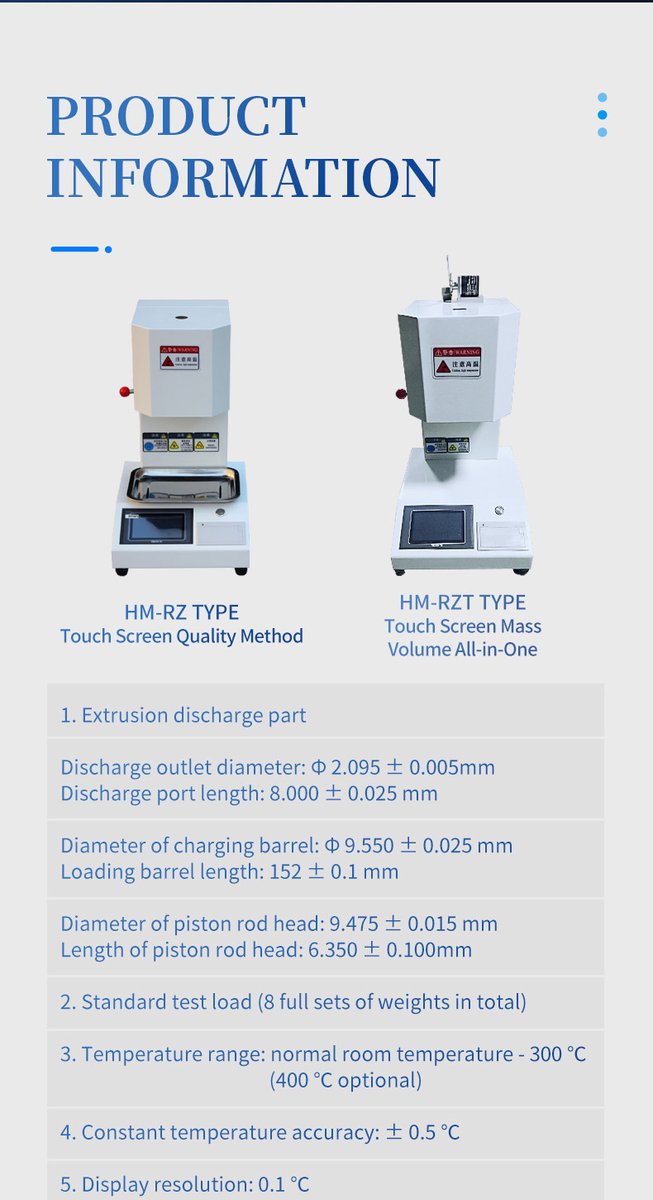
Designed around the mass-method (MFR) principle specified in ISO 1133 and ASTM D1238, the HM-RZ measures the weight of polymer melt extruded through a precision tungsten carbide die (Φ2.095 ± 0.005 mm orifice diameter, 8.000 ± 0.025 mm length) under controlled temperature and load conditions. The Hastelloy alloy heating barrel (Φ9.550 ± 0.025 mm inner diameter, 152 ± 0.1 mm length) eliminates the oxidation and corrosion issues common in standard steel barrels when operating at sustained high temperatures, a frequent scenario in engineering plastics testing such as polycarbonate at 300°C.
The dual-sensor temperature control system with fuzzy PID algorithm maintains constant-temperature accuracy of ±0.5°C with 0.1°C display resolution, and recovers to set-point within 4 minutes after sample loading — a critical factor for throughput in busy production labs. Eight standard load levels ranging from 0.325 kg to 21.6 kg cover the testing requirements for virtually all thermoplastic grades, from low-MFR engineering resins to high-MFR commodity plastics. For detailed MFR and MVR comparison methodology, see our melt flow testing technical guide.
Applications
- PE/PP resin incoming material inspection at plastic product factories to verify MFR matches supplier specifications
- ABS resin batch consistency monitoring for injection molding process stability and yield optimization
- Engineering plastics (PC, nylon, POM) melt flow characterization for automotive and electronic component manufacturing
- Polystyrene and PVC compound flow property verification for extrusion and thermoforming processes
- Petrochemical plant resin grade classification and production quality release testing
- Compounding and masterbatch production — melt flow verification after additive incorporation
- Third-party testing laboratory standardized thermoplastic MFR certification per ISO 1133
Key Features and Advantages
- Hastelloy alloy barrel withstands continuous operation at temperatures up to 400°C without oxidation, enabling reliable testing of high-melting engineering plastics like polycarbonate and fluoroplastics
- Dual-sensor PID temperature control delivers ±0.5°C accuracy with uniform thermal gradient, reducing measurement uncertainty caused by temperature non-uniformity across the barrel
- Sub-4-minute temperature recovery after sample loading minimizes idle time between tests, supporting high-throughput environments such as resin production QC labs running 20+ tests per day
- Eight-level standard load system (0.325 to 21.6 kg) eliminates the need for separate load kits — one instrument covers PE at 2.16 kg, PP at 2.16 kg, PC at 1.2 kg, and all other standard conditions
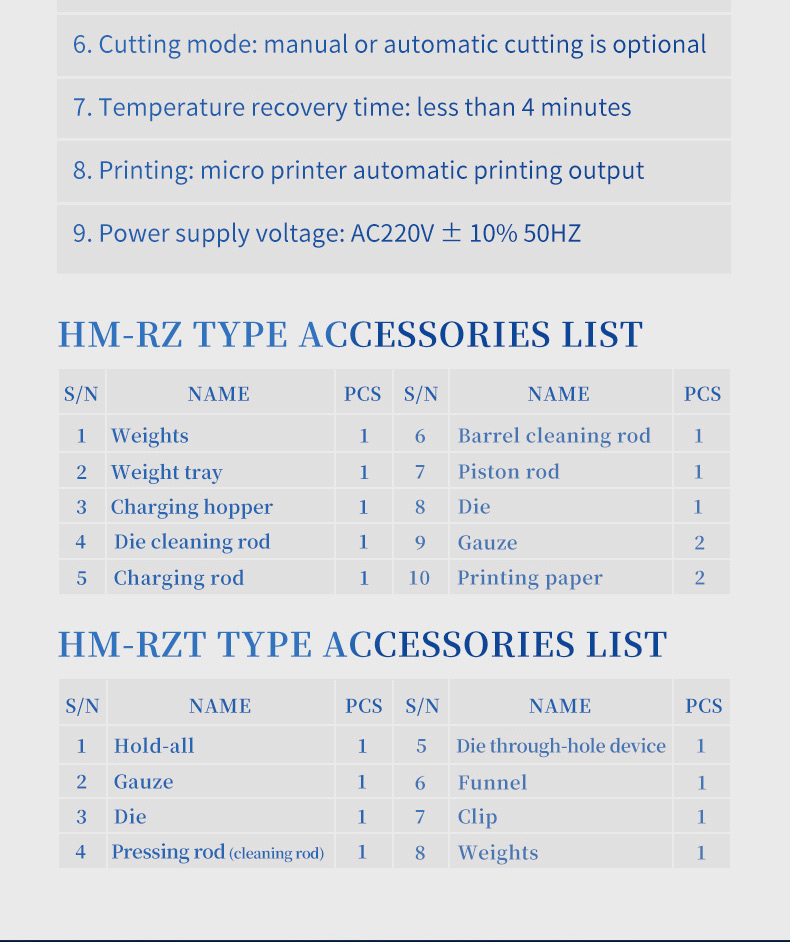
- Automatic and manual cutting modes provide operational flexibility: auto-cutting for routine high-volume testing, manual for research and method development work
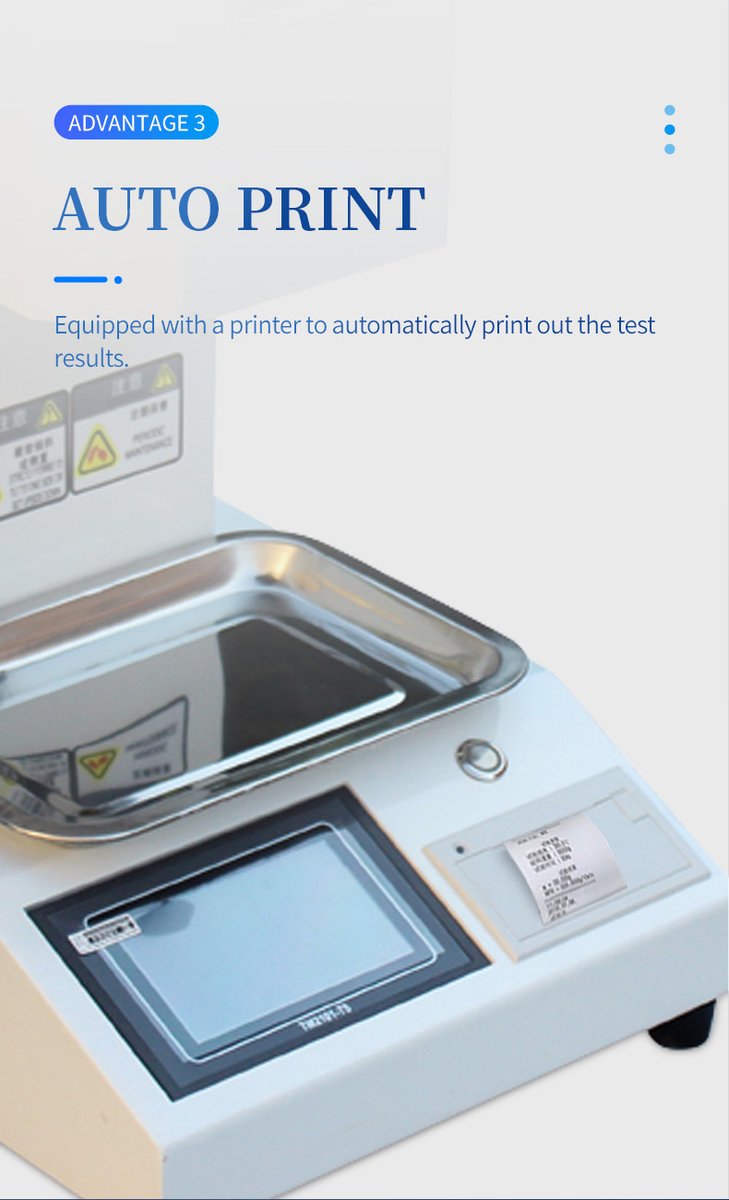
- Built-in micro-printer generates immediate hardcopy records without requiring a PC, ideal for GMP-regulated production environments where real-time documentation is mandatory
- Chinese LCD display shows all testing parameters simultaneously, reducing operator setup errors and training time for new lab personnel
- Four-minute pre-heat countdown timer per national standard ensures standardized soaking time before extrusion begins, improving inter-laboratory reproducibility
- RS232 interface (optional) connects directly to PC-based data acquisition systems for automated result logging in LIMS-integrated laboratories
- Tungsten carbide die (Φ2.095 ± 0.005 mm) provides superior wear resistance compared to standard steel dies, maintaining dimensional accuracy over extended testing campaigns
Technical Specifications
| Parameter | Specification |
|---|---|
| Measurement Method | Mass Flow Rate (MFR) |
| Temperature Range | Room temperature – 300°C (400°C available upon request) |
| Constant Temperature Accuracy | ±0.5°C |
| Temperature Display Resolution | 0.1°C |
| Temperature Recovery Time | < 4 minutes after loading |
| Temperature Control | Fuzzy PID algorithm |
| Temperature Sensors | Dual sensor configuration |
| Barrel Inner Diameter | Φ9.550 ± 0.025 mm |
| Barrel Length | 152 ± 0.1 mm |
| Barrel Material | Hastelloy alloy |
| Die Orifice Diameter | Φ2.095 ± 0.005 mm |
| Die Length | 8.000 ± 0.025 mm |
| Die Material | Tungsten carbide |
| Piston Head Diameter | Φ9.475 ± 0.015 mm |
| Piston Head Length | 6.350 ± 0.100 mm |
| Standard Load Levels | 0.325, 1.2, 2.16, 3.8, 5.0, 10.0, 12.5, 21.6 kg |
| Cutting Mode | Manual / Automatic selectable |
| Display | Chinese LCD |
| Printer | Integrated micro-printer |
| Data Interface | RS232 (optional) |
| Power | 0.5 kW |
| Power Supply | AC 220V ± 10%, 50 Hz |
| Ambient Operating Temperature | 10°C – 40°C |
| Ambient Humidity | 30% – 80% RH |
| Applicable Standards | ISO 1133, ASTM D1238, GB/T 3682 |
FAQ
A: MFR (Melt Flow Rate) measures the mass of polymer extruded through a standard die in 10 minutes under specified temperature and load conditions, expressed in g/10min. It is the most widely used indicator of thermoplastic processability — higher MFR values indicate lower melt viscosity and easier flow, while lower values indicate higher viscosity. Consistent MFR values across resin batches ensure stable injection molding or extrusion parameters, reducing scrap rates and maintaining product quality.
A: Standard steel barrels oxidize and corrode when exposed to sustained temperatures above 250°C, especially when testing engineering plastics like polycarbonate (300°C) or fluoroplastics. Hastelloy alloy maintains dimensional stability and corrosion resistance at temperatures up to 400°C, ensuring that barrel wear does not introduce measurement drift over the instrument's lifetime. This is particularly valuable for laboratories testing high-temperature resins on a routine basis.
A: Common conditions per ISO 1133 include: PE at 190°C/2.16 kg, PP at 230°C/2.16 kg, PS at 200°C/5.0 kg, ABS at 220°C/10.0 kg, PC at 300°C/1.2 kg, and POM at 190°C/2.16 kg. The HM-RZ supports all standard conditions with its 8-level load system and 300°C temperature range (400°C optional). Refer to the material specification sheet for the exact test conditions required.
A: After loading the polymer sample, the barrel temperature temporarily drops. The national standard (GB/T 3682) requires a standardized pre-heat period before extrusion begins. The HM-RZ's built-in 4-minute countdown starts automatically after loading, ensuring consistent thermal equilibration across all tests. This reduces operator-dependent variability and improves inter-laboratory reproducibility of MFR results.
A: Yes, the optional RS232 data interface enables direct connection to a PC for automated data acquisition. Test results including temperature, load, cutting time, and calculated MFR values can be logged to spreadsheet or LIMS software. The integrated micro-printer also provides standalone hardcopy output for labs that prefer immediate physical records without PC dependency.
A: MFR (Mass Flow Rate) measures the weight of extruded polymer in g/10min, while MVR (Melt Volume Rate) measures the volume of extruded polymer in cm³/10min. The HM-RZ is a mass-method instrument supporting MFR measurement. For laboratories requiring both MFR and MVR capabilities, the HM-RZT dual-mode tester provides both methods in a single instrument with additional displacement measurement accuracy of 0.1 mm.
Address of this article:https://www.labinstruments.net/melt-flow-index-tester/melt-flow-rate-tester-polymer-manufacturing.html
- Previous: no more
- Next: HM-RZT Dual-Mode Melt Flow Indexer for Engineering Plastics Rheology Analysis